When a child arrives at the emergency department with bilious vomiting, the specter of midgut volvulus looms over every decision that follows. The condition, in which the intestine twists around its own blood supply, can strangle meters of bowel within hours, making it one of the few true imaging emergencies in pediatrics. For decades, the default diagnostic tool in much of North America was the fluoroscopic upper gastrointestinal series, an examination that requires a child to swallow contrast material while a radiologist tracks its passage in real time. But a new international survey published in Pediatric Radiology reveals that this landscape is shifting, and it is shifting unevenly, shaped less by scientific evidence than by local training cultures and staffing models.
The survey, conducted jointly by the Society for Pediatric Radiology and the European Society of Paediatric Radiology, was distributed to members of both societies between August and September 2025. It asked radiologists whether their institutions had adopted ultrasound as the first imaging test for suspected midgut volvulus, how long they had been using it, who performed the examinations, what their protocols looked like, and what obstacles stood in the way of wider adoption. A total of 227 responses representing 179 hospitals across 38 countries were analyzed, with results stratified by geographic region to expose patterns that a single-country study would have missed.
The headline finding is a stark transatlantic divide. In Europe, 78.2 percent of responding hospitals reported using ultrasound as their first-line test for suspected volvulus. In other regions of the world, adoption stood at 61.1 percent. North America lagged dramatically behind, with only 28.9 percent of hospitals making sound waves the initial diagnostic probe. That means a newborn with the same life-threatening presentation may be sent first to an ultrasound suite in Munich or London but to a fluoroscopy suite in many US and Canadian centers, purely as a function of geography and institutional tradition rather than any difference in the underlying disease.
The reasons behind the gap are as revealing as the numbers themselves. When the researchers asked what barriers impeded adoption, European respondents most frequently pointed to acceptance among radiologists themselves, a professional culture question about whether ultrasound can reliably replace the long-entrenched upper gastrointestinal series. In North America, by contrast, the dominant barrier was sonographer training and competence. The distinction matters because it points to different solutions: persuading physicians to change their diagnostic habits is a different organizational challenge from building the technologist workforce capable of performing technically demanding pediatric bowel ultrasound at any hour of the day or night.
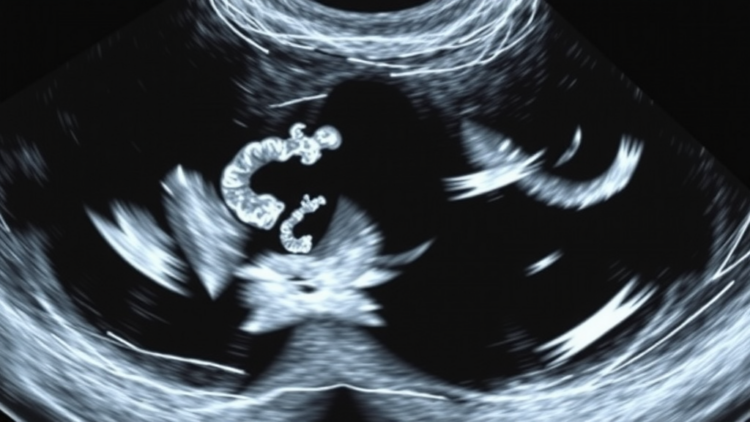
The technical demands of the examination help explain that workforce problem. Ultrasound for malrotation and volvulus hinges on mapping the vascular anatomy of the midgut, primarily by identifying the relative positions of the superior mesenteric vein and artery and by tracing the bowel loops to determine whether the duodenum courses in its expected retroperitoneal pattern. In volvulus, the sonographer may see the classic whirlpool sign, with the mesentery and vessels spiraling around a central axis, or a distended, fluid-filled proximal duodenum that tapers abruptly. Obtaining these views reliably in a squirming, crying infant, often in the middle of the night, requires hands-on training that cannot be transmitted through a written protocol alone.
Perhaps the most sobering discovery in the survey is what is missing even where ultrasound has been adopted. Across all regions, most institutions reported having no formal clinical pathway governing when and how first-line ultrasound should be used, no standardized reporting template to ensure that radiologists communicate their findings consistently, and no routine administration of oral or nasogastric fluid to distend the stomach and duodenum during the examination. Each of these omissions carries consequences. Without a clinical pathway, triage decisions fall to individual clinicians under pressure; without standardized reports, surgeons may receive ambiguous guidance on whether the bowel is at risk; without fluid instillation, some examinations may be nondiagnostic and default back to fluoroscopy anyway.
The survey did identify one intervention that respondents believed could overcome these fragmentation problems: the publication of formal, evidence-based guidelines. This was the most commonly cited factor that would facilitate broader adoption, ahead of technological improvements or institutional policies. The finding echoes a broader literature on implementation science, which has repeatedly shown that the translation of best evidence into routine practice stalls without authoritative, consensus-based guidance to legitimize change and standardize technique. Radiology is no exception, and pediatric bowel ultrasound, with its steep learning curve and operator-dependent accuracy, may be an especially strong candidate for guideline-driven standardization.
The scientific groundwork for a guideline already exists. A 2022 expert panel narrative review in the American Journal of Roentgenology laid out the techniques and interpretive framework for ultrasound in malrotation and volvulus, and a 2021 systematic review and meta-analysis in Archives of Disease in Childhood synthesized diagnostic accuracy data across studies. Individual centers have published encouraging institutional experiences, including a UK tertiary hospital series in Clinical Radiology reporting on ultrasound as the first-line investigation for midgut malrotation, and work examining the significance of nondiasonic examinations when ultrasound cannot answer the clinical question. Economic analyses have even suggested that ultrasound-first pathways can reduce cost and examination time compared with fluoroscopy, removing one traditional objection to the switch.
The practical stakes of this transition are considerable. A child with suspected volvulus typically undergoes imaging in an urgent, often out-of-hours setting, and the choice of first test determines how quickly a surgeon can be mobilized. Ultrasound offers advantages that matter enormously in pediatrics: it involves no ionizing radiation in a population that is more radiosensitive than adults, it requires no contrast ingestion in a vomiting child, it can be performed at the bedside in unstable patients, and it can be repeated without cumulative dose concerns. Fluoroscopy, for its part, offers a dynamic view of contrast passing through the duodenum that some radiologists still consider indispensable for excluding malrotation, even when ultrasound has already addressed the immediate question of whether volvulus is present.
What this survey ultimately documents is the moment of transition itself, captured before the dust settles. The authors’ conclusion is measured: the use of ultrasound as first-line imaging for suspected midgut volvulus varies widely across regions, the barriers reflect local staffing and training models, and formal published guidelines are frequently identified as a potential facilitator of broader implementation. In other words, the science has largely outrun the systems built to deliver it. Whether a child with bilious vomiting gets a radiation-free ultrasound first or a fluoroscopic contrast study still depends heavily on which side of an ocean they happen to be born on, and closing that gap will require not just more evidence but the deliberate work of training sonographers, persuading radiologists, and writing the guidelines that turn individual expertise into dependable, worldwide practice.
Subject of Research: International adoption of ultrasound as first-line imaging for suspected midgut volvulus in children
Article Title: International practice patterns in the use of ultrasound as first-line imaging for suspected midgut volvulus in children: a joint society for pediatric radiology–European society of paediatric radiology survey
Article References: Tutman, J., Perucca, G., Chan, S., El-Ali, A., Kljucevsek, D., Limantoro, I., Riccabona, M., Petit, P., Nguyen, H. N., & Samet, J. (2026). International practice patterns in the use of ultrasound as first-line imaging for suspected midgut volvulus in children: a joint society for pediatric radiology–European society of paediatric radiology survey. Pediatric Radiology. https://doi.org/10.1007/s00247-026-06792-y
Image Credits: AI Generated
DOI: 10.1007/s00247-026-06792-y
Keywords: midgut volvulus, pediatric radiology, ultrasound, malrotation, upper gastrointestinal series, international survey, clinical guidelines, sonographer training, bilious vomiting, medical imaging, Society for Pediatric Radiology, European Society of Paediatric Radiology
Cite Scienmag News
APA MLA Chicago
Harold Sullivan. (September 23, 2026). Ultrasound Is Replacing X-Ray Imaging for Pediatric Volvulus, but Only in Some Countries. Scienmag. https://scienmag.com/ultrasound-is-replacing-x-ray-imaging-for-pediatric-volvulus-but-only-in-some-countries/
Harold Sullivan. “Ultrasound Is Replacing X-Ray Imaging for Pediatric Volvulus, but Only in Some Countries.” Scienmag, 23 September 2026, https://scienmag.com/ultrasound-is-replacing-x-ray-imaging-for-pediatric-volvulus-but-only-in-some-countries/. Accessed 23 September 2026.
Harold Sullivan. “Ultrasound Is Replacing X-Ray Imaging for Pediatric Volvulus, but Only in Some Countries.” Scienmag. September 23, 2026. https://scienmag.com/ultrasound-is-replacing-x-ray-imaging-for-pediatric-volvulus-but-only-in-some-countries/
Copy citation Download RIS
Tags: bilious vomitingchallenges in adopting ultrasound for pediatric emergenciesClinical guidelinesearly detection of pediatric volvulusEuropean Society of Paediatric Radiologyglobal variations in pediatric gastrointestinal diagnostic toolsimpact of training cultures on pediatric imaging choicesinternational surveyinternational survey on pediatric imaging practicesmalrotationMedical Imagingmidgut volvulusobstacles to ultrasound implementation in pediatric emergency carepediatric imaging protocols for suspected volvuluspediatric midgut volvulus imagingpediatric radiologypediatric radiology diagnostic methodspediatric ultrasound for volvulus diagnosisrole of radiologists and pediatricians in imaging decisionsSociety for Pediatric Radiologysonographer trainingultrasoundultrasound versus X-ray for intestinal volvulusupper gastrointestinal series