• HOME
  • NEWS
  • EXPLORE
    • CAREER
      • Companies
      • Jobs
    • EVENTS
    • iGEM
      • News
      • Team
    • PHOTOS
    • VIDEO
    • WIKI
  • BLOG
  • COMMUNITY
    • FACEBOOK
    • INSTAGRAM
    • TWITTER
Thursday, July 16, 2026
BIOENGINEER.ORG
No Result
View All Result
  • Login
  • HOME
  • NEWS
  • EXPLORE
    • CAREER
      • Companies
      • Jobs
        • Lecturer
        • PhD Studentship
        • Postdoc
        • Research Assistant
    • EVENTS
    • iGEM
      • News
      • Team
    • PHOTOS
    • VIDEO
    • WIKI
  • BLOG
  • COMMUNITY
    • FACEBOOK
    • INSTAGRAM
    • TWITTER
  • HOME
  • NEWS
  • EXPLORE
    • CAREER
      • Companies
      • Jobs
        • Lecturer
        • PhD Studentship
        • Postdoc
        • Research Assistant
    • EVENTS
    • iGEM
      • News
      • Team
    • PHOTOS
    • VIDEO
    • WIKI
  • BLOG
  • COMMUNITY
    • FACEBOOK
    • INSTAGRAM
    • TWITTER
No Result
View All Result
Bioengineer.org
No Result
View All Result
Home NEWS Science News Health

Ultrasound helmet would make live images, brain-machine interface possible

Bioengineer by Bioengineer
May 8, 2018
in Health
Reading Time: 2 mins read
0
Share on FacebookShare on TwitterShare on LinkedinShare on RedditShare on Telegram
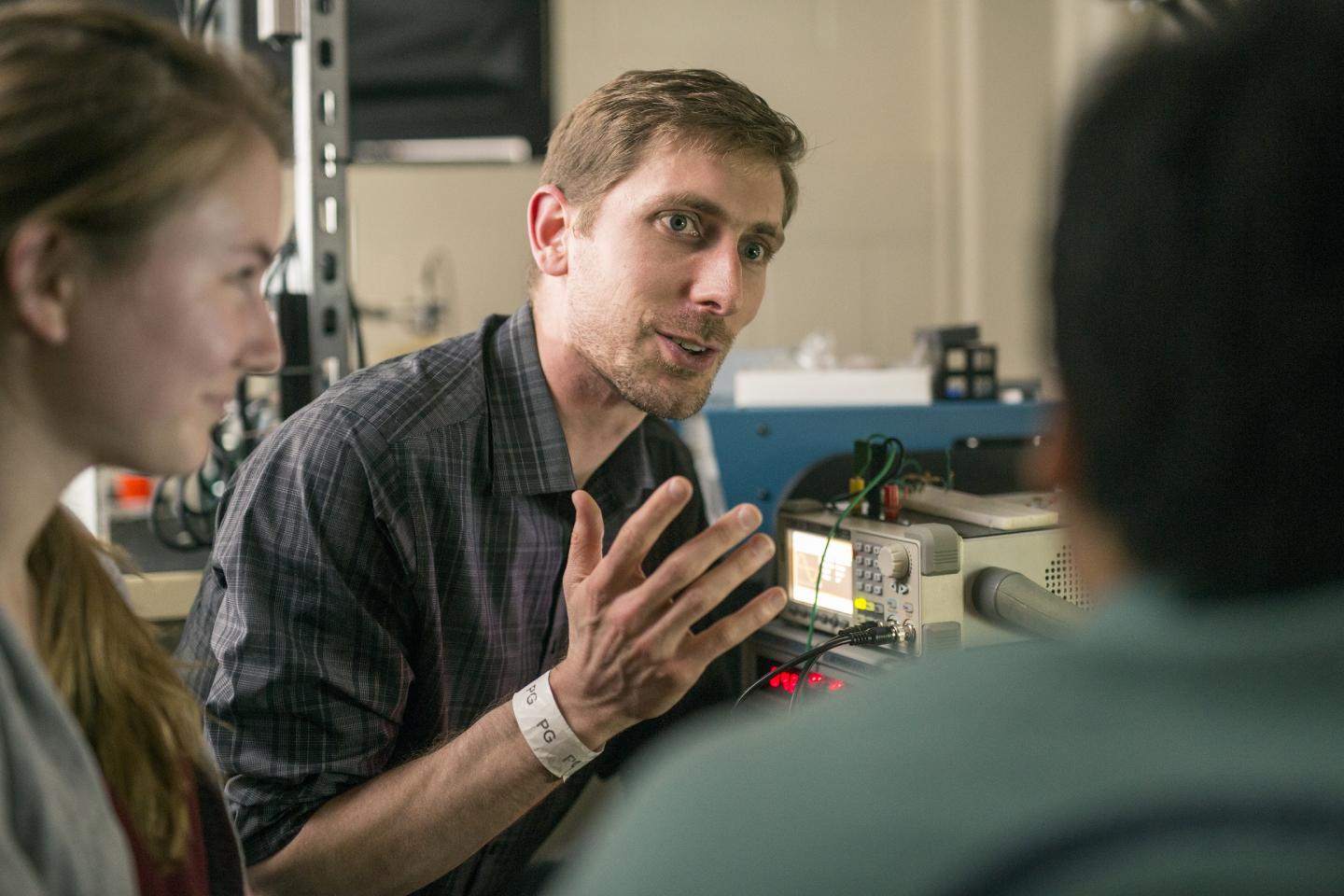
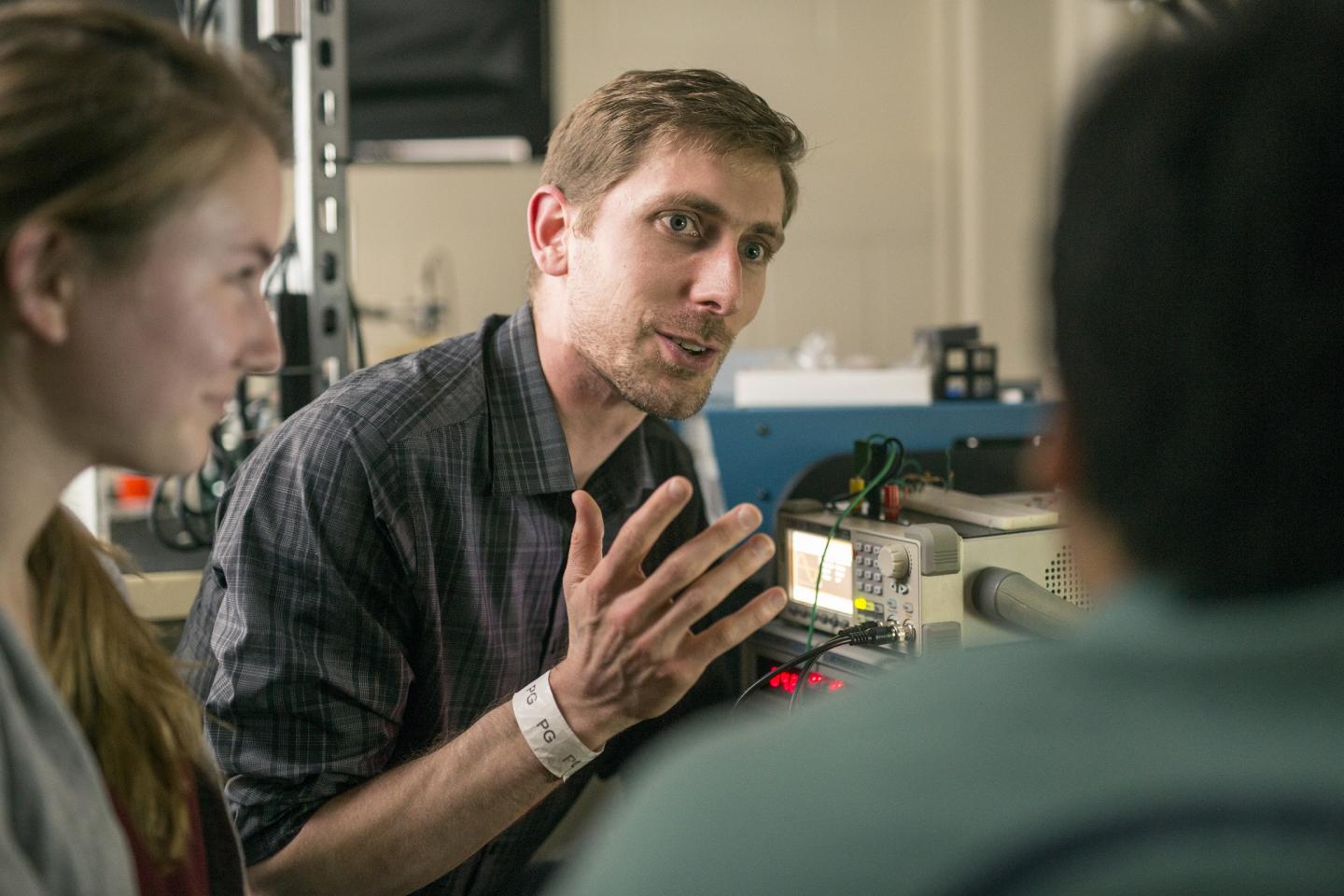
IMAGE

Credit: Daniel Dubois/Vanderbilt University

Ultrasound technology for the brain could mean real-time images during surgery, a better idea of which areas get stimulated by certain feelings or actions and, ultimately, an effective way for people to control software and robotics by thinking about it.

Medical doctors and scientists have spent decades hoping for such an advance, but it was impossible before now, said Brett Byram, assistant professor of biomedical engineering. Ultrasound beams bounced around inside the skull, so no useful imagery could make it out.

Byram plans to use machine learning that will gradually be able to account for distortion and deliver workable images. What's more, he wants to integrate electroencephalogram technology so doctors could see not only brain perfusion – how blood flow correlates to changes in thought – but also areas of stimulation related to movement and emotion.

"The goal is to create a brain-machine interface using an ultrasound helmet and EEG," Byram said. "A lot of the technology we're using now wasn't available when people were working on this 20 or 30 years ago. Deep neural networks and machine learning have become popular, and our group is the first to show how you can use those for ultrasound beamforming."

The applications, he said, are endless. At the basic level, it could allow for images as clear or moreso than those doctors are accustomed to seeing of the heart or womb.

Going forward, a person with limited movement due to ALS could think about wanting a glass of water, and a robotic arm could retrieve one because the helmet detected blood flow and EEG information that told it to. A student reading a paper may feel stress about a certain part that isn't properly sourced, and the computer would know to put a mark there for later editing.

Byram, whose funding for this is from a $550,000 National Science Foundation Faculty Early Career Development grant, said he's working with Leon Bellan, assistant professor of mechanical engineering and biomedical engineering, and Michael Miga, Harvie Branscomb Professor and professor of biomedical engineering, radiology and neurological surgery, to develop the helmet. He plans to invite medical center doctors to the team as their work progresses.

###

Media Contact

Heidi Nieland Hall
[email protected]
615-322-6614
@vanderbiltu

http://news.vanderbilt.edu/research/

Original Source

https://news.vanderbilt.edu/2018/05/08/ultrasound-helmet-would-make-live-images-brain-machine-interface-possible/


Share12Tweet8Share2ShareShareShare2

Related Posts

Frog Protein Antidote Could Neutralize Lethal Red Tide Toxin First

July 16, 2026

Low-PFAS Drinking Water: Is It a Major Source of Human PFAS Exposure?

July 16, 2026

Sweeteners Slow Growth of Key Gut Bacteria in Laboratory Studies

July 16, 2026

Blood Test Model Predicts Postoperative Lung Infections in Older Hip Fracture Patients

July 16, 2026
Please login to join discussion

POPULAR NEWS

  • New Drug Candidate Developed at McMaster Shows Potential for Treating Brain Cancer

    58 shares
    Share 23 Tweet 15
  • Scientists Overcome Antimicrobial Resistance in Bacteria Linked to Cystic Fibrosis

    42 shares
    Share 17 Tweet 11
  • Porcine Heart Transplant

    50 shares
    Share 20 Tweet 13
  • A varied menu

    51 shares
    Share 22 Tweet 12

About

We bring you the latest biotechnology news from best research centers and universities around the world. Check our website.

Follow us

Recent News

Frog Protein Antidote Could Neutralize Lethal Red Tide Toxin First

Frog Protein Shows Promise as First Antidote to Fatal Red Tide Toxin

Low-PFAS Drinking Water: Is It a Major Source of Human PFAS Exposure?

Subscribe to Blog via Email

Enter your email address to subscribe to this blog and receive notifications of new posts by email.

Join 85 other subscribers
  • Contact Us

Bioengineer.org © Copyright 2023 All Rights Reserved.

Welcome Back!

Login to your account below

Forgotten Password?

Retrieve your password

Please enter your username or email address to reset your password.

Log In
No Result
View All Result
  • Homepages
    • Home Page 1
    • Home Page 2
  • News
  • National
  • Business
  • Health
  • Lifestyle
  • Science

Bioengineer.org © Copyright 2023 All Rights Reserved.