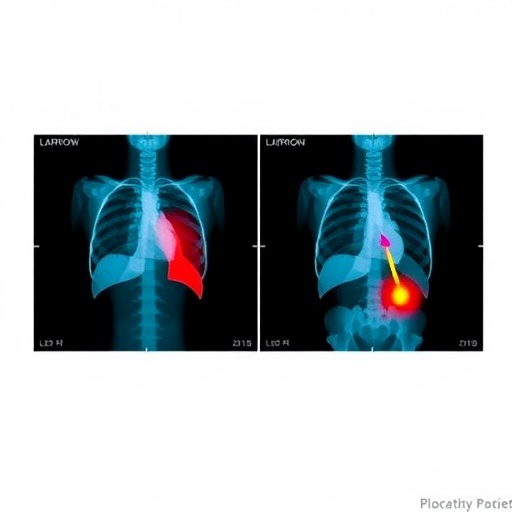
Older adults who suffer hip fractures face a high risk of complications after surgery, particularly postoperative pulmonary infection. A new study reports the development and validation of a prediction model that relies on routine blood tests—data that are already collected in most hospitals—aiming to identify vulnerable patients early and support timely preventive care.
The research focuses specifically on older patients undergoing hip fracture surgery, a population known to experience weakened respiratory function, altered immune responses, and frequent comorbidities. The investigators sought a clinically practical alternative to complex assessments by using measurable laboratory markers available soon after admission or around the perioperative period.
Using statistical modeling, the team combined multiple blood-based variables to estimate the probability of developing an in-hospital postoperative pulmonary infection. The approach evaluates patterns across routine laboratory parameters rather than requiring specialized imaging or biomarkers, which can delay decision-making and increase cost.
Model performance was assessed through validation procedures designed to test how well the tool generalizes beyond the data used to train it. Evaluation metrics indicate whether the model can reliably distinguish patients who will develop infection from those who will not, which is critical for any risk-stratification method intended for clinical deployment.
Importantly, the study emphasizes interpretability and workflow fit. Because routine blood tests are already embedded in standard care pathways, clinicians could potentially integrate the risk score into postoperative monitoring protocols without adding new diagnostic steps.
The findings may also inform hospital-level strategies, such as targeting pulmonary hygiene measures, optimizing early mobilization, and refining antibiotic stewardship. By identifying high-risk patients, healthcare teams could prioritize interventions that reduce infection rates while avoiding unnecessary treatment for lower-risk individuals.
In a “viral science news” framing, this work exemplifies a broader trend: turning everyday clinical data into actionable predictive intelligence. As hospitals increasingly adopt data-driven tools, blood test–based models could become a fast, scalable method for anticipating complications across surgical specialties.
For the hip fracture community, where postoperative outcomes heavily influence long-term recovery and survival, even modest improvements in early risk detection can have outsized benefits. The authors note that routine blood-based prediction models could help standardize care and sharpen clinical decision-making during a critical window.
Subject of Research: Older patients with hip fracture undergoing surgery; prediction of in-hospital postoperative pulmonary infection
Article Title: Development and validation of a routine blood test–based model to predict in-hospital postoperative pulmonary infection in older patients with hip fracture.
Article References: Xu, Z., Liu, J., Chen, F. et al. Development and validation of a routine blood test–based model to predict in-hospital postoperative pulmonary infection in older patients with hip fracture. BMC Geriatr (2026). https://doi.org/10.1186/s12877-026-07906-9
Image Credits: AI Generated
Tags: blood test-based risk assessmentclinical risk stratification modelsearly detection of postoperative pulmonary infectionselderly patient respiratory healthhip fracture surgery complication preventionhospital-based infection prediction toolsnon-invasive assessment for postoperative complicationsPostoperative lung infection predictionpredictive analytics in orthopedic careroutine laboratory markers for infection riskstatistical modeling for infection riskvalidation of clinical prediction models