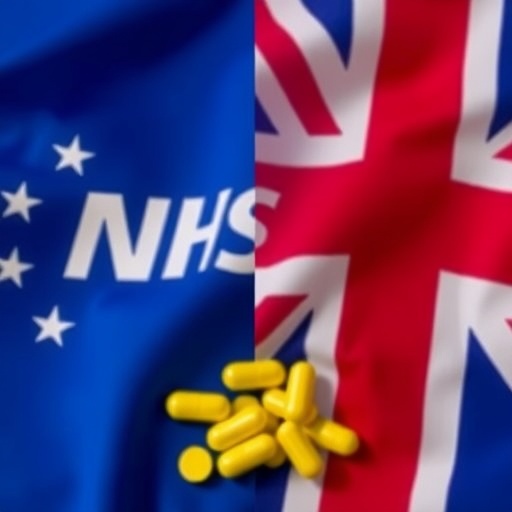
A recent in-depth commentary published in The BMJ casts a critical eye on the United Kingdom’s newly minted trade agreement with the United States, specifically scrutinizing the substantial financial implications for the National Health Service (NHS). This UK-US trade deal, officially announced in December 2025, was heralded by government officials as a landmark collaboration promising to bolster access to medicines and accelerate investment within the UK’s life sciences sector. However, emerging analyses underscore grave concerns that the deal, rather than safeguarding NHS resources, is poised to strain the healthcare system’s budget and precipitate significant public health repercussions over the coming decade.
Fundamentally, the agreement facilitates zero tariffs on UK pharmaceutical and medical device exports to the US for a period of three years. While this provision ostensibly benefits the UK’s pharmaceutical industry by enhancing export potential, the broader ramifications for NHS expenditure appear markedly adverse. Due to amended drug pricing frameworks and an elevation of health technology assessment thresholds, NHS spending on branded medications is projected to escalate considerably. The government has pledged to more than double its investment in new medicines, scaling expenditure from 0.3% of national GDP to a minimum of 0.6% by 2036. This trajectory involves intermediary targets of 0.35% of GDP by 2028 and 0.4% by 2030, exacerbating financial pressures on the public health system.
Central to these fiscal challenges are modifications to cost-effectiveness thresholds employed by the National Institute for Health and Care Excellence (NICE). Beginning in April 2026, NICE’s threshold for new medicines—expressed in terms of cost per quality-adjusted life year (QALY)—will be raised from a range of £20,000-£30,000 to £25,000-£35,000. The QALY metric serves as a composite measure reflecting both life extension and quality of life enhancements offered by therapeutic interventions. Traditionally, NICE calibrated its thresholds to balance gains from novel pharmaceuticals against potential health deterioration caused by diverting limited NHS resources. Raising these thresholds effectively sanctions NHS acceptance of higher drug prices for similar health improvements, thereby inflating overall medication costs.
Moreover, the voluntary scheme for branded medicines pricing, access, and growth (VPAG), a prior mechanism designed to moderate NHS branded medicines spending through industry rebates, has been significantly diluted. In 2025, the pharmaceutical sector contributed a 23% rebate to NHS medication costs. Under the terms of the new trade agreement, this rate has been sharply reduced to 14.5%, diminishing fiscal safeguards previously implemented to curb expenditure growth. This reduction amplifies the NHS’s financial exposure at a time when increased drug prices are already anticipated.
The cumulative fiscal burden projected through this trade deal is staggering—the analysis asserts that by 2036, approximately £45 billion will be siphoned from broader NHS care budgets to accommodate rising medication costs, unless additional funding is secured. This funding reallocation threatens to impair various health services, ultimately contributing to preventable mortality. Specifically, the report estimates an excess of 229,000 avoidable deaths attributable to diminished spending on other health interventions by 2036, a figure surpassing fatalities incurred during the COVID-19 pandemic between March 2020 and June 2022.
The grim prognostications intensify when the indirect effects on publicly funded adult social care are incorporated. As morbidity and mortality mount from constrained health service capacity, social care demands intensify, amplifying system-wide strain. Analytical modeling using English local authority data reveals that every £1 billion reallocated to pharmaceutical expenses elevates adult social care costs by approximately £118 million. This complex interplay between health and social care spending illustrates the broader systemic risks embedded within the agreement’s financial prescriptions.
Beyond economic concerns, there is skepticism regarding the anticipated benefits touted in governmental discourse. Proponents of the trade deal claimed that higher UK medicine prices would stimulate pharmaceutical innovation and investment domestically. However, these benefits remain highly uncertain and speculative. NICE’s projections suggest that despite increased cost-effectiveness thresholds, only two to five additional new medicines will secure approval annually. Given that NICE already approves over 90% of evaluated medicines, the primary impact is likely to manifest as escalated prices for existing drugs rather than expanded patient access.
The trade deal’s commercial advantages are further muted by recent judicial decisions impacting US pharmaceutical tariff policies. Originally, the UK anticipated avoiding tariffs up to 100% on exports; however, a US Supreme Court ruling has reduced this ceiling to 10%, thereby diminishing the economic gains from tariff exemptions. Given that the UK is a net importer of medicines, the overall economic equation does not favor increased export competitiveness, especially since the deal’s projected incremental costs to the NHS are expected to exceed the entire annual value of UK medical exports to the US—reported to be approximately £5 billion—before 2031.
Transparency concerns loom large in the discourse surrounding this trade agreement. Despite the Department of Health and Social Care completing an internal impact assessment on its broader costs, the document has not been publicly released, limiting parliamentary and public scrutiny. The authors of the BMJ commentary highlight the government’s apparent acquiescence to pharmaceutical industry pressures without adequate accountability measures or transparent cost-benefit analyses.
Ultimately, the trade deal epitomizes a structural dilemma confronting the UK’s health system, originally envisioned as an equitable, patient-centered model but increasingly co-opted to absorb financial risks associated with volatile global pharmaceutical markets. The redirection of NHS funding towards securing access to pricier branded medicines, at the expense of other vital health services, challenges the foundational principles of universal care access and systemic sustainability. The foreseeable health outcomes—evidenced by projected excess mortality—call for urgent reassessment of policy priorities and transparent deliberation to safeguard public health integrity while navigating complex international trade imperatives.
Subject of Research: People
Article Title: Health costs of the UK-US trade deal on pharmaceuticals
News Publication Date: 1-Jul-2026
Web References: http://dx.doi.org/10.1136/bmj-2026-340588
References: BMJ editorial commentary, 2026
Keywords: Pharmaceuticals, NHS Funding, UK-US Trade Deal, Health Economics, Drug Pricing, NICE, QALY, Public Health Impact
Tags: drug pricing frameworks UKhealth technology assessment changes UKNHS branded medication spendingNHS drug cost increaseNHS financial sustainabilityNHS healthcare budget strainNHS public health funding challengestrade deal effects on healthcareUK government medicine investment targetsUK life sciences sector investmentUK pharmaceutical exports to USUK-US trade agreement impact on NHS