• HOME
  • NEWS
  • EXPLORE
    • CAREER
      • Companies
      • Jobs
    • EVENTS
    • iGEM
      • News
      • Team
    • PHOTOS
    • VIDEO
    • WIKI
  • BLOG
  • COMMUNITY
    • FACEBOOK
    • INSTAGRAM
    • TWITTER
Monday, July 6, 2026
BIOENGINEER.ORG
No Result
View All Result
  • Login
  • HOME
  • NEWS
  • EXPLORE
    • CAREER
      • Companies
      • Jobs
        • Lecturer
        • PhD Studentship
        • Postdoc
        • Research Assistant
    • EVENTS
    • iGEM
      • News
      • Team
    • PHOTOS
    • VIDEO
    • WIKI
  • BLOG
  • COMMUNITY
    • FACEBOOK
    • INSTAGRAM
    • TWITTER
  • HOME
  • NEWS
  • EXPLORE
    • CAREER
      • Companies
      • Jobs
        • Lecturer
        • PhD Studentship
        • Postdoc
        • Research Assistant
    • EVENTS
    • iGEM
      • News
      • Team
    • PHOTOS
    • VIDEO
    • WIKI
  • BLOG
  • COMMUNITY
    • FACEBOOK
    • INSTAGRAM
    • TWITTER
No Result
View All Result
Bioengineer.org
No Result
View All Result
Home NEWS Science News Biology

UK insects struggling to find a home make a bee-line for foreign plants

Bioengineer by Bioengineer
December 16, 2019
in Biology
Reading Time: 2 mins read
0
IMAGE
Share on FacebookShare on TwitterShare on LinkedinShare on RedditShare on Telegram

IMAGE

Credit: RHS


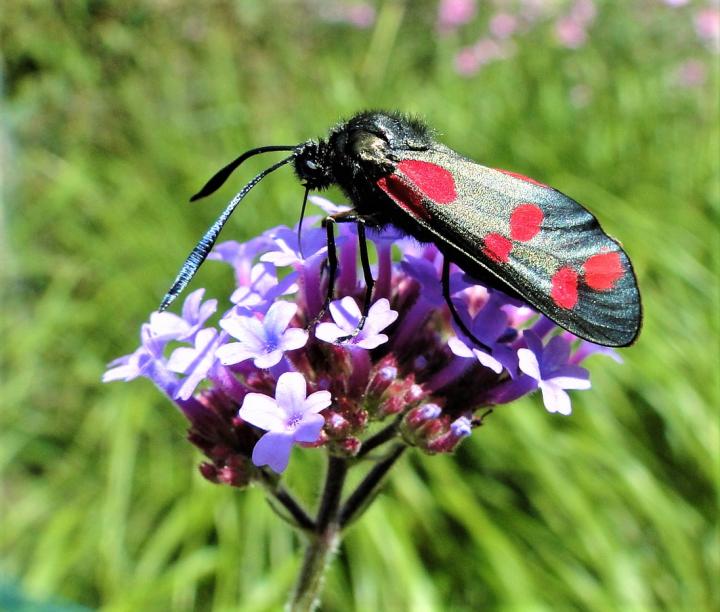
Non-native plants are providing new homes for Britain’s insects – some of which are rare on native plants, a new study has found.

Researchers at the University of York discovered that foreign plants – often found in our gardens and parks – were supporting communities of British insects, including pollinators like butterflies, bees and hoverflies as well as beetles, bugs, and earwigs. For example, native Loosestrife weevils were commonly found consuming the non-native European wand loosestrife, and solitary bees were found visiting the flowers of non-native agave-leaved sea holly plants.

Lead author PhD student Roberto Padovani, from the Department of Biology, said: “We are rapidly altering the face of our planet, and creating more and more man-made habitats which are providing unexpected homes for nature, and in this case, it is foreign plants supporting the UK’s insect communities.”

“It was fascinating to observe the diversity of insects on non-native plants, from pollinators to bugs like crickets and lacewings and beetles like ladybirds and weevils.”

Professor Chris Thomas, Director of the Leverhulme Centre for Anthropocene Biodiversity at York and one of the co-authors, added: “The movement of plants into new regions has been a defining feature of the past few centuries, and non-native plants are now present in very high numbers in most countries across the globe.”

“This trend is almost certain to continue, and so it is vital that we understand the processes that determine how insects associate with these non-native plants.”

The work represents a collaboration between the University of York, the Centre for Ecology and Hydrology, and the Royal Horticultural Society. They observed that insects were associated with both native and non-native garden plants in a highly controlled experiment that ran for six years. They additionally tested the data within a national-scale database that details a century of insects associating with plants in the UK.

The largest numbers of insect species were found on non-native plants that are closely related to native British plants, and on plants which today grow over a larger geographical area, and hence have become more fully integrated into the British flora.

Not surprisingly, the greatest numbers and diversity of insects were typically found on native plant species. However, non-native plants supported unique communities of British insects, including many species that were rare on native plants.

Roberto Padovani added: “A balance of both native and non-native plants may help provide a home for the widest variety of insects in our gardens. It is important to ensure that at least a third of plants are native, as the research suggests that these plants provide the best home for most insects. However, the presence of some non-native plants may help provide a home for unusual or rare British insects that may be struggling to find a home on our native plants.”

###

Media Contact
Julie Gatenby
[email protected]
01-904-322-029

Related Journal Article

http://dx.doi.org/10.1111/gcb.14915

Tags: BiodiversityBiologyClimate ChangeEcology/EnvironmentPlant Sciences
Share12Tweet8Share2ShareShareShare2

Related Posts

Here are a few rewritten headlines for a science magazine post, each with a slightly different tone: Intriguing & poetic: How do organs sculpt themselves? Sea stars hold the secret Direct & research-focused: Sea stars reveal the hidden rules of organ formation Metaphorical & inviting: Tiny architects beneath the waves: What sea stars teach us about building organs Short & punchy: Star-shaped clues to how our organs take shape Question-led: Could a sea star show us how organs form? Elegant & feature-style: The body’s blueprint, glimpsed in a sea star’s arm

July 6, 2026
Bacteria evolve faster with unconventional gene copies — Biology

Bacteria evolve faster with unconventional gene copies

July 6, 2026

Neighbours rewire soil feedback via root microbiome shifts

July 6, 2026

Evolution-Inspired Biosensors Revolutionize Lipid Tracking in Real Time

July 2, 2026
Please login to join discussion

POPULAR NEWS

  • Detection of EDCs in Breast Milk and Infant Urine Up to Six Months Highlights Early Exposure Risks

    77 shares
    Share 31 Tweet 19
  • New Drug Candidate Developed at McMaster Shows Potential for Treating Brain Cancer

    58 shares
    Share 23 Tweet 15
  • Saying Goodbye to PGY-6: Pediatric Fellowship Realities

    103 shares
    Share 41 Tweet 26
  • KTU Researchers Explore Ultrasound’s Role in Enhancing Blood Flow Beyond Diagnostics

    53 shares
    Share 21 Tweet 13

About

We bring you the latest biotechnology news from best research centers and universities around the world. Check our website.

Follow us

Recent News

Salmonella protein SopB curbs early inflammation to slow disease progression

Multi-metal cooperation drives lung cancer chemoresistance, reversed by MiADMSA

Softness-driven cancer stem cells reprogrammed to defeat solid tumor resistance

Subscribe to Blog via Email

Enter your email address to subscribe to this blog and receive notifications of new posts by email.

Join 83 other subscribers
  • Contact Us

Bioengineer.org © Copyright 2023 All Rights Reserved.

Welcome Back!

Login to your account below

Forgotten Password?

Retrieve your password

Please enter your username or email address to reset your password.

Log In
No Result
View All Result
  • Homepages
    • Home Page 1
    • Home Page 2
  • News
  • National
  • Business
  • Health
  • Lifestyle
  • Science

Bioengineer.org © Copyright 2023 All Rights Reserved.