

• HOME
  • NEWS
  • EXPLORE
    • CAREER
      • Companies
      • Jobs
    • EVENTS
    • iGEM
      • News
      • Team
    • PHOTOS
    • VIDEO
    • WIKI
  • BLOG
  • COMMUNITY
    • FACEBOOK
    • INSTAGRAM
    • TWITTER
Friday, April 3, 2026
BIOENGINEER.ORG
No Result
View All Result
  • Login
  • HOME
  • NEWS
  • EXPLORE
    • CAREER
      • Companies
      • Jobs
        • Lecturer
        • PhD Studentship
        • Postdoc
        • Research Assistant
    • EVENTS
    • iGEM
      • News
      • Team
    • PHOTOS
    • VIDEO
    • WIKI
  • BLOG
  • COMMUNITY
    • FACEBOOK
    • INSTAGRAM
    • TWITTER
  • HOME
  • NEWS
  • EXPLORE
    • CAREER
      • Companies
      • Jobs
        • Lecturer
        • PhD Studentship
        • Postdoc
        • Research Assistant
    • EVENTS
    • iGEM
      • News
      • Team
    • PHOTOS
    • VIDEO
    • WIKI
  • BLOG
  • COMMUNITY
    • FACEBOOK
    • INSTAGRAM
    • TWITTER
No Result
View All Result
Bioengineer.org
No Result
View All Result
Home NEWS Science News Cancer

UIC Scientists Revamp Cancer Therapy to Enhance Safety and Effectiveness

Bioengineer by Bioengineer
September 6, 2025
in Cancer
Reading Time: 2 mins read
0
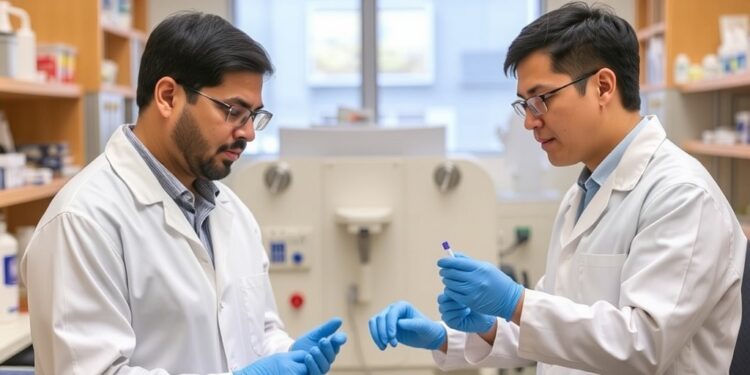
UIC Scientists Revamp Cancer Therapy to Enhance Safety and Effectiveness
Share on FacebookShare on TwitterShare on LinkedinShare on RedditShare on Telegram

University of Illinois Chicago researchers have embarked on a groundbreaking journey to redefine the treatment landscape for acute lymphoblastic leukemia, which stands as the most prevalent blood cancer among children. Harnessing the power of protein engineering, the team has innovatively redesigned the enzyme asparaginase, a fundamental component of leukemia therapy. The aim is not only to enhance its therapeutic capabilities but also to mitigate its severe side effects, thus widening the scope of patients who may benefit from this treatment. Through their pioneering efforts, they hope to forge a path toward a safer, more effective therapeutic option for a range of cancers beyond leukemia.

Asparaginase has played a pivotal role in the treatment of acute lymphoblastic leukemia since its FDA approval in the 1970s. Despite its significance in cancer therapy, the existing formulations of asparaginase are notorious for their adverse side effects, including severe blood clots and liver damage. These complications have restricted the drug’s use to a limited subset of patients, often forcing oncologists to make difficult decisions regarding treatment plans. The research team is acutely aware of these challenges and has set themselves on a course to address them head-on, thereby advancing the therapeutic potential of asparaginase for a broader patient population.

The novel enzyme developed by the UIC team seeks to augment the efficacy of asparaginase while significantly reducing the associated risks. By leveraging advanced protein engineering techniques, they have created a biologic compound that preserves the enzyme’s anticancer properties while minimizing the toxic effects that have plagued traditional formulations. This optimization process not only enhances the drug’s therapeutic index but also raises the prospect of utilizing it in the treatment of other malignancies, such as melanoma and liver cancer. As such, the research represents a promising leap towards developing more versatile cancer therapies.

In a recent publication in the journal Cancer Letters, Lavie and his collaborators reported compelling findings from preclinical studies conducted on animal models. Their innovative enzyme demonstrated impressive efficacy, successfully obliterating leukemia cells in mice while sparing them from the debilitating side

Tags: acute lymphoblastic leukemia treatmentcancer therapy advancementsenhancing therapeutic capabilitiesFDA-approved cancer drugsimproving patient outcomes in cancer therapyinnovative oncology researchmitigating cancer treatment side effectspediatric blood cancer researchprotein engineering in medicineredesigned asparaginase enzymesafer cancer treatment optionstargeted leukemia therapies


Share12Tweet8Share2ShareShareShare2

Related Posts

Leading Cancer Scientist Thales “PapaG” Papagiannakopoulos Joins Salk Institute

April 2, 2026

Leukemia Research Reactivates Silenced Gene in Mice: A Potential Breakthrough for Human Therapies

April 2, 2026

Redesigned Endoscope Introduces Innovative Approach for Early Detection of Ovarian Cancer

April 2, 2026

Reprogramming Key Immune ‘Gatekeeper’ Cell Could Enhance Cancer Immunotherapy

April 2, 2026

POPULAR NEWS

  • blank

    Revolutionary AI Model Enhances Precision in Detecting Food Contamination

    96 shares
    Share 38 Tweet 24
  • Imagine a Social Media Feed That Challenges Your Views Instead of Reinforcing Them

    1007 shares
    Share 398 Tweet 249
  • Promising Outcomes from First Clinical Trials of Gene Regulation in Epilepsy

    51 shares
    Share 20 Tweet 13
  • Popular Anti-Aging Compound Linked to Damage in Corpus Callosum, Study Finds

    44 shares
    Share 18 Tweet 11

About

We bring you the latest biotechnology news from best research centers and universities around the world. Check our website.

Follow us

Recent News

How VRC01 Antibody Shapes HIV Breakthrough Viruses

Novel Domino Polymerization Enables Versatile, Degradable Polymers

Revolutionizing the Body from Within: The Rise of ‘Transformation Electrodes’

Subscribe to Blog via Email

Enter your email address to subscribe to this blog and receive notifications of new posts by email.

Join 78 other subscribers
  • Contact Us

Bioengineer.org © Copyright 2023 All Rights Reserved.

Welcome Back!

Login to your account below

Forgotten Password?

Retrieve your password

Please enter your username or email address to reset your password.

Log In
No Result
View All Result
  • Homepages
    • Home Page 1
    • Home Page 2
  • News
  • National
  • Business
  • Health
  • Lifestyle
  • Science

Bioengineer.org © Copyright 2023 All Rights Reserved.
