• HOME
  • NEWS
  • EXPLORE
    • CAREER
      • Companies
      • Jobs
    • EVENTS
    • iGEM
      • News
      • Team
    • PHOTOS
    • VIDEO
    • WIKI
  • BLOG
  • COMMUNITY
    • FACEBOOK
    • INSTAGRAM
    • TWITTER
Sunday, May 10, 2026
BIOENGINEER.ORG
No Result
View All Result
  • Login
  • HOME
  • NEWS
  • EXPLORE
    • CAREER
      • Companies
      • Jobs
        • Lecturer
        • PhD Studentship
        • Postdoc
        • Research Assistant
    • EVENTS
    • iGEM
      • News
      • Team
    • PHOTOS
    • VIDEO
    • WIKI
  • BLOG
  • COMMUNITY
    • FACEBOOK
    • INSTAGRAM
    • TWITTER
  • HOME
  • NEWS
  • EXPLORE
    • CAREER
      • Companies
      • Jobs
        • Lecturer
        • PhD Studentship
        • Postdoc
        • Research Assistant
    • EVENTS
    • iGEM
      • News
      • Team
    • PHOTOS
    • VIDEO
    • WIKI
  • BLOG
  • COMMUNITY
    • FACEBOOK
    • INSTAGRAM
    • TWITTER
No Result
View All Result
Bioengineer.org
No Result
View All Result
Home NEWS Science News

UCLouvain researcher makes the heart of Mars speak

Bioengineer by Bioengineer
November 6, 2019
in Science News
Reading Time: 2 mins read
0
IMAGE
Share on FacebookShare on TwitterShare on LinkedinShare on RedditShare on Telegram

IMAGE

Credit: UCLouvain

For 20 years, Véronique Dehant, a space scientist at University of Louvain (UCLouvain) and the Royal Observatory of Belgium, has been working on understanding the Earth’s core. In a few months, she will be able to complete her research by studying the heart of Mars, thanks to the ExoMars mission. Its purpose is to collect Martian radio science data and analyse the planet’s rotation in order to better understand the red planet’s innards and thus determine whether life is feasible on Mars. In the end, for Véronique Dehant, ‘This UCLouvain research is one more brick in the wall of understanding outer space.’

A bit of space history

For a planet to be habitable, it needs water on its surface. Previous space missions have demonstrated that there was water on Mars and that there is none today. Another essential fact about the red planet: its magnetic field is now extinct (which makes Mars uninhabitable – Earth’s magnetic field and atmosphere protect us from radiation and the solar wind eroding our atmosphere). To understand this loss of atmosphere, one solution is to study the heart of Mars.

To obtain a magnetic field, movement in the planetary core’s fluid part (conductive liquid core) is required. Understanding the nature of Mars’s core will determine where the planet is in its evolution and even whether a magnetic field could one day be recreated – an essential condition for living on the red planet.

Mars platform and robot

In concrete terms, on 25 July 2020 the ExoMars mission, led jointly by the European Space Agency (ESA) and the Russian Space Agency (ROSCOSMOS), will send a platform and a robot to the red planet:

  • The robot will collect subsoil samples (by drilling a few meters). Being a one-plate planet, its surface is not recycled (like Earth’s): all of its history is engraved on its surface … a treasure trove of information for scientists, who can delve into the history of Mars and the solar system.
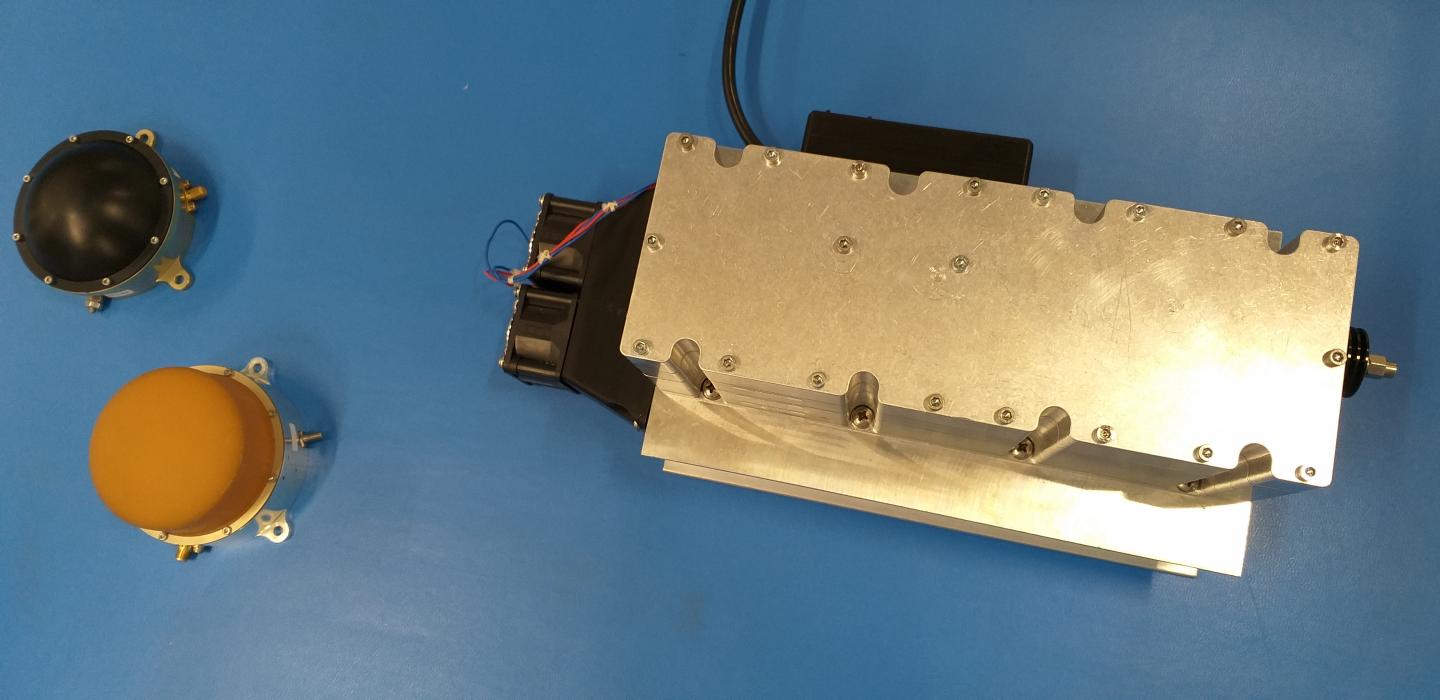
  • As for the platform, it will house two European instruments, including one developed in Belgium, the Lander Radioscience (LaRa), which Véronique Dehant is responsible for. Its goal is to determine whether Mars’s core is liquid or solid. Since planetary cores are physically inaccessible, scientists will use electromagnetic signals sent from Earth to LaRa and back (thanks to antennas designed at UCLouvain). The analysis of these signals will make it possible to understand the rotations and orientation of Mars and, ultimately, the nature of the red planet’s core.

###

Media Contact
Isabelle Decoster
[email protected]
32-486-426-220

Original Source

https://uclouvain.be/en/discover/press/news/uclouvain-researcher-makes-the-heart-of-mars-speak.html

Tags: AstronomyAstrophysicsCivil EngineeringExperiments in SpacePlanets/MoonsRobotry/Artificial IntelligenceSatellite Missions/ShuttlesSpace/Planetary Science
Share14Tweet9Share2ShareShareShare2

Related Posts

Evaluating Digoxin Use in Patients with Symptomatic Rheumatic Heart Disease

May 10, 2026

Evaluating the Effectiveness and Safety of Digitalis Glycosides in Treating Heart Failure

May 10, 2026

Urdu Fall Risk Questionnaire Adapted for Elderly

May 10, 2026

Key Pharmacological Markers for HIV Prevention in MSM

May 10, 2026
Please login to join discussion

POPULAR NEWS

  • Research Indicates Potential Connection Between Prenatal Medication Exposure and Elevated Autism Risk

    840 shares
    Share 336 Tweet 210
  • New Study Reveals Plants Can Detect the Sound of Rain

    727 shares
    Share 290 Tweet 181
  • Scientists Investigate Possible Connection Between COVID-19 and Increased Lung Cancer Risk

    68 shares
    Share 27 Tweet 17
  • Salmonella Haem Blocks Macrophages, Boosts Infection

    61 shares
    Share 24 Tweet 15

About

We bring you the latest biotechnology news from best research centers and universities around the world. Check our website.

Follow us

Recent News

Evaluating Digoxin Use in Patients with Symptomatic Rheumatic Heart Disease

Evaluating the Effectiveness and Safety of Digitalis Glycosides in Treating Heart Failure

Urdu Fall Risk Questionnaire Adapted for Elderly

Subscribe to Blog via Email

Success! An email was just sent to confirm your subscription. Please find the email now and click 'Confirm' to start subscribing.

Join 82 other subscribers
  • Contact Us

Bioengineer.org © Copyright 2023 All Rights Reserved.

Welcome Back!

Login to your account below

Forgotten Password?

Retrieve your password

Please enter your username or email address to reset your password.

Log In
No Result
View All Result
  • Homepages
    • Home Page 1
    • Home Page 2
  • News
  • National
  • Business
  • Health
  • Lifestyle
  • Science

Bioengineer.org © Copyright 2023 All Rights Reserved.