• HOME
  • NEWS
  • EXPLORE
    • CAREER
      • Companies
      • Jobs
    • EVENTS
    • iGEM
      • News
      • Team
    • PHOTOS
    • VIDEO
    • WIKI
  • BLOG
  • COMMUNITY
    • FACEBOOK
    • INSTAGRAM
    • TWITTER
Wednesday, April 22, 2026
BIOENGINEER.ORG
No Result
View All Result
  • Login
  • HOME
  • NEWS
  • EXPLORE
    • CAREER
      • Companies
      • Jobs
        • Lecturer
        • PhD Studentship
        • Postdoc
        • Research Assistant
    • EVENTS
    • iGEM
      • News
      • Team
    • PHOTOS
    • VIDEO
    • WIKI
  • BLOG
  • COMMUNITY
    • FACEBOOK
    • INSTAGRAM
    • TWITTER
  • HOME
  • NEWS
  • EXPLORE
    • CAREER
      • Companies
      • Jobs
        • Lecturer
        • PhD Studentship
        • Postdoc
        • Research Assistant
    • EVENTS
    • iGEM
      • News
      • Team
    • PHOTOS
    • VIDEO
    • WIKI
  • BLOG
  • COMMUNITY
    • FACEBOOK
    • INSTAGRAM
    • TWITTER
No Result
View All Result
Bioengineer.org
No Result
View All Result
Home NEWS Science News

UCI scientists identify a new approach to recycle greenhouse gas

Bioengineer by Bioengineer
January 6, 2017
in Science News
Reading Time: 2 mins read
0
Share on FacebookShare on TwitterShare on LinkedinShare on RedditShare on Telegram
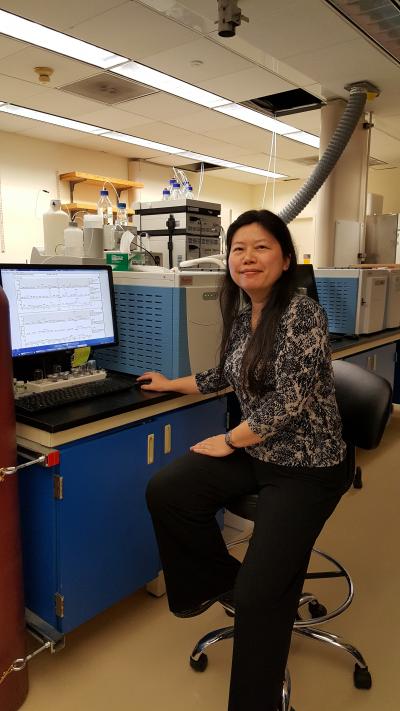
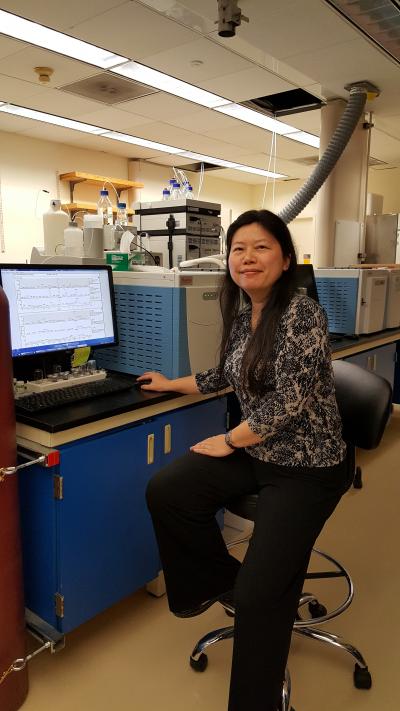
IMAGE

Credit: UCI

Led by Yilin Hu, UCI assistant professor of molecular biology & biochemistry at the Ayala School of Biological Sciences, the researchers found that they could successfully express the reductase component of the nitrogenase enzyme alone in the bacterium Azotobacter vinelandii and directly use this bacterium to convert CO2 to CO. The intracellular environment of the bacterium was shown to favor the conversion of CO2 in a way that would be more applicable to the future development of strategies for large-scale production of CO. The findings were surprising to the group, as nitrogenase was only previously believed to convert nitrogen (N2) to ammonia (NH3) within the bacterium under similar conditions. The full study can be found online in Nature Chemical Biology.

Hu and her colleagues knew that the intracellular environment of the bacterium Azotobacter vinelandii favors other reduction reactions, due in part to its well-known oxygen protection mechanisms and presence of physiological electron donors. But they were unsure if the intracellular environment would support the conversion of CO2 to CO.

They were excited to discover that the bacterium could reduce CO2 and release CO as a product, which makes it an attractive whole-cell system that could be explored further for new ways of recycling atmospheric CO2 into biofuels and other commercial chemical products. These findings of Hu's group establish the nitrogenase enzyme as a fascinating template for developing approaches to energy-efficient and environmentally-friendly fuel production.

"Our observation that a bacterium can convert CO2 to CO opens up new avenues for biotechnological adaptation of this reaction into a process that effectively recycles the greenhouse gas into the starting material for biofuel synthesis that will help us simultaneously combat two major challenges we face nowadays: global warming and energy shortage," said Hu.

###

Johannes Rebelein, Martin Stiebritz and Chi Chung Lee from UCI contributed to the study, which was supported by UCI and a Hellman Fellowship.

Media Contact

Rahasson Ager
[email protected]
949-824-6282
@UCIrvine

http://www.uci.edu

############

Story Source: Materials provided by Scienmag

Share12Tweet8Share2ShareShareShare2

Related Posts

Climate Change Impact on Children with Seizures

Climate Change Impact on Children with Seizures

April 22, 2026

Do Children in Rural and Urban Areas Face Distinct Mental Health Challenges?

April 22, 2026

Do Medications Targeting the Same Disease Impact Quality of Life Differently?

April 22, 2026

How Does Maternal Stress Impact the Metabolic Health of Offspring?

April 22, 2026
Please login to join discussion

POPULAR NEWS

  • Research Indicates Potential Connection Between Prenatal Medication Exposure and Elevated Autism Risk

    796 shares
    Share 318 Tweet 199
  • Scientists Investigate Possible Connection Between COVID-19 and Increased Lung Cancer Risk

    65 shares
    Share 26 Tweet 16
  • Salmonella Haem Blocks Macrophages, Boosts Infection

    58 shares
    Share 23 Tweet 15
  • NSF funds machine-learning research at UNO and UNL to study energy requirements of walking in older adults

    101 shares
    Share 40 Tweet 25

About

BIOENGINEER.ORG

We bring you the latest biotechnology news from best research centers and universities around the world. Check our website.

Follow us

Recent News

Climate Change Impact on Children with Seizures

Do Children in Rural and Urban Areas Face Distinct Mental Health Challenges?

Do Medications Targeting the Same Disease Impact Quality of Life Differently?

Subscribe to Blog via Email

Enter your email address to subscribe to this blog and receive notifications of new posts by email.

Join 79 other subscribers
  • Contact Us

Bioengineer.org © Copyright 2023 All Rights Reserved.

Welcome Back!

Login to your account below

Forgotten Password?

Retrieve your password

Please enter your username or email address to reset your password.

Log In
No Result
View All Result
  • Homepages
    • Home Page 1
    • Home Page 2
  • News
  • National
  • Business
  • Health
  • Lifestyle
  • Science

Bioengineer.org © Copyright 2023 All Rights Reserved.