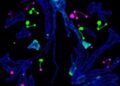
Irvine, Calif., Jan. 10, 2022 — A research team led by University of California, Irvine has discovered new neural circuits that regulate spatial learning and memory in the brain’s hippocampal formation. The team identified novel functional roles of new circuit connections between the venal CA1 region and dorsal CA3 regions of the hippocampus and demonstrated that genetic inactivation of this projection impairs object-related spatial learning and memory, but does not modulate anxiety-related behaviors.

Credit: UCI School of Medicine
Irvine, Calif., Jan. 10, 2022 — A research team led by University of California, Irvine has discovered new neural circuits that regulate spatial learning and memory in the brain’s hippocampal formation. The team identified novel functional roles of new circuit connections between the venal CA1 region and dorsal CA3 regions of the hippocampus and demonstrated that genetic inactivation of this projection impairs object-related spatial learning and memory, but does not modulate anxiety-related behaviors.
The study, titled “Non-canonical projections to the hippocampal CA3 regulate spatial learning and memory by modulating the feedforward hippocampal trisynaptic pathway,” was published today in PLOS Biology.
The hippocampus is not a homogenous brain area. The septotemporal axis, along which the trisynaptic pathway is located, separates the dorsal region of the hippocampus, which is more involved in learning, memory and spatial navigation, and the ventral region, which plays a role in emotional behavior. The trisynaptic’s feedforward, unidirectional circuit organization is well documented, but the connectivity across septal to temporal regions is less well described.
“Our findings extend the knowledge of hippocampal connectivity and its relation to learning and memory processes across the septotemporal axis and provide a circuit foundation to explore these novel functional roles,” said Xiangmin Xu, PhD, Chancellor’s Fellow and professor of anatomy and neurobiology, and director for the Center for Neural Circuit Mapping (CNCM) at the UCI School of Medicine. “The new hippocampal circuit mechanism is highly relevant to treating learning and memory disorders, including Alzheimer’s disease.”
Building on their earlier work, Xu and his team used multiple viral tracers, including monosynaptic rabies retrograde tracing and herpes (H129)-based anterograde tracing to establish new hippocampal CA1 projections to CA3. Robust mapping results showed that CA1 inputs to CA3 run opposite the trisynaptic pathway and in a temporal to septal direction. They also found that genetic inactivation of the CA1 to CA3 projection impaired object-related spatial learning and memory, but did not modulate anxiety-related behaviors.
“The emergence of viral-genetic mapping techniques enhances our ability to determine the detailed complexity of brain circuity,” Xu said. “Our study was made possible by the new viral genetic tools developed by our CNCM investigators at UCI. We are developing these new viral tracers as brain mapping tools, which we plan to share through our center for use by the neuroscience community.”
Other UCI members of the research team include Xiaoxiao Lin, UCI anatomy and neurobiology graduate student and first author of the paper; biomedical engineering undergraduate Michelle Amalraj; Crisylle Blanton and neurobiology undergraduate researcher Brenda Avila. Other significant contributors to the study include Douglas A. Nitz, PhD, professor and chair of the Department of Cognitive Science at the University of California, San Diego; and Todd C. Holmes, PhD, physiology and biophysics professor in the UCI School of Medicine.
This work was supported by National Institutes of Health BRAIN Initiative grants NS078434 and MH120020; and an NIH R35 grant GM127102.
About the UCI School of Medicine
Each year, the UCI School of Medicine educates more than 400 medical students, and nearly 150 doctoral and master’s students. More than 700 residents and fellows are trained at UCI Medical Center and affiliated institutions. The School of Medicine offers an MD; a dual MD/PhD medical scientist training program; and PhDs and master’s degrees in anatomy and neurobiology, biomedical sciences, genetic counseling, epidemiology, environmental health sciences, pathology, pharmacology, physiology and biophysics, and translational sciences. Medical students also may pursue an MD/MBA, an MD/master’s in public health, or an MD/master’s degree through one of three mission-based programs: the Health Education to Advance Leaders in Integrative Medicine (HEAL-IM), the Leadership Education to Advance Diversity-African, Black and Caribbean (LEAD-ABC), and the Program in Medical Education for the Latino Community (PRIME-LC). The UCI School of Medicine is accredited by the Liaison Committee on Medical Accreditation and ranks among the top 50 nationwide for research. For more information, visit som.uci.edu.
Journal
PLoS Biology
DOI
10.1371/journal.pbio.3001127
Article Title
Non-canonical projections to the hippocampal CA3 regulate spatial learning and memory by modulating the feedforward hippocampal trisynaptic pathway
Article Publication Date
20-Dec-2021
COI Statement
The authors have declared that no competing interests exist.