• HOME
  • NEWS
  • EXPLORE
    • CAREER
      • Companies
      • Jobs
    • EVENTS
    • iGEM
      • News
      • Team
    • PHOTOS
    • VIDEO
    • WIKI
  • BLOG
  • COMMUNITY
    • FACEBOOK
    • INSTAGRAM
    • TWITTER
Sunday, May 10, 2026
BIOENGINEER.ORG
No Result
View All Result
  • Login
  • HOME
  • NEWS
  • EXPLORE
    • CAREER
      • Companies
      • Jobs
        • Lecturer
        • PhD Studentship
        • Postdoc
        • Research Assistant
    • EVENTS
    • iGEM
      • News
      • Team
    • PHOTOS
    • VIDEO
    • WIKI
  • BLOG
  • COMMUNITY
    • FACEBOOK
    • INSTAGRAM
    • TWITTER
  • HOME
  • NEWS
  • EXPLORE
    • CAREER
      • Companies
      • Jobs
        • Lecturer
        • PhD Studentship
        • Postdoc
        • Research Assistant
    • EVENTS
    • iGEM
      • News
      • Team
    • PHOTOS
    • VIDEO
    • WIKI
  • BLOG
  • COMMUNITY
    • FACEBOOK
    • INSTAGRAM
    • TWITTER
No Result
View All Result
Bioengineer.org
No Result
View All Result
Home NEWS Science News Chemistry

UBC researchers develop new heart valve aimed at high-risk patients

Bioengineer by Bioengineer
March 25, 2019
in Chemistry
Reading Time: 2 mins read
0
Share on FacebookShare on TwitterShare on LinkedinShare on RedditShare on Telegram

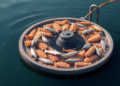
Nanocomposites replace animal tissue in new valve design

Credit: UBCO

Researchers at UBC have created the first-ever nanocomposite biomaterial heart-valve developed to reduce or eliminate complications related to heart transplants.

By using a newly developed technique, the researchers were able to build a more durable valve that enables the heart to adapt faster and more seamlessly.

Assistant Professor Hadi Mohammadi runs the Heart Valve Performance Laboratory (HVPL) through UBC Okanagan’s School of Engineering. Lead author on the study, he says the newly developed valve is an example of a transcatheter heart valve, a promising new branch of cardiology. These valves are unique because they can be inserted into a patient through small incisions rather than opening a patient’s chest–a procedure that is generally safer and much less invasive.

“Existing transcatheter heart valves are made of animal tissues, most often the pericardium membrane from a cow’s heart, and have had only moderate success to date,” explains Mohammadi. “The problem is that they face significant implantation risks and can lead to coronary obstruction and acute kidney injury.”

The new valve solves that problem by using naturally derived nanocomposites–a material assembled with a variety of very small components–including gels, vinyl and cellulose. The combination of their new material with the non-invasive nature of transcatheter heart valves makes this new design very promising for use with high-risk patients, according to Mohammadi.

“Not only is the material important but the design and construction of our valve means that it lowers stress on the valve by as much as 40 per cent compared to valves currently available,” says Dylan Goode, a graduate researcher at the HVPL. “It is uniquely manufactured in one continuous form, so it gains strength and flexibility to withstand the circulatory complications that can arise following transplantation.”

Working with researchers from Kelowna General Hospital and Western University, the valve will now undergo vigorous testing to perfect its material composition and design. The testing will include human heart simulators and large animal in-vivo studies. If successful, the valve will then proceed to clinical patient testing.

“This has the potential to become the new standard in heart valve replacement and to provide a safer, longer-term solution for many patients.”

The new design was highlighted in a paper published this month in the Journal of Engineering in Medicine with financial support from the Natural Sciences and Engineering Research Council of Canada.

###

Media Contact
Nathan Skolski
[email protected]

Original Source

https://news.ok.ubc.ca/2019/03/25/ubc-researchers-develop-new-heart-valve-aimed-at-high-risk-patients

Related Journal Article

http://dx.doi.org/10.1177/0954411919837302

Tags: AgingBiomechanics/BiophysicsBiomedical/Environmental/Chemical EngineeringBiotechnologyCardiologyTechnology/Engineering/Computer Science
Share12Tweet8Share2ShareShareShare2

Related Posts

Miniature Sensor Uses Light to Detect Touch — Chemistry

Miniature Sensor Uses Light to Detect Touch

May 8, 2026
Iron Minerals Determine Whether Dissolved Organic Matter Fuels Microbes or Becomes Long-Term Carbon Storage — Chemistry

Iron Minerals Determine Whether Dissolved Organic Matter Fuels Microbes or Becomes Long-Term Carbon Storage

May 8, 2026

Kate Evans Appointed Associate Lab Director for Biological and Environmental Systems Science at ORNL

May 8, 2026

Advancing Multiscale Modeling and Overcoming Operational Challenges in Autothermal COâ‚‚-to-Methanol Reactors

May 8, 2026
Please login to join discussion

POPULAR NEWS

  • Research Indicates Potential Connection Between Prenatal Medication Exposure and Elevated Autism Risk

    840 shares
    Share 336 Tweet 210
  • New Study Reveals Plants Can Detect the Sound of Rain

    727 shares
    Share 290 Tweet 181
  • Scientists Investigate Possible Connection Between COVID-19 and Increased Lung Cancer Risk

    68 shares
    Share 27 Tweet 17
  • Salmonella Haem Blocks Macrophages, Boosts Infection

    61 shares
    Share 24 Tweet 15

About

We bring you the latest biotechnology news from best research centers and universities around the world. Check our website.

Follow us

Recent News

Evaluating Digoxin Use in Patients with Symptomatic Rheumatic Heart Disease

Evaluating the Effectiveness and Safety of Digitalis Glycosides in Treating Heart Failure

Urdu Fall Risk Questionnaire Adapted for Elderly

Subscribe to Blog via Email

Success! An email was just sent to confirm your subscription. Please find the email now and click 'Confirm' to start subscribing.

Join 82 other subscribers
  • Contact Us

Bioengineer.org © Copyright 2023 All Rights Reserved.

Welcome Back!

Login to your account below

Forgotten Password?

Retrieve your password

Please enter your username or email address to reset your password.

Log In
No Result
View All Result
  • Homepages
    • Home Page 1
    • Home Page 2
  • News
  • National
  • Business
  • Health
  • Lifestyle
  • Science

Bioengineer.org © Copyright 2023 All Rights Reserved.