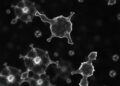
Researchers at the University of Toronto have mapped the spatial distribution of around 700 long non-coding RNAs, otherwise known as lncRNAs, in the testes. The team discovered much higher levels of lncRNAs in the testes than had been previously estimated, indicating that lncRNAs may play a more significant role in male reproduction than previously believed.

Credit: University of Toronto
Researchers at the University of Toronto have mapped the spatial distribution of around 700 long non-coding RNAs, otherwise known as lncRNAs, in the testes. The team discovered much higher levels of lncRNAs in the testes than had been previously estimated, indicating that lncRNAs may play a more significant role in male reproduction than previously believed.
The research team initiated a genome-wide analysis of lncRNA localization patterns within the testes of a common model organism used for biomedical research: the fruit fly. They found that both the numbers of lncRNA genes expressed and their levels of expression far exceeded expectations based on existing records and assumptions of their lack of relevance, due partly to lncRNAs not coding for proteins.
“Long non-coding RNAs are a topic of controversy because it’s not clear what functions most of them perform, if any,” said Matthew Jachimowicz, co-author on the study and PhD student of molecular genetics at U of T’s Donnelly Centre for Cellular and Biomolecular Research. “The uncertainty around lncRNAs is due, in part, to the belief that their expression levels are relatively low across genomes. The results of our study disprove this belief and demonstrate many potential roles for lncRNAs in sperm evolution and development.”
The study was published in the journal Nature Communications.
Across the animal kingdom, developing sperm have the highest levels of gene expression, with lncRNA genes expressed at even higher levels than coding genes, and for much longer. The Y chromosome, uniquely expressed during sperm development, also presents a unique challenge to researchers because of a host of unusual genetic characteristics, including transposable elements, satellite repeats and pseudogenes.
Transposable elements are DNA sequences that move from one area of the genome to another. Both satellite repeats and pseudogenes are non-coding, with the former being comprised of larger sections of repeating DNA sequences while the latter are structurally similar to genes.
The presence of these repetitive non-coding elements in the Y chromosome results in its silencing at all stages of development outside of sperm production. They can, however, present risks to sperm through the integration of non-coding elements into genes, which can lead to mutations, sperm malfunction or birth anomalies.
The research team found several examples of lncRNA genes that act to minimize potentially harmful transposable activities, keeping them to a level that promotes the evolution of new genes instead of mutations in existing genes.
“Mature sperm have been shown to contain RNA from both coding and non-coding genes,” said Jachimowicz. “Non-coding RNA found in the sperm nucleus can impact metabolism and behavior across multiple generations.”
The research team also discovered a new type of lncRNA-based particle in seminal fluid that could influence reproduction and offspring. They hypothesize that the new lncRNA-based particles could be produced by both sperm and non-sperm cells, and that they may be sending complex intercellular signals.
“A lot of the lncRNAs we found were missed in previous studies because they are not polyadenylated,” said Catherine Shao, first author on the study and lab technician at the Donnelly Centre. “This process adds a tail to the RNA molecule consisting of a string of adenine bases, which stabilizes the molecule and prevents degradation. It turns out that most lncRNAs are not polyadenylated, which is why so many have escaped detection using conventional approaches.”
“Our finding of high levels of lncRNA expression in the testes is key to refuting assumptions about lncRNAs being mostly non-functional, as these are largely based on observations of low expression,” said Henry Krause, principal investigator on the study and professor of molecular genetics at the Donnelly Centre and the Temerty Faculty of Medicine. “The newly discovered lncRNA-based particles, in particular, have the potential to inform the development of new RNA-based therapies.”
Journal
Nature Communications
DOI
10.1038/s41467-024-47346-w
Article Title
Spatially revealed roles for lncRNAs in Drosophila spermatogenesis, Y chromosome function and evolution
Article Publication Date
7-May-2024