• HOME
  • NEWS
  • EXPLORE
    • CAREER
      • Companies
      • Jobs
    • EVENTS
    • iGEM
      • News
      • Team
    • PHOTOS
    • VIDEO
    • WIKI
  • BLOG
  • COMMUNITY
    • FACEBOOK
    • INSTAGRAM
    • TWITTER
Saturday, March 28, 2026
BIOENGINEER.ORG
No Result
View All Result
  • Login
  • HOME
  • NEWS
  • EXPLORE
    • CAREER
      • Companies
      • Jobs
        • Lecturer
        • PhD Studentship
        • Postdoc
        • Research Assistant
    • EVENTS
    • iGEM
      • News
      • Team
    • PHOTOS
    • VIDEO
    • WIKI
  • BLOG
  • COMMUNITY
    • FACEBOOK
    • INSTAGRAM
    • TWITTER
  • HOME
  • NEWS
  • EXPLORE
    • CAREER
      • Companies
      • Jobs
        • Lecturer
        • PhD Studentship
        • Postdoc
        • Research Assistant
    • EVENTS
    • iGEM
      • News
      • Team
    • PHOTOS
    • VIDEO
    • WIKI
  • BLOG
  • COMMUNITY
    • FACEBOOK
    • INSTAGRAM
    • TWITTER
No Result
View All Result
Bioengineer.org
No Result
View All Result
Home NEWS Science News

Tweaking carotenoid genes helps tomatoes bring their a-game

Bioengineer by Bioengineer
December 1, 2020
in Science News
Reading Time: 2 mins read
0
IMAGE
Share on FacebookShare on TwitterShare on LinkedinShare on RedditShare on Telegram

A research team led by the University of Tsukuba shows that modern gene editing techniques can help tomato breeders introduce diversity and improve the nutrition and environmental impact of tomato crops
IMAGE

Credit: University of Tsukuba

Tsukuba, Japan – Cooked, fresh, sun-dried, or juiced, whichever way you prefer them, tomatoes are arguably one of the most versatile fruits on the planet–and yes, despite mainly being used in savory dishes, tomatoes really are a fruit.

The popularity of tomatoes has led to the development of more than 10,000 cultivars of various sizes, shapes, and hues. Interestingly though, there is little genetic diversity among modern tomato varieties. This lack of diversity, coupled with the fact that many traits are controlled by multiple genes, makes improving plant yield and quality a major challenge for tomato breeders.

But in a study published this week in Scientific Reports, researchers led by the University of Tsukuba explain how modern gene editing technology may be able to give tomato breeders a helping hand.

“The tomato was the first genetically modified food to be approved for human consumption,” says senior author of the study Professor Hiroshi Ezura. “However, many early transgenic varieties contained genes derived from other species, raising safety concerns among consumers. Therefore, coupled with the fact that most transgenic varieties showed only moderate improvements in quality, tomato breeding has, for the most part, moved away from transgenics.”

Unlike traditional genetic modification, modern gene editing techniques leave no trace in the genome and can introduce small changes within a native gene, mimicking natural variation.

Tomatoes contain relatively high levels of carotenoids, the yellow, red, and orange pigments found in many plants. Carotenoids are precursors to vitamin A and demonstrate antioxidant and anti-cancer properties, making them hugely important to human nutrition. Several natural mutations that enhance carotenoid accumulation in tomatoes have been documented, but their introduction into commercial varieties is a complicated and time-consuming prospect.

The University of Tsukuba-led team therefore set about reproducing carotenoid accumulation mutations in tomatoes using gene editing technology.

“Single nucleotide changes in individual tomato genes had previously been achieved using Target-AID gene editing technology,” explains Professor Ezura. “However, we designed a system whereby changes were simultaneously introduced into three genes associated with carotenoid accumulation.”

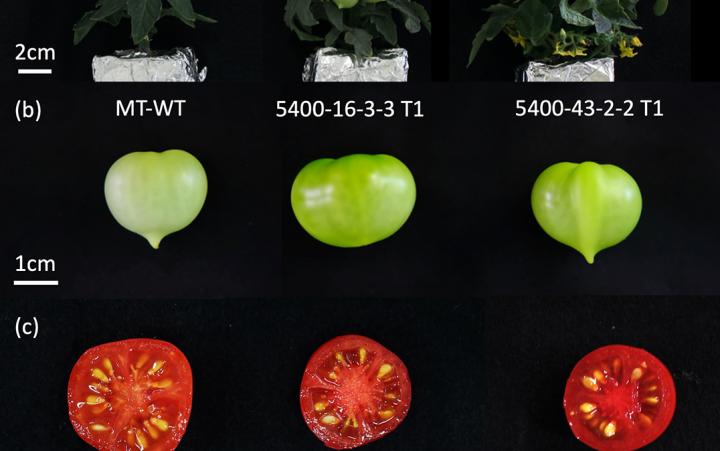
Among 12 resulting tomato lines, 10 contained mutations in all three target genes. Further examination of two lines with the dark green fruit and purple roots of natural carotenoid accumulation mutants revealed high levels of carotenoids, particularly lycopene, in the gene-edited plants.

Professor Ezura explains, “This shows that it is possible to improve multigenic plant quality traits using gene editing technology, and opens up a whole range of options for improving the yield, shelf-life, nutrient content, and disease resistance of different crop plants, which has obvious benefits for both human health and the environment.”

###

Media Contact
Naoko Yamashina
[email protected]

Related Journal Article

http://dx.doi.org/10.1038/s41598-020-77379-2

Tags: BiologyBiotechnologyGeneticsNutrition/NutrientsPlant Sciences
Share12Tweet8Share2ShareShareShare2

Related Posts

Biochar Boosts Forest Resilience Against Acid Rain by Restoring Essential Soil Nitrogen

Biochar Boosts Forest Resilience Against Acid Rain by Restoring Essential Soil Nitrogen

March 27, 2026
Two Salk Scientists Honored as 2025 AAAS Fellows

Two Salk Scientists Honored as 2025 AAAS Fellows

March 27, 2026

Starburst Winds Drain Supernova Energy Quickly

March 26, 2026

Decoding the Phosphorus Puzzle: How Microplastics and Hydrochar Transform Nutrient Dynamics in Rice Paddies

March 26, 2026
Please login to join discussion

POPULAR NEWS

  • blank

    Revolutionary AI Model Enhances Precision in Detecting Food Contamination

    96 shares
    Share 38 Tweet 24
  • Imagine a Social Media Feed That Challenges Your Views Instead of Reinforcing Them

    1004 shares
    Share 397 Tweet 248
  • Uncovering Functions of Cavernous Malformation Proteins in Organoids

    54 shares
    Share 22 Tweet 14
  • Promising Outcomes from First Clinical Trials of Gene Regulation in Epilepsy

    51 shares
    Share 20 Tweet 13

About

We bring you the latest biotechnology news from best research centers and universities around the world. Check our website.

Follow us

Recent News

In-Sensor Cryptography Links Physical Process to Digital Identity

Can Psychosocial Factors Influence Cancer Risk?

Depression Factors in Elderly: Pre vs. Post-COVID Analysis

Subscribe to Blog via Email

Enter your email address to subscribe to this blog and receive notifications of new posts by email.

Join 78 other subscribers
  • Contact Us

Bioengineer.org © Copyright 2023 All Rights Reserved.

Welcome Back!

Login to your account below

Forgotten Password?

Retrieve your password

Please enter your username or email address to reset your password.

Log In
No Result
View All Result
  • Homepages
    • Home Page 1
    • Home Page 2
  • News
  • National
  • Business
  • Health
  • Lifestyle
  • Science

Bioengineer.org © Copyright 2023 All Rights Reserved.