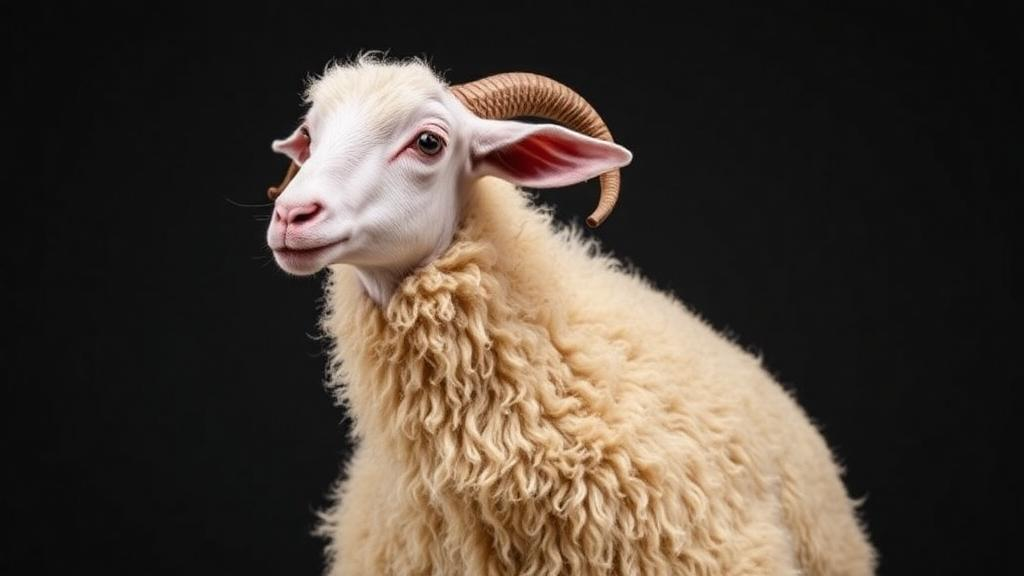
In the rolling farmland of southern Türkiye, a carefully engineered sheep breed has been quietly proving its worth, and a new study now offers the most detailed head-to-head comparison yet. The Cukurova Meat Sheep, a synthetic breed created through a deliberate crossbreeding program, was pitted against the Awassi, one of Türkiye’s most widespread and time-tested local breeds, in a controlled fattening trial designed to strip away every environmental variable and expose pure genetic differences. The results, published in the journal Archives Animal Breeding by Murat Durmuş of Cukurova University, reveal a nuanced picture: the two breeds grow at nearly identical rates and produce meat of broadly similar physical quality, but the modern composite breed delivers more muscle in the cuts that consumers and butchers prize most, along with a measurably richer nutritional profile.
The Cukurova Meat Sheep, abbreviated CMS, is not a product of chance. It was assembled from four genetic streams: 37.5 percent Île de France, 37.5 percent Rambouillet, 12.5 percent Awassi, and 12.5 percent Sakız. The breeding strategy aimed to fuse the superior muscle development and growth performance of European meat-type breeds with the environmental resilience of local Turkish genetics. The Awassi, by contrast, is a fat-tailed breed that has been shaped over centuries in the hot, semi-arid regions of the Middle East. It tolerates high temperatures and humidity, thrives on limited feed, and digests nutrients with notable efficiency, making it a cornerstone of sheep production in southeastern Anatolia and the Mediterranean region. Until now, however, rigorous comparative data on the CMS under standardized conditions have been scarce.
The experimental design was deliberately simple and tightly controlled. Twenty single-born, intact male lambs, ten of each breed, were selected at similar ages and body weights, with Awassi lambs averaging roughly 27.9 kilograms and CMS lambs 27.7 kilograms at the start. The animals were housed in pairs in identical pens, a arrangement chosen to satisfy the strong herding instincts of sheep and minimize stress-related adaptation problems that could skew the data. After a two-week adaptation period during which the concentrate proportion of the diet was gradually increased to protect rumen health, the lambs were fattened for ten weeks on an 80:20 concentrate-to-roughage ration, fed ad libitum alongside alfalfa hay. All lambs were slaughtered on the same day at approximately 175 to 179 days of age, and meat analyses focused on the longissimus lumborum, the prized loin muscle that runs along the spine.
When it came to growth, the two breeds proved remarkably evenly matched. Initial and final live weights showed no statistically significant differences, and average daily gain was essentially the same across both groups. The Awassi lambs did eat more, recording higher daily feed intake, yet this appetite advantage did not translate into faster growth, meaning the CMS lambs achieved equivalent performance on less feed. Feed conversion ratio, the efficiency metric that divides intake by gain, did not differ significantly between breeds, but the pattern hints at the leaner economics of the meat-type composite. An interesting digestive footnote emerged from fecal analysis: Awassi lambs excreted feces with higher acid detergent fiber concentrations, suggesting a greater capacity for fiber utilization, a trait likely rooted in their long evolutionary history of subsisting on coarse roughage in harsh environments.
The carcass story is where the breeds genuinely diverge. Awassi lambs produced heavier hot and cold carcasses, a difference partly attributable to their higher slaughter weights and, crucially, to the tail fat that defines fat-tailed breeds. In the Awassi carcasses, tail fat alone constituted 14.73 percent of cold carcass weight, a substantial energy store with little commercial value in modern meat markets, while no tail fat was detected in the CMS carcasses. Awassi lambs also deposited more omental and mesenteric fat and showed greater fat thickness over the loin muscle, painting a picture of an animal geared toward energy storage. The CMS lambs, meanwhile, carried heavier weights and higher proportions of the forearm, rib, loin, and rump, precisely the regions where premium cuts are carved. The authors caution that because full tissue dissection was not performed, these cut weights cannot be read as direct proof of greater muscle mass, but the pattern is consistent with the breed’s meat-type design.
Physical meat quality, the suite of traits that determine how meat looks, cooks, and feels on the plate, was strikingly similar between the breeds. Postmortem pH values at 24 hours fell within the normal range for lamb, around 5.70 to 5.71, indicating that neither breed produced dark, firm, dry meat or the pale, soft, exudative defect that plagues poorly handled carcasses. Cooking loss, Warner-Bratzler shear force measured on raw loin samples, and the full texture profile analysis of cooked meat, covering hardness, springiness, cohesiveness, chewiness, and resilience, all showed no significant breed differences. The only physical divergence appeared in the chroma value of raw meat, where Awassi samples displayed higher color saturation, suggesting a more vivid red that could catch a shopper’s eye at the butcher’s counter. When the meat was cooked, myoglobin denatured as expected, shifting color toward lighter, browner tones in both breeds equally.
Beneath the surface, however, the chemical composition told a different story. Crude protein content was significantly higher in CMS meat, a difference the author attributes primarily to breed-related differences in muscle composition, possibly compounded by the fat-tailed Awassi’s tendency to divert energy into fat deposition rather than lean tissue. Mineral analysis using inductively coupled plasma mass spectrometry revealed that CMS meat contained significantly higher concentrations of potassium and magnesium, two intracellular minerals central to neuromuscular function, cellular homeostasis, and energy metabolism, while calcium, copper, iron, sodium, and zinc levels were equivalent between breeds.
The fatty acid and amino acid analyses added further texture to the comparison. Overall fatty acid profiles were similar, an expected outcome given that all lambs consumed the same cereal-based diet and ruminant meat lipids are dominated by dietary and microbial sources processed through ruminal biohydrogenation. One exception stood out: arachidonic acid, an omega-6 polyunsaturated fatty acid embedded in muscle membrane phospholipids, was significantly higher in CMS meat, a shift the study links to breed-related differences in lipid metabolism and muscle development. Among the 26 amino acids identified, most were present at similar levels, but CMS meat carried significantly more glutamic acid, a key component of myofibrillar proteins and a major contributor to savory umami flavor, and notably more taurine, an amino sulfonic acid involved in muscle energy metabolism and cellular regulation. The absence of detectable omega-3 fatty acids in both breeds reflects the cereal-heavy ration and the extensive biohydrogenation that occurs in the rumen, a reminder that diet, not just genetics, shapes the lipid profile of meat.
The study’s limitations are candidly acknowledged. Twenty lambs from only two sires per breed is a modest sample, feed intake was recorded at the pen level rather than for individual animals, and sensory panels and molecular analyses fell outside the study’s scope. Yet the core message survives these caveats: under identical feeding and management, breed effects in these lambs manifested not in how fast they grew or how tender their meat felt, but in where the carcass carried its value and what its muscle contained. For a livestock sector grappling with rising demand for animal protein, urbanizing consumer markets, and the need to make every kilogram of feed count, the Cukurova Meat Sheep’s combination of leaner carcass composition, more muscle in high-value cuts, and elevated protein, taurine, and arachidonic acid represents a compelling case that targeted crossbreeding can reshape the economics and nutrition of lamb meat without sacrificing the eating quality that consumers expect.
Subject of Research: Comparative growth performance, carcass traits, and meat quality of Awassi and Cukurova Meat Sheep lambs under identical fattening conditions
Article Title: Growth performance, carcass traits, and meat quality of Awassi and Cukurova Meat Sheep lambs
Article References: Durmuş, M. (2026). Growth performance, carcass traits, and meat quality of Awassi and Cukurova Meat Sheep lambs. Archives Animal Breeding, 69(4), 569-583. https://doi.org/10.5194/aab-69-569-2026
Image Credits: AI Generated
Keywords: sheep, lamb meat, Cukurova Meat Sheep, Awassi, carcass traits, meat quality, fattening performance, fatty acids, amino acids, taurine, animal breeding, Türkiye
News Source: Drew Townsend. (October 14, 2026). Turkey’s New Meat Sheep Beats the Classic Awassi Where It Counts: The Cut. Scienmag.