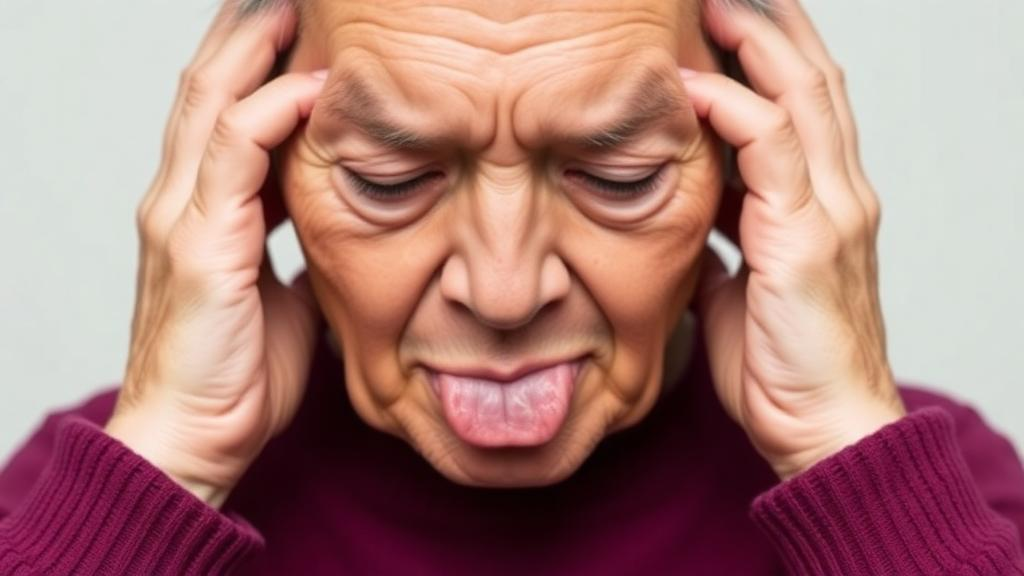
Swallowing is one of those bodily functions that most people never think about until it stops working smoothly. Yet for millions of older adults, the act of moving food and liquid from the mouth to the stomach becomes a daily source of worry, coughing fits, and even fear of choking. A new large-scale study from China now suggests that this physical difficulty, known as dysphagia, is tightly intertwined with another common problem of aging: anxiety. The research, published in BMC Geriatrics, surveyed more than thirteen thousand community-dwelling adults aged 65 and older and found that those who reported trouble swallowing were significantly more likely to experience anxiety symptoms than their peers who swallowed without difficulty.
The scale of the investigation sets it apart from most previous work on the topic. Between 2023 and the study’s completion, researchers conducted face-to-face interviews with 13,544 older adults living in communities across Central China, selecting participants through cluster random sampling to reduce the chance that the sample reflected only a narrow slice of the population. Each participant completed two validated screening instruments: the 10-item Eating Assessment Tool, widely used to detect the self-reported risk of dysphagia, and the 7-item Generalized Anxiety Disorder scale, a standard measure of anxiety symptom burden. Because both tools rely on self-report, the study captures how older people perceive their own difficulties rather than relying solely on clinical diagnoses, an approach that can reveal problems that never reach a doctor’s office.
The headline numbers are striking. Anxiety symptoms were present in 18.10 percent of participants, corresponding to 2,452 individuals, while 21.37 percent, or 2,895 people, reported a risk of dysphagia. In other words, roughly one in five older adults in the sample carried each of these burdens. More telling still was the overlap: 699 participants, or 5.16 percent of the total, reported both conditions simultaneously. That figure may sound modest, but it represents a co-occurrence well above what random chance alone would predict if the two conditions were independent, hinting at a genuine biological or psychological link between the gut and the mind.
Establishing that link rigorously is where the study’s methodology becomes important. Simple comparisons between people with and without swallowing problems can be badly misleading, because the two groups tend to differ in many other ways: age, chronic diseases, medications, living arrangements, physical activity, and social engagement all influence both swallowing function and mental health. To address this, the research team used multiple logistic regression alongside Directed Acyclic Graphs, a formal graphical method for mapping out which variables could confound the relationship and which lie on causal pathways. Only after identifying the appropriate set of covariates, drawn from demographic information, lifestyle factors, leisure activities, and health conditions, did the researchers estimate the association between the two conditions.
The central result survived this statistical gauntlet. After adjusting for all identified confounders, older adults with a self-reported risk of dysphagia had significantly higher odds of anxiety symptoms, with an adjusted odds ratio of 1.567 and a 95 percent confidence interval running from 1.386 to 1.772, a result with a p-value below 0.001. In practical terms, even after accounting for the many other differences between the groups, difficulty with swallowing was associated with roughly a 57 percent increase in the odds of experiencing anxiety symptoms. The confidence interval excludes the value of 1.0 by a comfortable margin, indicating that the finding is unlikely to be a statistical fluke.
To push the analysis further, the team turned to propensity score matching, a technique borrowed from causal inference research. Rather than comparing the raw groups, the method constructs matched pairs of participants: one with a self-reported risk of dysphagia and one without, chosen so that their covariate profiles are nearly identical. In this study, 5,790 participants were captured in a 1:1 match, and after matching, the two groups showed no statistically significant differences on any of the measured covariates. This creates a pseudo-experimental comparison that mimics, as closely as observational data allow, the balance achieved in a randomized trial. The result held firm: before matching, 24.15 percent of those with swallowing risk reported anxiety symptoms versus 16.46 percent of those without; after matching, the figures were 24.15 percent versus 17.93 percent, both comparisons significant at p below 0.001.
Why should the throat and the anxious mind be so closely connected? The authors point to the well-established principle that functional impairment and psychological problems influence each other in both directions. Swallowing is a complex sensorimotor behavior coordinated by brainstem circuits and modulated by higher cortical and limbic regions, the very networks that also generate emotional states. Anxiety can heighten sensitivity to normal swallowing sensations, producing a vicious cycle in which fear of choking makes eating stressful, which in turn worsens the perceived difficulty and reinforces the anxiety. Conversely, the practical consequences of dysphagia, including dietary restrictions, social embarrassment at mealtimes, weight loss, and fear of aspiration pneumonia, are themselves potent stressors that can erode mental well-being over time.
The study’s community setting gives the findings particular public health relevance. Dysphagia in older adults is often associated with stroke, neurodegenerative disease, and head and neck cancer, but the present results show that self-reported swallowing risk is common even among older people living independently at home, affecting more than a fifth of the sample. Because both dysphagia and anxiety frequently go undiagnosed in community settings, the authors argue that screening for one condition should prompt consideration of the other. A simple questionnaire such as the Eating Assessment Tool takes only minutes to complete, and pairing it with a brief anxiety screen could identify older adults who would otherwise slip through the cracks of routine geriatric care.
Several caveats deserve attention when interpreting the results. The study is cross-sectional, meaning it captures a single moment in time and cannot determine whether swallowing difficulties cause anxiety, anxiety contributes to swallowing problems, or both feed into each other in a loop. Self-reported measures, while validated, may not align perfectly with objective swallowing assessments such as videofluoroscopy. In addition, the sample was drawn from Central China, and cultural, dietary, and healthcare factors may shape how both conditions are experienced and reported, so caution is warranted before generalizing the exact prevalence figures to other populations. The propensity score matching also can only balance the covariates that were measured; unmeasured differences between the groups could still contribute to the observed association.
Even with those limitations, the study delivers a clear and consequential message: in older adults, the body and the mind decline together, and clinicians who treat them separately risk missing half the problem. With populations worldwide aging rapidly, conditions that affect one in five older people are not niche concerns but major determin of quality of life, healthcare utilization, and caregiver burden. The authors’ finding that self-reported risk of dysphagia and anxiety symptoms each affect approximately one-fifth of community-dwelling older adults in Central China, and that the two are significantly linked even after rigorous statistical adjustment, argues for integrated models of geriatric care in which a complaint about eating triggers attention to emotional health, and vice versa. For families and caregivers, the practical takeaway may be the simplest one of all: if an older loved one starts avoiding certain foods, coughing at meals, or expressing dread about eating, that moment is worth taking seriously, both for the sake of nutrition and for the health of the mind.
Subject of Research: The association between self-reported dysphagia risk and anxiety symptoms in community-dwelling older adults
Article Title: How self-reported risk of dysphagia relates to anxiety symptoms in older adults: a propensity score-matched study
Article References: Zhou, X., Wu, L., Wu, P., Wei, Y., Zuo, T., Zhu, H., Ye, Z., Yan, S., Zhu, D., Luo, S., Wang, Y., Wang, R., Zeng, X., Li, L., & Zeng, H. (2026). How self-reported risk of dysphagia relates to anxiety symptoms in older adults: a propensity score-matched study. BMC Geriatrics. https://doi.org/10.1186/s12877-026-08390-x
Image Credits: AI Generated
DOI: 10.1186/s12877-026-08390-x
Keywords: dysphagia, anxiety, older adults, geriatrics, propensity score matching, cross-sectional study, swallowing disorders, mental health, aging, public health, Eating Assessment Tool, China
News Source: Glenn Wilkins. (October 7, 2026). Trouble Swallowing and Anxiety Often Go Hand in Hand in Older Adults, Massive Chinese Study Finds. Scienmag.