

• HOME
  • NEWS
  • EXPLORE
    • CAREER
      • Companies
      • Jobs
    • EVENTS
    • iGEM
      • News
      • Team
    • PHOTOS
    • VIDEO
    • WIKI
  • BLOG
  • COMMUNITY
    • FACEBOOK
    • INSTAGRAM
    • TWITTER
Thursday, April 16, 2026
BIOENGINEER.ORG
No Result
View All Result
  • Login
  • HOME
  • NEWS
  • EXPLORE
    • CAREER
      • Companies
      • Jobs
        • Lecturer
        • PhD Studentship
        • Postdoc
        • Research Assistant
    • EVENTS
    • iGEM
      • News
      • Team
    • PHOTOS
    • VIDEO
    • WIKI
  • BLOG
  • COMMUNITY
    • FACEBOOK
    • INSTAGRAM
    • TWITTER
  • HOME
  • NEWS
  • EXPLORE
    • CAREER
      • Companies
      • Jobs
        • Lecturer
        • PhD Studentship
        • Postdoc
        • Research Assistant
    • EVENTS
    • iGEM
      • News
      • Team
    • PHOTOS
    • VIDEO
    • WIKI
  • BLOG
  • COMMUNITY
    • FACEBOOK
    • INSTAGRAM
    • TWITTER
No Result
View All Result
Bioengineer.org
No Result
View All Result
Home NEWS Science News Biology

Tropical moths in the mountains are larger

Bioengineer by Bioengineer
October 12, 2018
in Biology
Reading Time: 2 mins read
0
Share on FacebookShare on TwitterShare on LinkedinShare on RedditShare on Telegram
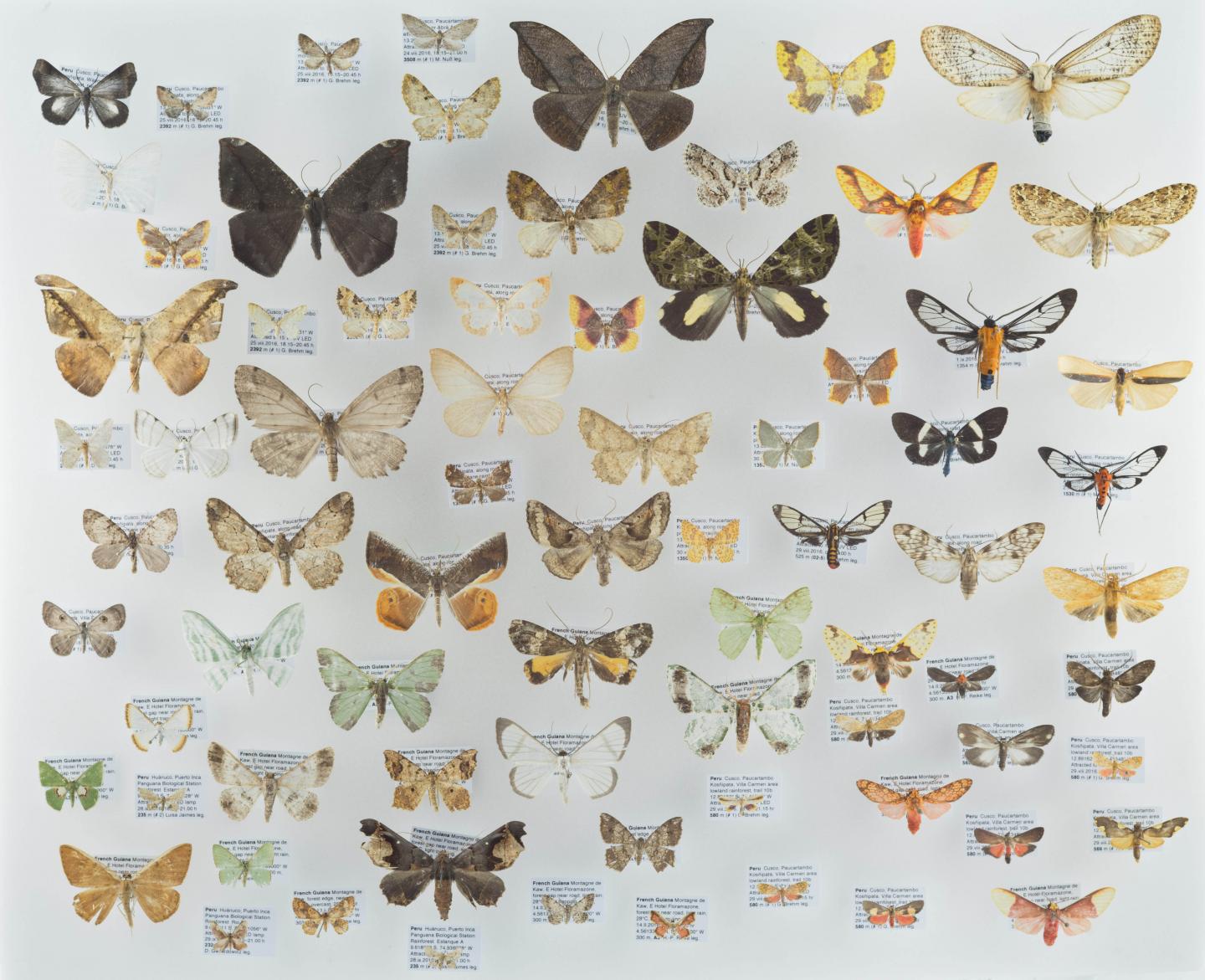
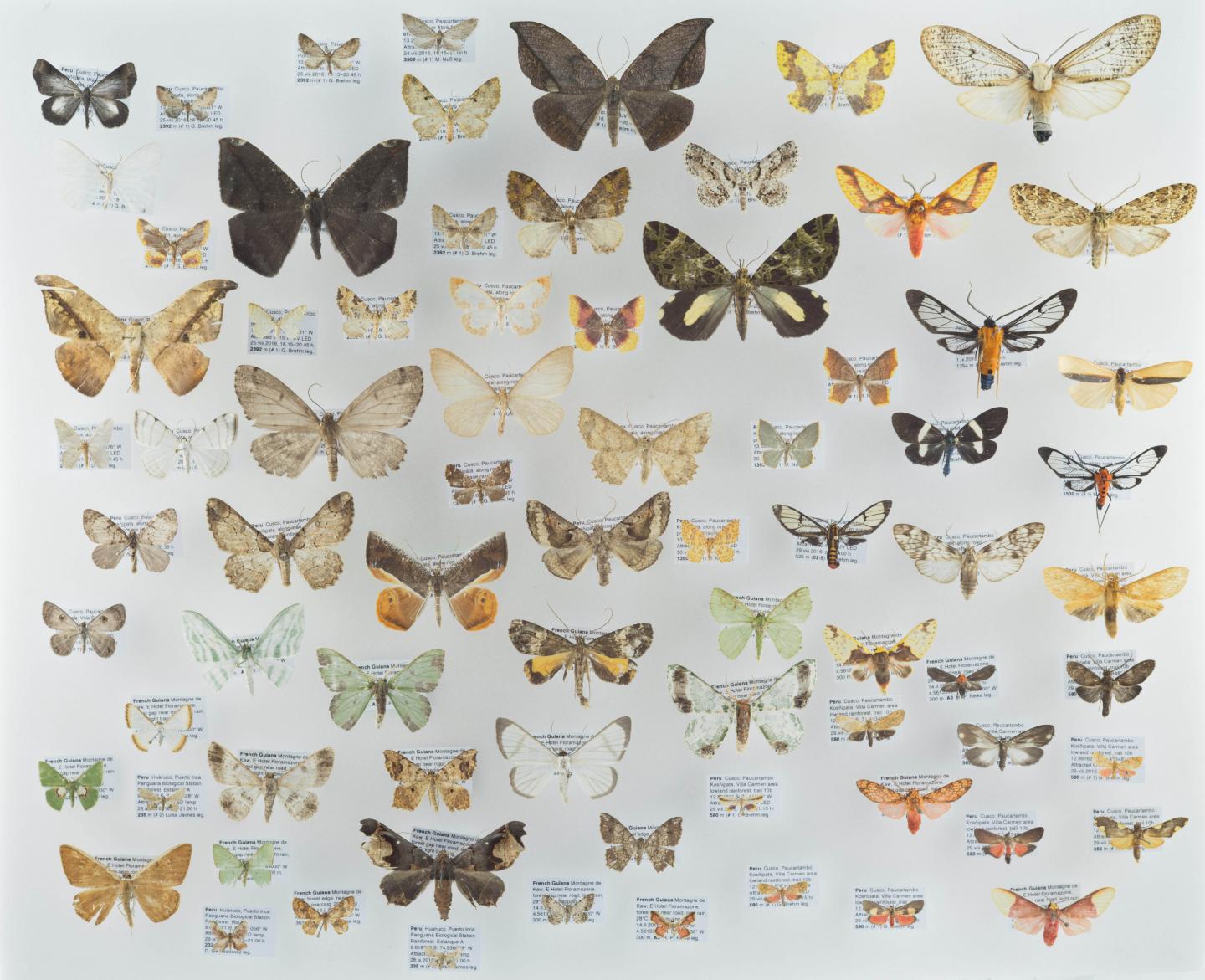
IMAGE

Credit: (Photo: Gunnar Brehm/FSU Jena)

Jena, Germany (12.10.18) Researchers from three universities have measured more than 19,000 tropical moths from 1,100 species to find out whether their size varies with elevation. Scientists from Friedrich-Schiller-University Jena (Germany) worked on the study together with colleagues from Marburg in Germany and Connecticut in the USA. "Body size plays a central role in the ecology and evolution of organisms," explains Dr Gunnar Brehm of the University of Jena. The zoologist is the lead author of the study, which has just been published online.

The temperature-size rule applies

"The extensive dataset from a biodiversity hotspot sets new standards, because never before has a study been carried out with so many species along a complete elevational gradient – from lowland rainforest to the summit of a volcano in Costa Rica," says Brehm. The researchers found clear patterns in their measurements: moths from two extremely species-rich families (Arctiinae (tiger moths) and Geometridae (geometer moths)) increase in size significantly at higher elevations. This is in line with expectations under what is called the 'Bergmann rule'. However, this rule was originally laid down only for birds and mammals, and the situation is different for cold-blooded animals such as insects. "We had actually presumed that these animals would become smaller at higher elevations. With a smaller wingload to carry, the moths would cope better with the thinner air when flying," adds Brehm. "However, in actual fact the load clearly increases. In addition, with increasing elevation ecosystems become less productive, which ought to favour small species." Other factors obviously play a greater role: the 'temperature-size rule' predicts that at lower temperatures, animals attain a larger size. The researchers were able to demonstrate this trend, not only in different species, but also within species.

With the new data, the research team has created a basis for experimental approaches aimed at achieving a better understanding of functional relationships, including in complex and species-rich ecosystems – especially in view of global warming.

###

Contact:

Dr Gunnar Brehm
Institute of Zoology and Evolutionary Research of Friedrich Schiller University Jena
Erbertstraße 1, 07743 Jena, Germany
Phone: +49 (0)3641 / 949184
Email: [email protected]

Media Contact

Axel Burchardt
[email protected]
0049-364-193-1031

http://www.uni-jena.de

Original Source

https://www.uni-jena.de/en/Research+News/FM181012_Faltergroesse_en.html http://dx.doi.org/10.1111/ecog.03917


Share12Tweet8Share2ShareShareShare2

Related Posts

Genome Mapping Uncovers Wheat Pathogen Host Genes

Genome Mapping Uncovers Wheat Pathogen Host Genes

April 16, 2026
A Fresh Perspective on Aging: How the Immune System Alters the Pace of Aging

A Fresh Perspective on Aging: How the Immune System Alters the Pace of Aging

April 15, 2026

New Functions of Non-m6A mRNA Modifications in Plants

April 15, 2026

Protein Aids Cellular Stress Management, Study Finds

April 15, 2026
Please login to join discussion

POPULAR NEWS

  • Scientists Investigate Possible Connection Between COVID-19 and Increased Lung Cancer Risk

    61 shares
    Share 24 Tweet 15
  • Boosting Breast Cancer Risk Prediction with Genetics

    47 shares
    Share 19 Tweet 12
  • Popular Anti-Aging Compound Linked to Damage in Corpus Callosum, Study Finds

    45 shares
    Share 18 Tweet 11
  • NSF funds machine-learning research at UNO and UNL to study energy requirements of walking in older adults

    94 shares
    Share 38 Tweet 24

About

We bring you the latest biotechnology news from best research centers and universities around the world. Check our website.

Follow us

Recent News

Foxes and Birds as Early Indicators for Tracking Antibiotic Resistance Spread in Ecosystems

Breakthrough Laser Technique Unveils Secrets of Radioactive Atomic Nuclei

Linear RAG Scanning Edits Igκ Variable Regions

Subscribe to Blog via Email

Enter your email address to subscribe to this blog and receive notifications of new posts by email.

Join 79 other subscribers
  • Contact Us

Bioengineer.org © Copyright 2023 All Rights Reserved.

Welcome Back!

Login to your account below

Forgotten Password?

Retrieve your password

Please enter your username or email address to reset your password.

Log In
No Result
View All Result
  • Homepages
    • Home Page 1
    • Home Page 2
  • News
  • National
  • Business
  • Health
  • Lifestyle
  • Science

Bioengineer.org © Copyright 2023 All Rights Reserved.
