• HOME
  • NEWS
  • EXPLORE
    • CAREER
      • Companies
      • Jobs
    • EVENTS
    • iGEM
      • News
      • Team
    • PHOTOS
    • VIDEO
    • WIKI
  • BLOG
  • COMMUNITY
    • FACEBOOK
    • INSTAGRAM
    • TWITTER
Thursday, June 25, 2026
BIOENGINEER.ORG
No Result
View All Result
  • Login
  • HOME
  • NEWS
  • EXPLORE
    • CAREER
      • Companies
      • Jobs
        • Lecturer
        • PhD Studentship
        • Postdoc
        • Research Assistant
    • EVENTS
    • iGEM
      • News
      • Team
    • PHOTOS
    • VIDEO
    • WIKI
  • BLOG
  • COMMUNITY
    • FACEBOOK
    • INSTAGRAM
    • TWITTER
  • HOME
  • NEWS
  • EXPLORE
    • CAREER
      • Companies
      • Jobs
        • Lecturer
        • PhD Studentship
        • Postdoc
        • Research Assistant
    • EVENTS
    • iGEM
      • News
      • Team
    • PHOTOS
    • VIDEO
    • WIKI
  • BLOG
  • COMMUNITY
    • FACEBOOK
    • INSTAGRAM
    • TWITTER
No Result
View All Result
Bioengineer.org
No Result
View All Result
Home NEWS Science News Chemistry

‘Trojan horse’ anticancer drug disguises itself as fat

Bioengineer by Bioengineer
July 18, 2019
in Chemistry
Reading Time: 3 mins read
0
IMAGE
Share on FacebookShare on TwitterShare on LinkedinShare on RedditShare on Telegram

Promising system delivers chemo drug straight into tumors with fewer side effects
IMAGE

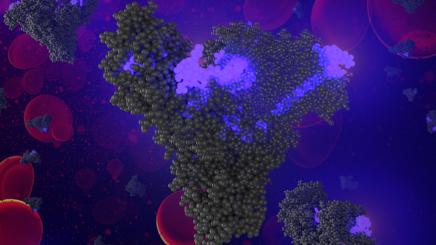
Credit: Nathan Gianneschi/Northwestern University

EVANSTON, Ill. — A stealthy new drug-delivery system disguises chemotherapeutics as fat in order to outsmart, penetrate and destroy tumors.

Thinking the drugs are tasty fats, tumors invite the drug inside. Once there, the targeted drug activates, immediately suppressing tumor growth. The drug also is lower in toxicity than current chemotherapy drugs, leading to fewer side effects.

“It’s like a Trojan horse,” Northwestern University’s Nathan Gianneschi, who led the research. “It looks like a nice little fatty acid, so the tumor’s receptors see it and invite it in. Then the drug starts getting metabolized and kills the tumor cells.”

The study will be published July 18 in the Journal of the American Chemical Society (JACS). Gianneschi is the Jacob and Rosalind Cohn Professor of Chemistry in Northwestern’s Weinberg College of Arts and Sciences. Cassandra E. Callmann is the paper’s first author. A current postdoctoral fellow at Northwestern, Callmann was a graduate student in Gianneschi’s laboratory during the research.

To develop the targeting system, Gianneschi and his team engineered a long-chain fatty acid with two binding sites — able to attach to drugs — on each end. The fatty acid and its hitchhiking drugs are then hidden inside human serum albumin (HSA), which carries molecules, including fats, throughout the body.

The body’s cellular receptors recognize the fats and proteins supplied by the HSA and allow them inside. Quick-growing and hungry, cancer cells consume the nutrients much faster than normal cells. When the cancer cells metabolize the hidden drug, they die.

“It’s like the fatty acid has a hand on both ends: one can grab onto the drug and one can grab onto proteins,” Gianneschi said. “The idea is to disguise drugs as fats so that they get into cells and the body is happy to transport them around.”

In the study, the researchers used the drug delivery system to carry a common, FDA-approved chemotherapy drug, paclitaxel, into tumors in a small animal model. Disguised as fat, the drug entered and completely eliminated the tumors in three types of cancer: bone, pancreatic and colon.

Even better: the researchers found they could deliver 20 times the dose of paclitaxel with their system, compared to two other paclitaxel-based drugs. But even at such a high quantity, the drug in Gianneschi’s system was still 17 times safer.

“Commonly used small-molecule drugs get into tumors — and other cells,” Gianneschi said. “They are toxic to tumors but also to humans. Hence, in general, these drugs have horrible side effects. Our goal is to increase the amount that gets into a tumor versus into other cells and tissues. That allows us to dose at much higher quantities without side effects, which kills the tumors faster.”

###

Associate director of Northwestern’s International Institute of Nanotechnology, Gianneschi is a member of the Chemistry of Life Processes Institute, Simpson Querrey Institute and Robert H. Lurie Comprehensive Cancer Center. He also is a professor of biomedical engineering and materials science and engineering in the McCormick School of Engineering.

The study was supported by Elevance Renewable Sciences, the ARCS Foundation and the Inamori Foundation.

Media Contact
Amanda Morris
[email protected]

Tags: BiochemistrycancerChemistry/Physics/Materials SciencesMaterialsPharmaceutical ChemistryPharmaceutical SciencesPharmaceutical/Combinatorial Chemistry
Share12Tweet8Share2ShareShareShare2

Related Posts

International Team Including Dresden Scientists Develops Novel Designer Proteins for Advanced Study of Living Tissue

June 25, 2026

New Study Uncovers Key Factors Driving Water Chemistry in Nanoscale Environments

June 25, 2026

Plasma Technology Extends Catalyst Lifespan in Hydrogen Production

June 24, 2026

Electric Field and Oxygen Spillover Collaborate to Control Electrode Migration in SOECs

June 24, 2026
Please login to join discussion

POPULAR NEWS

  • Saying Goodbye to PGY-6: Pediatric Fellowship Realities

    103 shares
    Share 41 Tweet 26
  • Multi-Hospital Study Reveals Long Covid Burden Is Twice as High as Current Estimates

    92 shares
    Share 36 Tweet 23
  • Detection of EDCs in Breast Milk and Infant Urine Up to Six Months Highlights Early Exposure Risks

    77 shares
    Share 31 Tweet 19
  • New Drug Candidate Developed at McMaster Shows Potential for Treating Brain Cancer

    58 shares
    Share 23 Tweet 15

About

We bring you the latest biotechnology news from best research centers and universities around the world. Check our website.

Follow us

Recent News

Energy-Saving Membrane Technology Developed by KAIST and Georgia Tech Enables Crude Oil Separation Without Boiling

Cracking the Code: How Cancer Evades Antibody-Drug Conjugates and New Strategies to Overcome Resistance

Chiral Laser Gyroscopes Surpass Lock-In Limit

Subscribe to Blog via Email

Enter your email address to subscribe to this blog and receive notifications of new posts by email.

Join 82 other subscribers
  • Contact Us

Bioengineer.org © Copyright 2023 All Rights Reserved.

Welcome Back!

Login to your account below

Forgotten Password?

Retrieve your password

Please enter your username or email address to reset your password.

Log In
No Result
View All Result
  • Homepages
    • Home Page 1
    • Home Page 2
  • News
  • National
  • Business
  • Health
  • Lifestyle
  • Science

Bioengineer.org © Copyright 2023 All Rights Reserved.