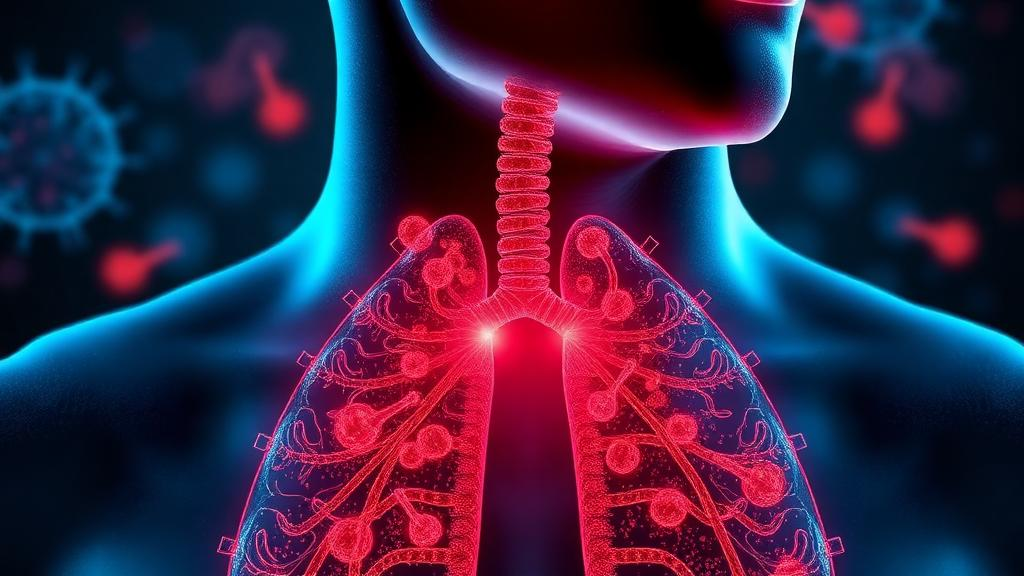
A protein that tags other molecules for destruction has been identified as a driver of airway inflammation in asthma. A study published in Molecular Biology Reports on 23 October 2026 reports that TRIM27, an E3 ubiquitin ligase, worsens house dust mite–induced airway epithelial cell injury by promoting the ubiquitination and degradation of TRAF3, which in turn activates the NF-κB and MAPK signaling pathways. Reducing TRIM27 in experimental models eased lung tissue damage, lowered inflammatory cell infiltration and dampened inflammatory cytokine release.
Asthma is a chronic inflammatory airway disease, and injury to the airway epithelial cells that line the airways is closely associated with disease progression. TRIM27 functions as an E3 ubiquitin ligase, a class of enzymes that attach ubiquitin marks to target proteins and thereby flag them for degradation by the cell’s protein-disposal machinery. TRIM27 has previously been implicated in immune-inflammatory responses, but its role in asthma-related airway injury had not been established.
To investigate, the research team, which includes Juan Xie and Kai Liu among its authors, built two experimental systems: a house dust mite (HDM) extract–induced mouse model to simulate asthma in vivo, and an HDM-treated 16HBE human bronchial epithelial cell model to mimic the process in vitro. Lung histopathological injury was assessed with hematoxylin–eosin and PAS staining. Inflammatory cells in bronchoalveolar lavage fluid were counted, inflammatory cytokines were measured by ELISA, and cell viability, apoptosis, gene expression and protein expression were examined using CCK-8 assays, flow cytometry, TUNEL staining, RT-qPCR and Western blotting.
The first key observation was that TRIM27 was upregulated in both the mouse and the cell models of asthma, suggesting that the ligase responds to allergen-driven airway injury. When the researchers knocked down TRIM27 in mice, the consequences of HDM challenge were noticeably reduced: histopathological damage to the lungs was alleviated, goblet cell hyperplasia — the overgrowth of mucus-producing cells in the airway lining — was diminished, inflammatory cell infiltration declined, and levels of inflammatory cytokines fell.
The in vitro experiments pointed in the same direction. In HDM-stimulated 16HBE cells, TRIM27 knockdown partially restored the decline in cell viability caused by allergen exposure, inhibited apoptosis as measured by flow cytometry and TUNEL staining, curbed the generation of reactive oxygen species, and reduced the release of inflammatory cytokines. The partial nature of the rescue indicates that TRIM27 is one contributor among others in the injury process rather than its sole determinant.
The mechanistic core of the study concerns two major inflammatory signaling routes. HDM stimulation activated the NF-κB and MAPK pathways in the experimental systems, and TRIM27 knockdown suppressed that activation. Further experiments showed how: TRIM27 promotes the ubiquitination of TRAF3 and its subsequent degradation, and this loss of TRAF3 is what permits the NF-κB/MAPK pathways to become active.
A complementary experiment tested the relationship between the two proteins from the opposite direction. When the researchers knocked down TRAF3, the protective effects of TRIM27 knockdown were weakened. This result places TRAF3 downstream of TRIM27 in the pathway and supports the proposed chain of events: TRIM27 removes TRAF3, TRAF3 loss enables NF-κB/MAPK activation, and the activated signaling exacerbates airway epithelial cell injury and the inflammatory response, promoting asthma progression in the models.
The authors conclude that TRIM27 activates NF-κB/MAPK signaling by promoting TRAF3 ubiquitination and degradation, thereby exacerbating airway epithelial cell injury and inflammation. The findings come from preclinical mouse models and a human bronchial epithelial cell line, so their relevance to asthma in patients remains to be established. Within those limits, the study identifies a specific molecular sequence — TRIM27, TRAF3 degradation, NF-κB/MAPK activation — that links allergen exposure to epithelial damage and cytokine production, and it marks TRIM27 as a candidate target for future research into airway inflammation.
Subject of Research: Role of the E3 ubiquitin ligase TRIM27 and TRAF3 degradation in NF-κB/MAPK activation during asthma-related airway inflammation
Article Title: TRIM27 enhances NF-κB/MAPK activation by ubiquitinating and degrading TRAF3 to drive asthma-induced airway inflammation
Article References: Xie, J., Guo, C., Li, Y., Lu, H., Wen, Y., & Liu, K. (2026). TRIM27 enhances NF-κB/MAPK activation by ubiquitinating and degrading TRAF3 to drive asthma-induced airway inflammation. Molecular Biology Reports, 53(1), Article 1789. https://doi.org/10.1007/s11033-026-12999-x
Image Credits: AI Generated
DOI: 10.1007/s11033-026-12999-x
Keywords: TRIM27, TRAF3, asthma, airway inflammation, NF-κB, MAPK, ubiquitination, E3 ubiquitin ligase, house dust mite, airway epithelial cells, Molecular Biology Reports, enhances
News Source: Drew Townsend. (October 24, 2026). TRIM27 Protein Drives Airway Inflammation in Asthma by Destroying TRAF3. Scienmag.