A research team led by investigators at Northern Arizona University and the University of Arizona has laid out the full design of a school-based obesity prevention study for American Indian children in rural Tribal communities. The project, known as the Rural Tribal School Partnership for the Primary Prevention of Obesity, or P2, is described in a study protocol published in Frontiers in Public Health. Because the paper reports a planned procedure rather than completed results, no conclusions about the program’s effectiveness can yet be drawn; the document instead details how the intervention will be delivered and measured.
The protocol responds to a persistent health disparity. Obesity among American Indian youth places them at elevated risk for chronic diseases later in life, including type 2 diabetes, cardiovascular disease, and obesity-related cancers. School environments in Tribal communities are considered uniquely positioned to support prevention, since they can deliver structured health education, physical activity opportunities, school meal programs, and wellness policy initiatives.
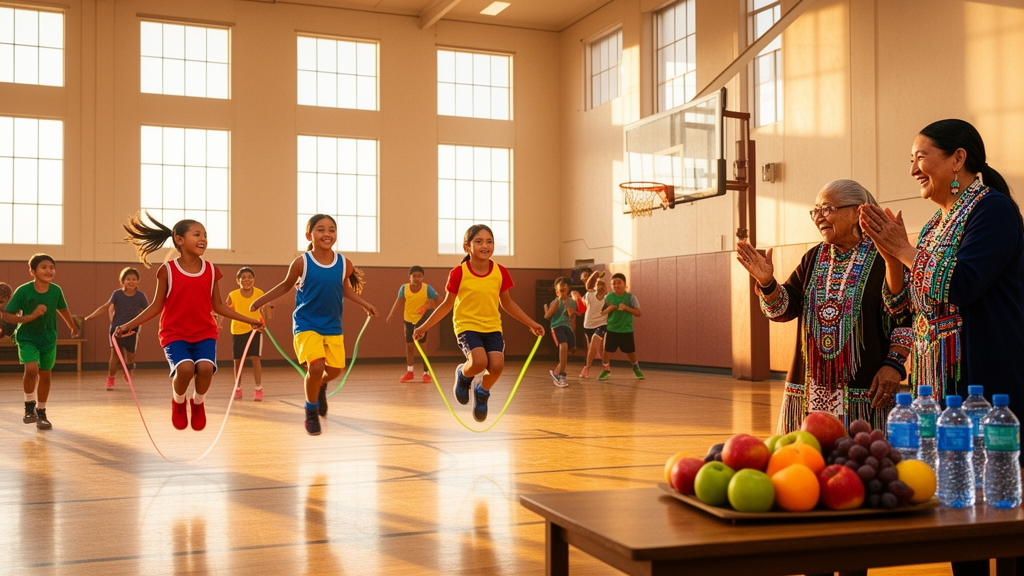
However, the authors note that school-based obesity prevention research in American Indian communities remains limited, and past efforts have not been successful in improving weight status among American Indian and Alaska Native youth. They also point out that earlier work has not fully leveraged the requirement that schools participating in the National School Lunch Program maintain wellness policies. P2 is a multi-component health promotion curriculum addressing nutrition and physical activity through three integrated parts: classroom instruction, food services, and policy.
The classroom component delivers nutrition and physical activity education directly to students, while the food services component works through school meal programs, and the policy component engages school wellness policies as a structural lever for change. The evaluation will focus on American Indian fourth-grade students in rural Tribal communities. The researchers plan a cluster, non-randomized design across four schools, with one intervention arm and one control arm.
Because schools rather than individual students are assigned to the arms, the design is described as cluster-based; because assignment is not random, the study is non-randomized, a limitation that shapes how strongly causal conclusions can be drawn from the eventual results. Enrolled fourth-grade youth will complete measurements at two time points: pre-intervention at the start of the school year and post-intervention at the end of the school year. The primary outcomes are body mass index, or BMI, along with nutrition and physical activity knowledge and behaviors.
BMI will serve as the weight-status measure against which the curriculum’s effects will be judged once data collection is complete. Knowledge and behavioral measures will capture what students learn and how their reported eating and activity habits change over the school year. Secondary outcomes add a set of more granular and partly objective measurements.
Physical activity tracking will monitor students’ movement, and dietary recall will document what students report eating. Students will also be asked about their perception of school environment policies and practices, giving the team a measure of how the intervention’s policy component is experienced from the student side. Notably, the protocol includes objective measurement of fruit and vegetable intake using the Veggie Meter, a device-based assessment that goes beyond self-reported diet.
By embedding the intervention across classrooms, cafeterias, and policy structures simultaneously, the P2 team aims to evaluate whether the coordinated, multi-component curriculum can improve BMI, nutrition knowledge, and physical activity behaviors among American Indian fourth-graders. The authors state that study findings will inform best practices and a scalable, culturally responsive health promotion curriculum model for rural and American Indian-serving schools. Several caveats frame the work at this stage.
The protocol was received by the journal in August 2026 and accepted in October 2026, and the final formatted version is pending publication. With a non-randomized design, a small number of clusters, and a single school year of follow-up, the study’s eventual findings will need careful interpretation, and any observed differences between arms cannot automatically be attributed to the curriculum alone. The authors also note that claims in the article are solely those of the authors and do not necessarily represent their affiliated organizations or the publisher.
For now, the protocol stands as a detailed roadmap rather than a verdict. Its value lies in specifying, before any data are collected, exactly how a Tribal school partnership will combine education, food services, and wellness policy change, and exactly which measures, from BMI to objective vegetable intake, will determine whether the approach moves the needle on a stubborn childhood health disparity.
Subject of Research: A study protocol for a school-based, multi-component obesity prevention intervention in rural Tribal communities serving American Indian youth
Article Title: A study protocol for rural tribal school partnerships for the primary prevention of obesity among American Indian youth (P2)
Article References: Eddie, R., Nuño, V. L., Charley, B., Wertheim, B. C., Calles, N., Crawford-Martin, B., Yung, A., Greenwood, R., & Dominguez, S. (2026). A study protocol for rural tribal school partnerships for the primary prevention of obesity among American Indian youth (P2). Frontiers in Public Health, 14, Article 1957377. https://doi.org/10.3389/fpubh.2026.1957377
Image Credits: AI Generated
DOI: 10.3389/fpubh.2026.1957377
Keywords: American Indian youth, obesity prevention, study protocol, school health, nutrition, physical activity, wellness policy, rural health, health disparities, National School Lunch Program, child health, Tribal communities
News Source: Daisy Hatcher. (October 27, 2026). Tribal School Partnership Protocol Aims to Curb Obesity in American Indian Youth. Scienmag.