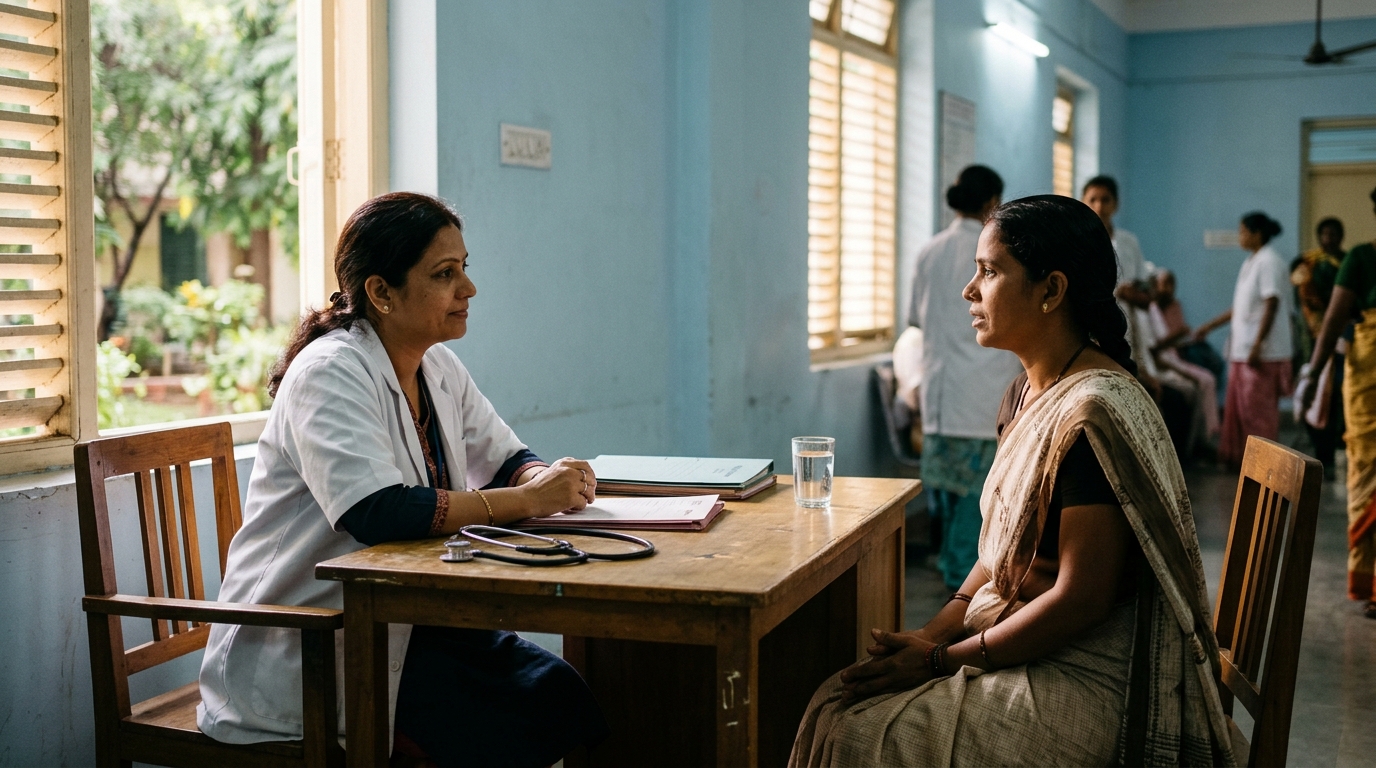
A new randomized controlled trial in Pune, India, will test whether a brief behavioral alcohol intervention delivered inside routine tuberculosis and HIV clinics can reduce unhealthy drinking and improve treatment outcomes for people facing both diseases. The study, called HATHI — Hybrid trial for Alcohol reduction among people with TB and HIV in India — is designed as a Hybrid Type 1 effectiveness-implementation trial, meaning it will evaluate the intervention’s clinical effectiveness while simultaneously gathering evidence on how such an approach could be embedded in real-world care settings. The protocol, published in Addiction Science & Clinical Practice, lays out the study’s aims, methods and rationale in detail.
The public health backdrop is stark. India carries the highest burden of tuberculosis disease in the world, accounting for 26 percent of all new cases globally, and approximately 48,000 of those cases occur among people living with HIV. Unhealthy alcohol use, the researchers note, can worsen the health of people who have TB, people who have HIV, and those who have both infections at once. Behavioral interventions that target alcohol use and are integrated directly into TB and HIV care, the study team argues, may lead to better outcomes than leaving alcohol treatment to separate services that many patients never reach.
HATHI will recruit 450 people with unhealthy alcohol use from TB and HIV clinics in Pune. Participants will be randomized to either the four-session behavioral intervention integrated into TB and HIV care, or to usual care. The primary outcome is alcohol consumption measured by phosphatidyl ethanol, or PEth, an alcohol biomarker that provides an objective measure of recent drinking rather than relying solely on self-report. The researchers hypothesize that the intervention will result in lower alcohol use compared with standard care at six months.
Beyond the primary aim, the trial is structured to answer several linked questions. The second aim tests whether the same intervention leads to improved TB and HIV clinical outcomes, including adherence to TB and HIV medications, HIV viral suppression, TB sputum and culture conversion, and a composite outcome combining TB treatment failure, default from treatment, or death. The third aim evaluates barriers and facilitators to integrating the intervention into TB and HIV care, and the fourth determines the incremental costs of delivering the intervention in these clinical settings. This layered design reflects the hybrid model, which pairs effectiveness testing with implementation science so that a positive result can translate more quickly into policy and practice.
The choice of a Hybrid Type 1 design is significant for how the findings might be used. In such trials, the primary focus remains on clinical effectiveness, but implementation outcomes — here, the practical barriers and facilitators of integration, and the costs of delivery — are collected alongside. If HATHI proves effective, the researchers write, insights into barriers and facilitators for integration will inform future scale-up of this behavioral alcohol intervention in TB and HIV clinical settings. The intervention targets unhealthy alcohol use, which the team describes as a known barrier to optimal TB and HIV treatment outcomes.
The trial is registered with ClinicalTrials.gov under identifier NCT04230395, first submitted on January 18, 2020 and most recently updated on February 17, 2025, and with the India Clinical Trial Registry under CTRI/2020/03/024141. The study is led by an international team including Geetanjali Chander, Nishi Suryavanshi, Nikhil Gupte, Amita Gupta and colleagues, working across institutions in India and the United States.
Because this is a protocol publication, no results are yet available. The paper describes what the trial will do, not what it has found. The hypothesis — that the intervention will outperform usual care on alcohol use at six months and on TB and HIV clinical outcomes at twelve months — remains to be tested in the 450 participants the study plans to enroll. Readers should treat the reported aims, outcome measures and design choices as the study’s plan, not as demonstrated effects.
Still, the protocol offers a window into a persistent gap in care for people with TB and HIV in high-burden settings. Alcohol screening and counseling are rarely built into infectious disease clinics, even where drinking patterns directly undermine medication adherence and treatment completion. By embedding a structured behavioral intervention into the same clinics where patients already receive TB and HIV care, HATHI is designed to test a model that could, if successful, be replicated in other Indian cities and other high-burden countries. The trial’s use of an objective biomarker, PEth, as the primary outcome measure is intended to strengthen the reliability of its findings, and its inclusion of cost analysis is intended to give health systems the information they need to weigh adoption.
The study team includes investigators from institutions in Pune and Baltimore, reflecting a long-standing research partnership focused on TB, HIV and alcohol in India. The protocol paper is open access, and the trial’s progress can be followed through its public registry entries. As enrollment proceeds, the trial will generate data on whether integrating alcohol care into infectious disease treatment can move the needle on some of the world’s most stubborn co-epidemics.
Subject of Research: A hybrid effectiveness-implementation randomized controlled trial protocol testing a behavioral alcohol intervention integrated into TB and HIV care in Pune, India
Article Title: Hybrid trial for alcohol reduction among people with TB and HIV in India (HATHI): protocol for a hybrid type 1 effectiveness-implementation randomized controlled trial
Article References: Chander, G., Suryavanshi, N., Gupte, N., Dhumal, G., Bagchi, S., PM, A., Borse, R., Kakrani, A. L., Kane, J., Nadkarni, A., Sohn, H., Hutton, H., & Gupta, A. (2026). Hybrid trial for alcohol reduction among people with TB and HIV in India (HATHI): protocol for a hybrid type 1 effectiveness-implementation randomized controlled trial. Addiction Science & Clinical Practice. https://doi.org/10.1186/s13722-026-00734-7
Image Credits: AI Generated
DOI: 10.1186/s13722-026-00734-7
Keywords: HATHI trial, tuberculosis, HIV, alcohol intervention, Pune India, randomized controlled trial, implementation science, PEth biomarker, medication adherence, trial protocol, TB-HIV coinfection, behavioral health
News Source: Glenn Wilkins. (November 5, 2026). Trial to test alcohol counselling woven into TB and HIV care in Pune. Scienmag.