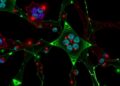
Giving living donor liver transplant recipients an infusion of immune cells derived from their donor a week before transplantation is feasible, safe – and may lead to recipients being successfully weaned off immunosuppressant medications without rejecting the transplanted organ.

Credit: University of Pittsburgh
Giving living donor liver transplant recipients an infusion of immune cells derived from their donor a week before transplantation is feasible, safe – and may lead to recipients being successfully weaned off immunosuppressant medications without rejecting the transplanted organ.
The early-stage clinical trial results by University of Pittsburgh School of Medicine scientists, reported today in Science Translational Medicine, point to a path that may spare organ transplant recipients from the serious side effects of long-term immunosuppressant use, which can include cancer, diabetes, kidney failure and susceptibility to infections.
“These trial results are very encouraging,” said senior author Angus W. Thomson, Ph.D., D.Sc., distinguished professor of immunology and surgery at Pitt and member of the Thomas E. Starzl Transplantation Institute. “Right now, we’re seeing preliminary evidence that this intervention is modifying the recipient’s immune response in such a way that we may be able to safely reduce – or even withdraw – immunosuppression. It would be a significant service to the transplantation community if patients are no longer dependent indefinitely on immunosuppressants.”
Because the liver regenerates, people are able to donate a portion of their liver to someone else in need. Both the part of the liver left in the donor and the part given to the recipient regrow to full-sized livers. This is called a living donor liver transplant, or LDLT.
In a phase 1 trial, Thomson, in collaboration with Abhinav Humar, M.D., clinical director of the Starzl Transplantation Institute and chief of the Division of Transplantation at UPMC, and the rest of the research team, enrolled 15 patients who were scheduled to receive a LDLT to also receive a donor immune cell infusion and compared them to 40 LDLT patients who did not receive the infusion.
Several weeks before surgery, the research team took blood from the donors for the trial patients and separated out the monocytes, a type of white blood cell. They then induced the monocytes to make regulatory dendritic cells (DCregs) – a type of immune cell that helps the rest of the immune system distinguish foreign invaders that must be eliminated from parts of the body that should be left alone.
A week before the transplantation, the newly made DCregs were infused into the recipient patients. The transplant then proceeded as normal and the patients were given immunosuppressant medications just like they would have if they had not received the DCregs.
The main goal of the trial was to determine feasibility and safety. There were no safety differences between the DCreg infusion patients and the standard-of-care patients. Moreover, it was feasible to add the DCreg infusion to the clinical workflow while still performing the transplantation in a timely manner.
But the researchers took it a step further and checked for differences in immunologic activity between the two patient groups. A year after the transplantation, they found that the patients who received the DCreg infusion also had a reduction in other immune cells that would signal a negative reaction to the transplanted liver. In animal studies this reduction has enabled researchers to successfully wean animals off immunosuppressants.
Interestingly, the transplanted DCregs persisted in the recipient patients for only a few days. But during that time, they were able to produce tiny particles called exosomes that allow cells to communicate by transferring messages from one cell to another, influencing a variety of cellular behaviors.
“We believe that these donor-derived exosomes are preemptively conditioning the prospective LDLT recipient to see donor cells as safe,” said Thomson. “A year post-transplant, clinicians will then determine which patients can start tapering off immunosuppressants. Then time will tell if our approach works.”
Thomson and the team continue to follow the trial participants and plan to report more results in about a year.
Additional authors are Lillian M. Tran, M.D., Camila Macedo, M.D., Alan F. Zahorchak M.S., Xinyan Gu B.S., Beth Elinoff, M.P.H., Aatur D. Singhi, M.D., Ph.D., Brian Isett, Ph.D., Adriana Zeevi, Ph.D., Avantika Srivastava, M.S., Mindi A. Styn, Ph.D., Fadi G. Lakkis, M.D., and Diana M. Metes, M.D., all of Pitt; Megan Sykes, M.D., and Kevin Breen Ph.D., both of Columbia University; and Erin M. Ables, M.A., and Douglas Landsittel, Ph.D., both of Indiana University Bloomington.
This research was supported by UPMC Enterprises award #88906, National Institutes of Health grants T32 AI74490, R01 AI118777, U19 AI131453, U01 AI136779, P30 CA047904 and S10OD028483, Starzl Transplantation Institute Research Funds, the Transplant Forum at Columbia University Irving Medical Center and the Nelson Family Transplant Innovation Program.
Journal
Science Translational Medicine
DOI
10.1126/scitranslmed.adf4287
Method of Research
Randomized controlled/clinical trial
Subject of Research
People
Article Title
Donor-derived regulatory dendritic cell infusion modulates effector CD8 T cell and NK cell responses after liver transplantation
Article Publication Date
11-Oct-2023