• HOME
  • NEWS
  • EXPLORE
    • CAREER
      • Companies
      • Jobs
    • EVENTS
    • iGEM
      • News
      • Team
    • PHOTOS
    • VIDEO
    • WIKI
  • BLOG
  • COMMUNITY
    • FACEBOOK
    • INSTAGRAM
    • TWITTER
Sunday, July 5, 2026
BIOENGINEER.ORG
No Result
View All Result
  • Login
  • HOME
  • NEWS
  • EXPLORE
    • CAREER
      • Companies
      • Jobs
        • Lecturer
        • PhD Studentship
        • Postdoc
        • Research Assistant
    • EVENTS
    • iGEM
      • News
      • Team
    • PHOTOS
    • VIDEO
    • WIKI
  • BLOG
  • COMMUNITY
    • FACEBOOK
    • INSTAGRAM
    • TWITTER
  • HOME
  • NEWS
  • EXPLORE
    • CAREER
      • Companies
      • Jobs
        • Lecturer
        • PhD Studentship
        • Postdoc
        • Research Assistant
    • EVENTS
    • iGEM
      • News
      • Team
    • PHOTOS
    • VIDEO
    • WIKI
  • BLOG
  • COMMUNITY
    • FACEBOOK
    • INSTAGRAM
    • TWITTER
No Result
View All Result
Bioengineer.org
No Result
View All Result
Home NEWS Science News

Tree study shows low-income Brisbane suburbs need more shade

Bioengineer by Bioengineer
September 23, 2022
in Science News
Reading Time: 2 mins read
0
Brisbane street
Share on FacebookShare on TwitterShare on LinkedinShare on RedditShare on Telegram

Researchers say more investment in tree planting is needed after discovering inequality in shade-coverage across certain Brisbane suburbs.
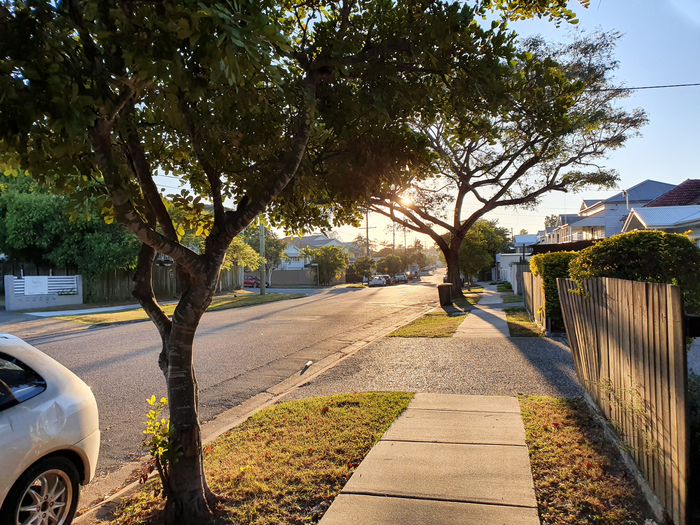
Brisbane street

Credit: The University of Queensland

Researchers say more investment in tree planting is needed after discovering inequality in shade-coverage across certain Brisbane suburbs.

A University of Queensland study counted trees in three Brisbane suburbs of varying average income levels: from low (Deagon), to middle (Riverhills) and higher-income suburbs (Parkinson).

Senior lecturer in Urban Planning at UQ’s School of Earth and Environmental Sciences, Dr Dorina Pojani, said like many other low-income suburbs globally, Deagon was being forced to swelter through rising temperatures and more frequent heatwaves.

“We found that Deagon has approximately 77 street trees per kilometre, 46 per cent less than Riverhills, which has 113 street trees per kilometre,” Dr Pojani said.

“Parkinson was found to have 87 street trees per kilometre, 12 per cent less than Riverhills.”

“Deagon’s lack of trees compared to the other two suburbs is a significant inequity, and if left unaddressed it has the potential to become a wider environmental justice issue.    

“We’re standing on the edge of a situation where low-income suburbs bear the physical and financial brunt of climate-driven temperature increases, and lives are at risk.    

“Trees not only protect people from the harshness of the sun outdoors, they can also reduce the need for air conditioning.”

UQ Environmental Science and Urban Planning graduate, Sean Patton, whose Honours thesis formed the basis of this research, said more money needed to be spent on planting trees in suburbs like Deagon.

“The Brisbane City Council’s tree planting budget for 2020 was $19.7 million, but it’s worth investing more so residents have better access to sun protection, especially in a city where local government encourages active transport,” Mr Patton said.

“A full benefit cost analysis, as well as a wider survey of Brisbane, would determine the budget needed, but considering the health risks from increasing temperatures, we certainly need more than what we’re currently seeing.

“The benefits from trees increase as they grow older, so the sooner we get started planting more street trees across these at-risk suburbs, the better.”

The research has been published in Australian Planner.


Journal

Australian Planner

DOI

10.1080/07293682.2022.2091624

Method of Research

Observational study

Article Title

Some like it hot? Unequal provision of tree shading in Australian subtropical suburbs

Article Publication Date

3-Jul-2022

Share12Tweet8Share2ShareShareShare2

Related Posts

Quasi-Bound States Boost Quantum Well Photoresponse — Technology and Engineering

Quasi-Bound States Boost Quantum Well Photoresponse

July 4, 2026

Lysine Pyruvylation Links Glycolysis to Epigenetics

July 4, 2026

Multiphysics Coupling: Single vs. Multiple DeepONet Branches

July 4, 2026

Personalized Neoantigen Dendritic Cell Vaccine in Glioblastoma

July 4, 2026

POPULAR NEWS

  • Detection of EDCs in Breast Milk and Infant Urine Up to Six Months Highlights Early Exposure Risks

    77 shares
    Share 31 Tweet 19
  • Saying Goodbye to PGY-6: Pediatric Fellowship Realities

    103 shares
    Share 41 Tweet 26
  • New Drug Candidate Developed at McMaster Shows Potential for Treating Brain Cancer

    58 shares
    Share 23 Tweet 15
  • KTU Researchers Explore Ultrasound’s Role in Enhancing Blood Flow Beyond Diagnostics

    53 shares
    Share 21 Tweet 13

About

We bring you the latest biotechnology news from best research centers and universities around the world. Check our website.

Follow us

Recent News

Quasi-Bound States Boost Quantum Well Photoresponse

Lysine Pyruvylation Links Glycolysis to Epigenetics

Multiphysics Coupling: Single vs. Multiple DeepONet Branches

Subscribe to Blog via Email

Success! An email was just sent to confirm your subscription. Please find the email now and click 'Confirm' to start subscribing.

Join 83 other subscribers
  • Contact Us

Bioengineer.org © Copyright 2023 All Rights Reserved.

Welcome Back!

Login to your account below

Forgotten Password?

Retrieve your password

Please enter your username or email address to reset your password.

Log In
No Result
View All Result
  • Homepages
    • Home Page 1
    • Home Page 2
  • News
  • National
  • Business
  • Health
  • Lifestyle
  • Science

Bioengineer.org © Copyright 2023 All Rights Reserved.