• HOME
  • NEWS
  • EXPLORE
    • CAREER
      • Companies
      • Jobs
    • EVENTS
    • iGEM
      • News
      • Team
    • PHOTOS
    • VIDEO
    • WIKI
  • BLOG
  • COMMUNITY
    • FACEBOOK
    • INSTAGRAM
    • TWITTER
Wednesday, November 18, 2026
BIOENGINEER.ORG
No Result
View All Result
  • Login
  • HOME
  • NEWS
  • EXPLORE
    • CAREER
      • Companies
      • Jobs
        • Lecturer
        • PhD Studentship
        • Postdoc
        • Research Assistant
    • EVENTS
    • iGEM
      • News
      • Team
    • PHOTOS
    • VIDEO
    • WIKI
  • BLOG
  • COMMUNITY
    • FACEBOOK
    • INSTAGRAM
    • TWITTER
No Result
View All Result
Bioengineer.org
No Result
View All Result
Home NEWS Science News Technology

Treated Bhimal and Pineapple Leaf Fibers Boost Epoxy Composite Strength

by
October 30, 2026
in Technology
Reading Time: 2 mins read
0
Treated Bhimal and Pineapple Leaf Fibers Boost Epoxy Composite Strength

Treated Bhimal and Pineapple Leaf Fibers Boost Epoxy Composite Strength

Share on FacebookShare on TwitterShare on LinkedinShare on RedditShare on Telegram

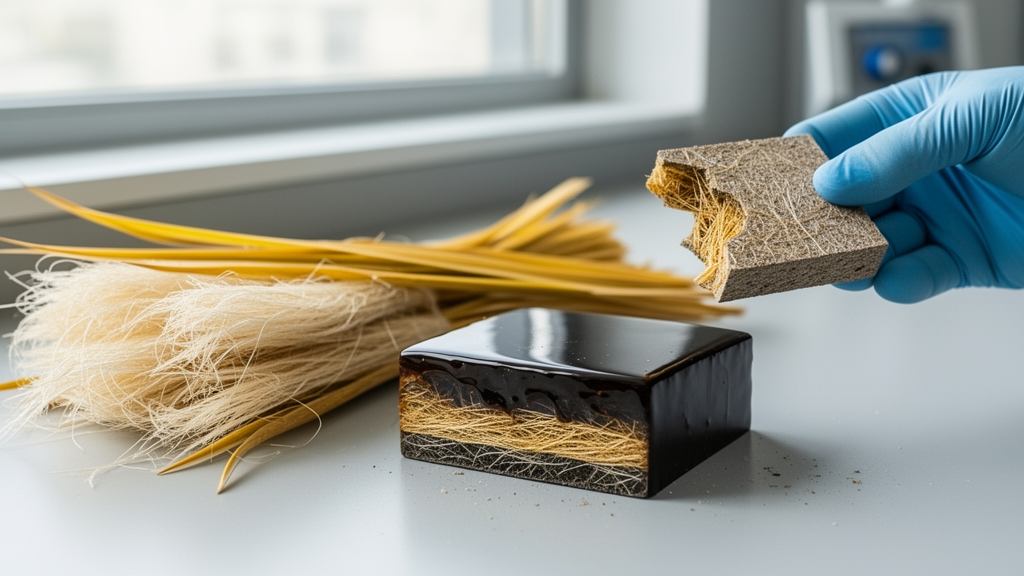
Researchers in India report that a hybrid epoxy composite reinforced with surface-treated Grewia optiva, known locally as Bhimal, fibers and pineapple leaf fiber, with marble dust as a filler, shows substantially improved thermomechanical performance. The study, published as open access research in Discover Materials on 21 October 2026, aimed to systematically characterize the thermomechanical properties and interfacial bonding of the surface-modified composites to evaluate their potential as a sustainable structural material. The work is being shared early as a peer-reviewed, accepted article carrying a permanent DOI, with a final version of record to follow.

The Bhimal fibers were sourced from the Dehradun region of Uttarakhand, India, and served as the primary reinforcement, while pineapple leaf fiber, or PALF, was introduced as a secondary natural-fiber reinforcement in an epoxy resin matrix. Marble dust was added as a filler to improve mechanical and physical properties. To strengthen the bond between the fibers and the matrix, the team applied alkaline treatment with sodium hydroxide, followed by benzoyl peroxide initiation, a surface-modification route intended to improve fiber-matrix interfacial adhesion.

Dynamic Mechanical Analysis showed a storage modulus of up to 16.14 gigapascals, alongside a reduction in the damping factor, tan δ, and improved glass-transition-related parameters, suggesting improved interfacial stress transmission and increased crosslink density. Thermogravimetric analysis indicated thermal stability up to 290 degrees Celsius. Scanning electron microscopy images of fractured surfaces showed that the fiber and matrix were well bonded, and Fourier transform infrared spectroscopy confirmed the chemical modification induced by the surface treatments.

Among the mechanical results, the impact strength of the Bhimal fiber-based composite material was improved by 305 percent. Taken together, the authors state that the findings help determine the value of Grewia optiva fiber-based composites and increase understanding of interfacial behavior in Bhimal-based structural composites, with relevance to circular economy applications in which agricultural and mineral by-products are diverted into material use.

Because the article is an early-shared accepted version subject to further edits, detailed comparisons with untreated counterparts, statistical treatment, and full methodological context will be clearer in the final version of record. The reported figures describe the specific treated hybrid composite system tested in this study and should not be generalized to other fiber-matrix combinations without direct evidence.

Subject of Research: Surface-modified natural-fiber and marble dust reinforced epoxy composites for sustainable structural applications

Article Title: Interfacial engineering and thermomechanical enhancement of bio-based grewia optiva fiber/PALF/marble dust reinforced-reinforced epoxy composites for circular economy applications

Article References: Tomar, P., Gori, Y., Kumar, A., & Yadav, A. K. (2026). Interfacial engineering and thermomechanical enhancement of bio-based grewia optiva fiber/PALF/marble dust reinforced-reinforced epoxy composites for circular economy applications. Discover Materials. https://doi.org/10.1007/s43939-026-01016-4

Image Credits: AI Generated

DOI: 10.1007/s43939-026-01016-4

Keywords: Grewia optiva, Bhimal fiber, PALF, epoxy composites, marble dust, interfacial adhesion, dynamic mechanical analysis, thermal stability, impact strength, circular economy, surface treatment, sustainable materials

News Source: Denise Maddox. (October 30, 2026). Treated Bhimal and Pineapple Leaf Fibers Boost Epoxy Composite Strength. Scienmag.

Tags: Bhimal fibercircular economydynamic mechanical analysisepoxy compositesGrewia optivaimpact strengthinterfacial adhesionmarble dustPALFsurface treatmentsustainable materialsthermal stability
Share12Tweet7Share2ShareShareShare1

Related Posts

Magnetic Resistance and Fluid Relaxation Suppress Nanofluid Heat and Microorganism Transport

Magnetic Resistance and Fluid Relaxation Suppress Nanofluid Heat and Microorganism Transport

November 18, 2026
Artificial Intelligence Advances Biological Digital Twins While Validation Limits Regulatory Adoption

Artificial Intelligence Advances Biological Digital Twins While Validation Limits Regulatory Adoption

November 18, 2026

Cobalt Rayleigh Wave Attenuation Distinguishes Competing High-Frequency Heat Conduction Models

November 18, 2026

Intermediate Injection Pressure Optimizes Emissions in Used Temple Oil Biodiesel Engine

November 18, 2026

POPULAR NEWS

  • Over Forty Percent of Northeast Ethiopian Neonates Experience Early Cord Clamping

    Over Forty Percent of Northeast Ethiopian Neonates Experience Early Cord Clamping

    29 shares
    Share 12 Tweet 7
  • Biomimetic Hydroxyapatite Coating Restores Elastic Modulus in Recycled Aggregate Concrete

    29 shares
    Share 12 Tweet 7
  • Early Shoulder Mobilization Accelerates Initial Motion but Yields Equivalent Annual Outcomes

    29 shares
    Share 12 Tweet 7
  • SGLT2 Inhibitor Use Associated With Lower Proteinuria Rates During Bevacizumab Therapy

    29 shares
    Share 12 Tweet 7

About

We bring you the latest biotechnology news from best research centers and universities around the world. Check our website.

Follow us

Recent News

Magnetic Resistance and Fluid Relaxation Suppress Nanofluid Heat and Microorganism Transport

Artificial Intelligence Advances Biological Digital Twins While Validation Limits Regulatory Adoption

Flexible Bronchoscopy Retrieves Airway Needles in Seven of Nine Pediatric Patients

Subscribe to Blog via Email

Enter your email address to subscribe to this blog and receive notifications of new posts by email.

Join 88 other subscribers
  • Contact Us

Bioengineer.org © Copyright 2023 All Rights Reserved.

Welcome Back!

Login to your account below

Forgotten Password?

Retrieve your password

Please enter your username or email address to reset your password.

Log In
No Result
View All Result
  • Homepages
    • Home Page 1
    • Home Page 2
  • News
  • National
  • Business
  • Health
  • Lifestyle
  • Science

Bioengineer.org © Copyright 2023 All Rights Reserved.