• HOME
  • NEWS
  • EXPLORE
    • CAREER
      • Companies
      • Jobs
    • EVENTS
    • iGEM
      • News
      • Team
    • PHOTOS
    • VIDEO
    • WIKI
  • BLOG
  • COMMUNITY
    • FACEBOOK
    • INSTAGRAM
    • TWITTER
Saturday, May 16, 2026
BIOENGINEER.ORG
No Result
View All Result
  • Login
  • HOME
  • NEWS
  • EXPLORE
    • CAREER
      • Companies
      • Jobs
        • Lecturer
        • PhD Studentship
        • Postdoc
        • Research Assistant
    • EVENTS
    • iGEM
      • News
      • Team
    • PHOTOS
    • VIDEO
    • WIKI
  • BLOG
  • COMMUNITY
    • FACEBOOK
    • INSTAGRAM
    • TWITTER
  • HOME
  • NEWS
  • EXPLORE
    • CAREER
      • Companies
      • Jobs
        • Lecturer
        • PhD Studentship
        • Postdoc
        • Research Assistant
    • EVENTS
    • iGEM
      • News
      • Team
    • PHOTOS
    • VIDEO
    • WIKI
  • BLOG
  • COMMUNITY
    • FACEBOOK
    • INSTAGRAM
    • TWITTER
No Result
View All Result
Bioengineer.org
No Result
View All Result
Home NEWS Science News Biology

‘Treasure trove’ of new discoveries highlights gaps in coral knowledge

Bioengineer by Bioengineer
January 21, 2020
in Biology
Reading Time: 3 mins read
0
IMAGE
Share on FacebookShare on TwitterShare on LinkedinShare on RedditShare on Telegram

IMAGE

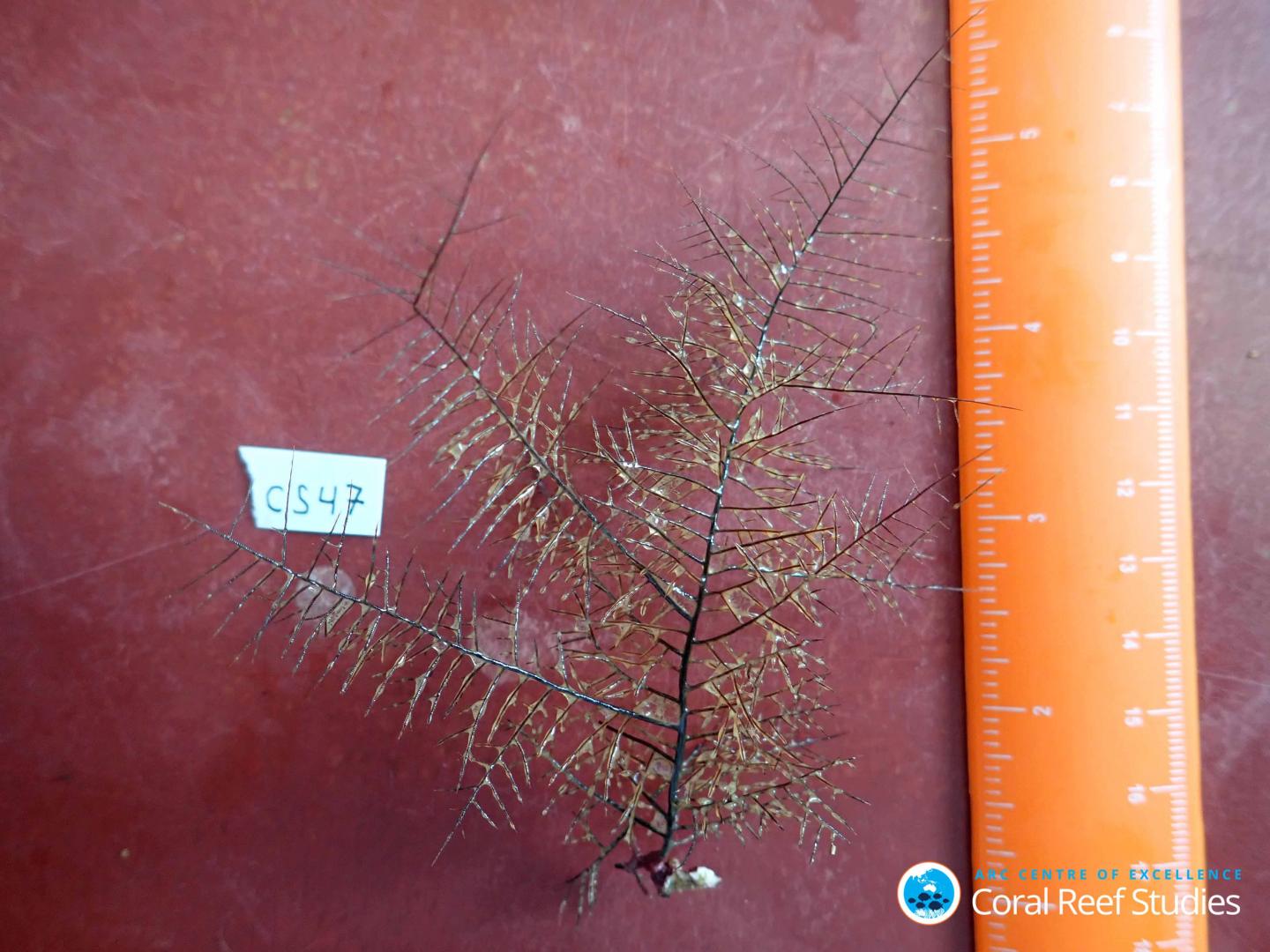
Credit: Credit to Jeremy Horowitz/ARC Centre of Excellence for Coral Reef Studies


Scientists discovered dozens of new coral species on a recent voyage along the length of the Great Barrier Reef.

A team of scientists completed a 21-day trip from the Capricorn Bunkers off Gladstone to Thursday Island in the Torres Strait late last year.

“On almost every dive we were finding species that aren’t in the books,” said Professor Andrew Baird from the ARC Centre of Excellence for Coral Reef Studies at James Cook University (Coral CoE at JCU).

Scientists from Queensland Museum (QM), University of Technology Sydney (UTS) and the King Abdullah University of Science and Technology (KAUST) in Saudi Arabia were also part of the expedition.

Prof Baird said the discoveries are timely as recent molecular advances reveal that much of the existing classification of corals is deeply flawed.

“One hard coral species, Acropora hyacinthus, was previously thought to be found on almost every reef crest along the length of the reef,” Prof Baird said.

But the recent molecular advances plus a closer look at the morphology, or shape of the coral, has overturned this assumption.

“What we once thought was a single species is potentially five different species–some with a very limited geographical range,” Prof Baird said.

The team also found a number of species not previously seen on the reef.

“The new species we found means that the biodiversity of some groups is up to three times higher than we had thought,” said Dr Francesca Benzoni, from KAUST.

JCU PhD student Jeremy Horowitz was on the voyage. He said much of what they found was new.

“Despite the economic and ecological importance of black corals this is the first survey of this group on the reef. It’s amazing how much remains unknown and how much more work needs to be done,” Mr Horowitz said.

The end of the voyage is just the beginning of a lot of hard work to formally describe this treasure trove.

“The volume of new material is overwhelming,” Prof Baird said.

“We need more trained taxonomists–biologists who can group organisms into categories–and more funds to reassess the taxonomy of common groups found on the reef, including hard, soft and black corals.”

“Australia is the custodian of the world’s largest coral reef system and as a World Heritage-listed site it is the nation’s obligation to manage it well.”

“Understanding the diversity of species on the reef underpins virtually every area of research and conservation,” Prof Baird said.

“It is vital to ensure we have a robust understanding of species diversity and their distributions, but taxonomy isn’t currently a research priority. This has to change.”

“You can’t manage the Great Barrier Reef if you don’t know how many species you have, how common they are, or where they are found.”

###

CONTACT

Prof Andrew Baird (AEST)

P: +61 (0)7 4781 4857

M: +61 (0)400 289 770

E: [email protected]

Jeremy Horowitz (AEST)

P: + 61 (0) 473 870 683

E: [email protected]

FURTHER INFORMATION

Melissa Lyne (AEDT)

Media Manager, Coral CoE

M: +61 (0)415 514 328

E: [email protected]

Media Contact
Melissa Lyne
[email protected]

Original Source

https://www.coralcoe.org.au/media-releases/treasure-trove-of-new-discoveries-highlights-gaps-in-coral-knowledge

Tags: BiodiversityBiologyEcology/EnvironmentEvolutionMarine/Freshwater BiologyMolecular BiologyPopulation Biology
Share12Tweet8Share2ShareShareShare2

Related Posts

Single mother must adapt swiftly — the survival of her colony depends on it — Biology

Single mother must adapt swiftly — the survival of her colony depends on it

May 15, 2026
Why Are Nearly Everyone Right-Handed? It Might Be Linked to How We Learned to Walk — Biology

Why Are Nearly Everyone Right-Handed? It Might Be Linked to How We Learned to Walk

May 15, 2026

Excessive Neuronal Activity Initiates Severe Autoimmune Brain Disorder

May 15, 2026

Precision Anti-Aging Strategies Focus on Eliminating Harmful Senescent Cells While Preserving Beneficial Ones

May 15, 2026
Please login to join discussion

POPULAR NEWS

  • Research Indicates Potential Connection Between Prenatal Medication Exposure and Elevated Autism Risk

    843 shares
    Share 337 Tweet 211
  • New Study Reveals Plants Can Detect the Sound of Rain

    730 shares
    Share 291 Tweet 182
  • Salmonella Haem Blocks Macrophages, Boosts Infection

    62 shares
    Share 25 Tweet 16
  • Breastmilk Balances E. coli and Beneficial Bacteria in Infant Gut Microbiomes

    58 shares
    Share 23 Tweet 15

About

We bring you the latest biotechnology news from best research centers and universities around the world. Check our website.

Follow us

Recent News

Perinatal and Early Childhood Factors in PFAPA Persistence

New Actinomycin Derivatives Target Malaria More Selectively

Mobile App Enhances Exercise for Older Adults’ Cognition

Subscribe to Blog via Email

Enter your email address to subscribe to this blog and receive notifications of new posts by email.

Join 82 other subscribers
  • Contact Us

Bioengineer.org © Copyright 2023 All Rights Reserved.

Welcome Back!

Login to your account below

Forgotten Password?

Retrieve your password

Please enter your username or email address to reset your password.

Log In
No Result
View All Result
  • Homepages
    • Home Page 1
    • Home Page 2
  • News
  • National
  • Business
  • Health
  • Lifestyle
  • Science

Bioengineer.org © Copyright 2023 All Rights Reserved.