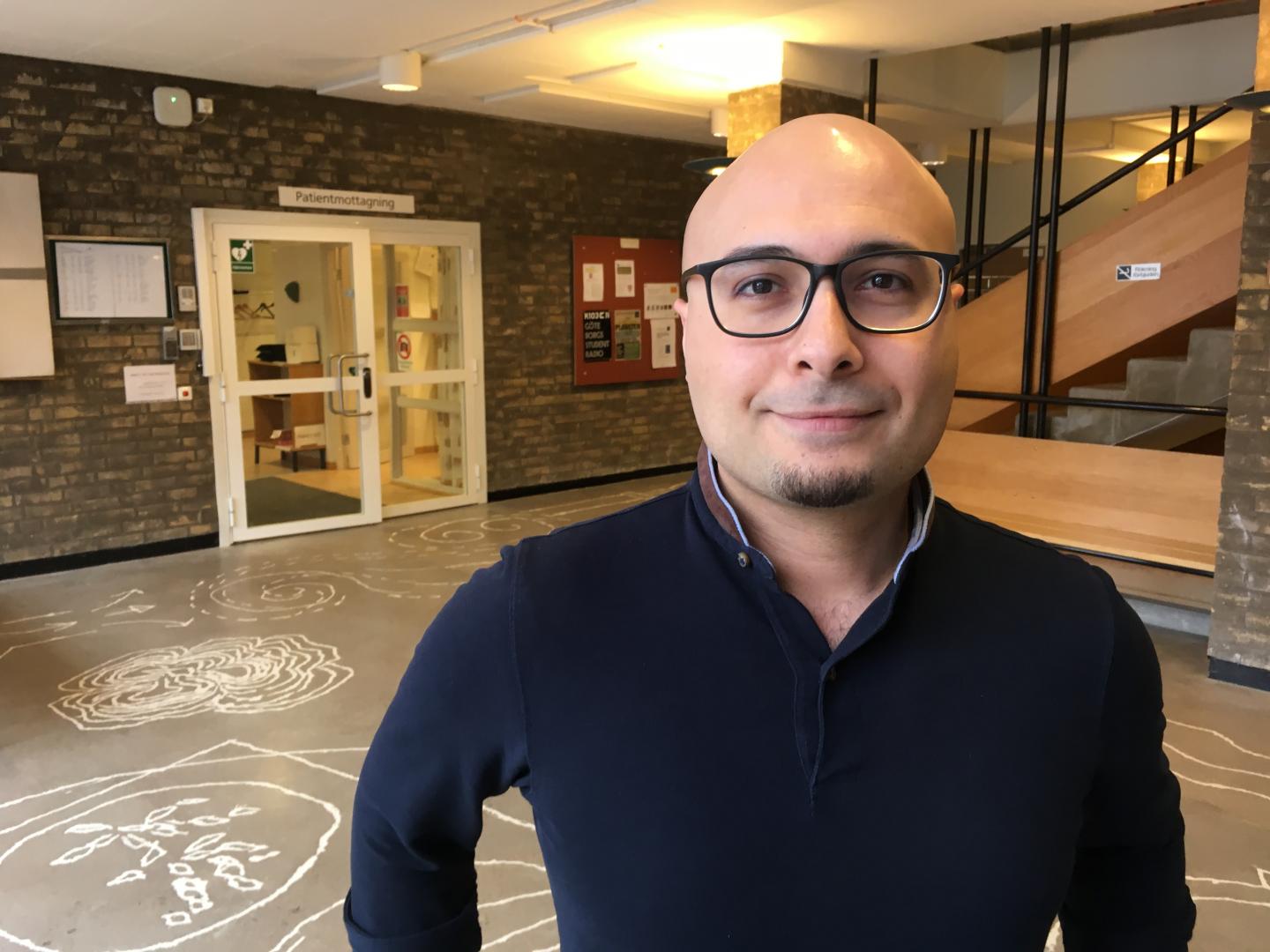
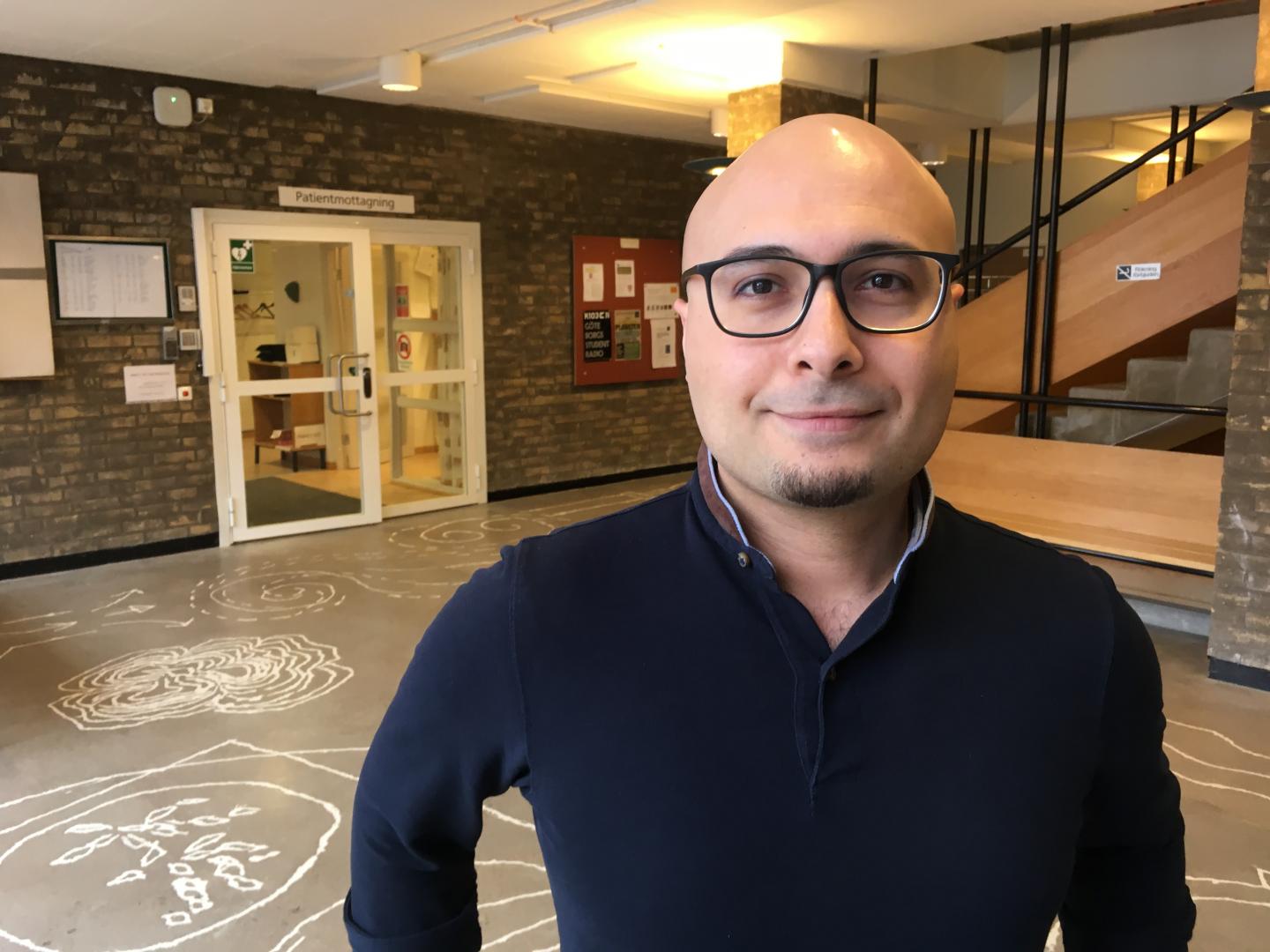
Credit: Photo by Margareta G. Kubista
Improved tools are now underway for determining the causes of death in settings where medical examinations or post-mortem autopsies are not routinely conducted. The population-based approach, namely Verbal Autopsy using standardized interviews, including signs, symptoms and circumstances leading to death, conducted with the bereaved family, are becoming the best alternative in the more affluent parts of the world.
"More than half the world's deaths and their causes are never recorded by virtue of the underdeveloped Civil Registration and Vital Statistic (CRVA) system which limits the capacity of health planners and politicians to adequately allocate resources where they are needed," says Laith Hussain-Alkhateeb, PhD, a researcher at the community medicine and public health, Occupational and Environmental Medicine (AMM) unit, Sahlgrenska Academy.
Pioneer projects began naming this technique in the 1950s in India, where they established the concept of Verbal Autopsy. The method has since become more widespread and has been standardized under the direction of the World Health Organization (WHO). Verbal Autopsy is applied today in more than 50 countries. Laith Hussain-Alkhateeb has studied its recent advancement using data from the Agincourt Health and socio-Demographic Surveillance System in South Africa.
During his novel research together with global health researchers from Sweden, UK and South Africa, Laith Hussain-Alkhateeb advanced the application of the Verbal Autopsy method into a pragmatic and scalable approach to modelling circumstances of mortality categories for verbal autopsy deaths with only minimal additional effort and cost to the existing verbal autopsy process of the medical causes. This enhancement of mortality data will bringing in information on health systems, social and cultural circumstances of outcomes providing routine feedback for monitoring global public health priorities.
Not purely medical
It is uncommon today for physician to actually conduct verbal autopsy themselves rather than trained fieldworkers using mobile tablet-verbal autopsy tool, which has ultimately reduced time and cost of the interview. This digital application with the standardized questionnaire instrument, which allows for simple yes or no responses, has shorten the interview time from an average of an hour to about 20 minutes.
"Achieving universal health coverage requires standardized tools that can effectively link healthcare services utilization to mortality outcomes in population for routine monitoring. Therefore, the concept we introduced does not undervalue the usefulness of medical classification of causes of death but incorporate additional health system and social dimensions to the understanding of death outcome," says Laith Hussain-Alkhateeb.
Migration in transition
Comparing medical and circumstantial causes of death between and within countries and regions and over time requires consistent and standardized tools. Sweden is pioneering to mark this achievement, and Laith Hussain-Alkhateeb has participated in the development of such timely and essential tool to allow comparisons possible over time and space.
"The method is not necessarily needed only in areas that lack the CRVS system. Many countries including Europe have sound systems for determining causes of death, but globalization and migration put these systems under extreme conditions, raising the issues of suboptimal care and miscommunication. In the case of European setting, these issues are attributed to both cultural and medical competence for European health practitioners caring for non-European immigrants," says Laith.
###
Title: Counting deaths, accounting for lives; http://hdl.handle.net/2077/54534
Media Contact
Laith Hussain-Alkhateeb
[email protected]
46-073-555-6777
@uniofgothenburg
http://www.gu.se/english
Original Source
https://sahlgrenska.gu.se/english/research/news-events/news-article//transitional-methods-for-determining-causes-of-death.cid1565555