• HOME
  • NEWS
  • EXPLORE
    • CAREER
      • Companies
      • Jobs
    • EVENTS
    • iGEM
      • News
      • Team
    • PHOTOS
    • VIDEO
    • WIKI
  • BLOG
  • COMMUNITY
    • FACEBOOK
    • INSTAGRAM
    • TWITTER
Wednesday, July 1, 2026
BIOENGINEER.ORG
No Result
View All Result
  • Login
  • HOME
  • NEWS
  • EXPLORE
    • CAREER
      • Companies
      • Jobs
        • Lecturer
        • PhD Studentship
        • Postdoc
        • Research Assistant
    • EVENTS
    • iGEM
      • News
      • Team
    • PHOTOS
    • VIDEO
    • WIKI
  • BLOG
  • COMMUNITY
    • FACEBOOK
    • INSTAGRAM
    • TWITTER
  • HOME
  • NEWS
  • EXPLORE
    • CAREER
      • Companies
      • Jobs
        • Lecturer
        • PhD Studentship
        • Postdoc
        • Research Assistant
    • EVENTS
    • iGEM
      • News
      • Team
    • PHOTOS
    • VIDEO
    • WIKI
  • BLOG
  • COMMUNITY
    • FACEBOOK
    • INSTAGRAM
    • TWITTER
No Result
View All Result
Bioengineer.org
No Result
View All Result
Home NEWS Science News Chemistry

Tracking Southern Hemisphere black carbon to Antarctic snow

Bioengineer by Bioengineer
April 8, 2020
in Chemistry
Reading Time: 2 mins read
0
IMAGE
Share on FacebookShare on TwitterShare on LinkedinShare on RedditShare on Telegram

IMAGE

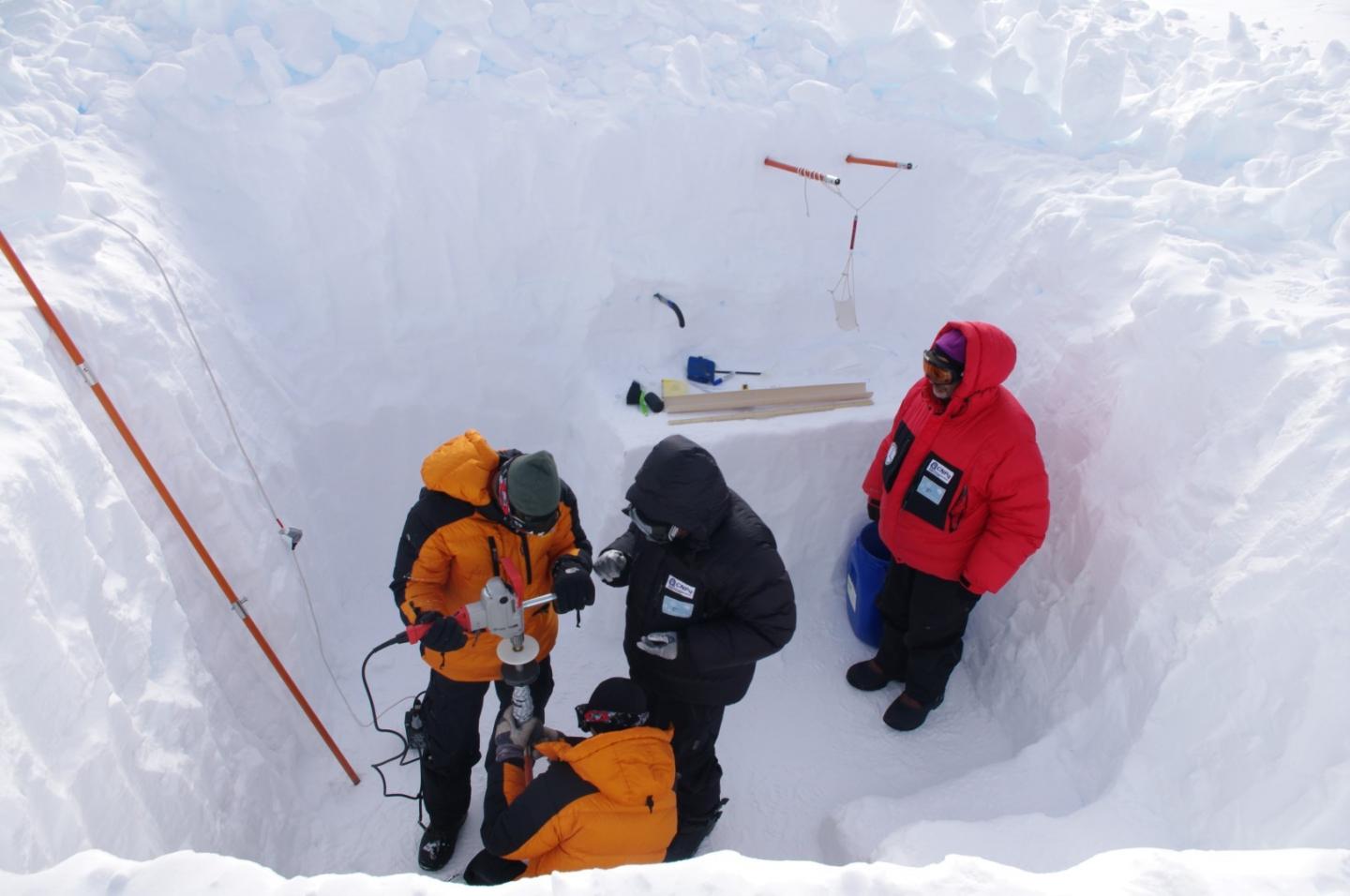
Credit: Luciano Marquetto

Black carbon (BC) measurements in Antarctica are still scarce, but necessary to understand the particle’s effect in our climate, says Luciano Marquetto, a Ph.D. student from the Polar and Climatic Center, Federal University of Rio Grande do Sul, Brazil.

“Black carbon, or BC, commonly known as soot, is a particle originated from the incomplete combustion of fossil fuels and biomass burning that warms the atmosphere. When deposited in snow and ice, BC increases surface radiation absorption and can cause melt,” explains Mr. Marquetto. “Some scientists say that BC is second only to CO2 in its warming effects on the climate, and studies have shown that BC concentrations have risen since the industrial revolution in several places of the world, including Greenland, the Himalayas, the Alps and even Antarctica.”

But studying BC in Antarctica is logistically challenging, and only in the last decade the topic has gained more attention. “Antarctica is a vast continent, and there are regions with no BC data yet. As climatic and atmospheric models rely on field data, studying BC concentrations in Antarctic snow is essential to improve these models”, adds Mr. Marquetto.

Mr. Marquetto was part of a team of Brazilian researchers led by Dr. Jefferson Cardia Simões (Polar and Climatic Center) who carried out a traverse in West Antarctica in the 2014/2015 austral summer. They travelled more than 1400 km, collecting several shallow snow cores and samples along the way to investigate the snow chemistry (and consequently the atmospheric chemistry) in the last 50 years or so. One of these shallow cores was analyzed for BC in cooperation with Dr. Susan Kaspari (Central Washington University, USA).

“We observed very low BC concentrations in snow, lower than in other works in the continent. Due to that, in the article published in Advances in Atmospheric Sciences we decided to focus on instrumental and methodological questions raised during the research that needed to be answered before going deeper into the environmental interpretation”, Mr. Marquetto says.

“However, our ultimate goal is to better understand BC seasonal variability and overall concentrations to see what impact the particle has in Antarctic snow, as well as try to identify BC geographical sources. We are also interested in the BC size distribution in snow, as particle size affects the amount of solar radiation BC can absorb. Impacts in the atmosphere and in the cryosphere are possibly being under or overestimated due to simplified representations of BC particle size in climatic models”, believes Mr. Marquetto.

“As for sectorial sources, we know biomass burning represents around 80% of all BC emitted to the atmosphere in the Southern Hemisphere, which means that the fires happening in Australia, New Zealand and South America ultimately leave a mark in Antarctic snow.”

###

Media Contact
Ms. LIN Zheng
[email protected]

Related Journal Article

http://dx.doi.org/10.1007/s00376-019-9124-8

Tags: Atmospheric ScienceChemistry/Physics/Materials SciencesEarth Science
Share12Tweet8Share2ShareShareShare2

Related Posts

Applying Physical Pressure Can Double EV Battery Lifespan and Slash Environmental Impact — Chemistry

Applying Physical Pressure Can Double EV Battery Lifespan and Slash Environmental Impact

July 1, 2026
Scientists Capture Ultrafast Chemical Reactions Unfolding in Real Time — Chemistry

Scientists Capture Ultrafast Chemical Reactions Unfolding in Real Time

July 1, 2026

Biochar-Based Materials Offer Promising Solution for Sustainable Uranium Recovery in Nuclear Energy

June 30, 2026

From Cells to Boundaries: Unveiling the Origins of Biological Order

June 30, 2026
Please login to join discussion

POPULAR NEWS

  • Detection of EDCs in Breast Milk and Infant Urine Up to Six Months Highlights Early Exposure Risks

    77 shares
    Share 31 Tweet 19
  • Saying Goodbye to PGY-6: Pediatric Fellowship Realities

    103 shares
    Share 41 Tweet 26
  • New Drug Candidate Developed at McMaster Shows Potential for Treating Brain Cancer

    58 shares
    Share 23 Tweet 15
  • KTU Researchers Explore Ultrasound’s Role in Enhancing Blood Flow Beyond Diagnostics

    53 shares
    Share 21 Tweet 13

About

We bring you the latest biotechnology news from best research centers and universities around the world. Check our website.

Follow us

Recent News

Social Marginalization Limits Access to Ontario Home Care

Revolutionary Soft Robotic Heart Paves the Way for Advanced Disease Research and Medical Device Testing

Gut Microbiome: The Secret Architect Shaping Liver Cancer Immunotherapy Outcomes

Subscribe to Blog via Email

Enter your email address to subscribe to this blog and receive notifications of new posts by email.

Join 82 other subscribers
  • Contact Us

Bioengineer.org © Copyright 2023 All Rights Reserved.

Welcome Back!

Login to your account below

Forgotten Password?

Retrieve your password

Please enter your username or email address to reset your password.

Log In
No Result
View All Result
  • Homepages
    • Home Page 1
    • Home Page 2
  • News
  • National
  • Business
  • Health
  • Lifestyle
  • Science

Bioengineer.org © Copyright 2023 All Rights Reserved.