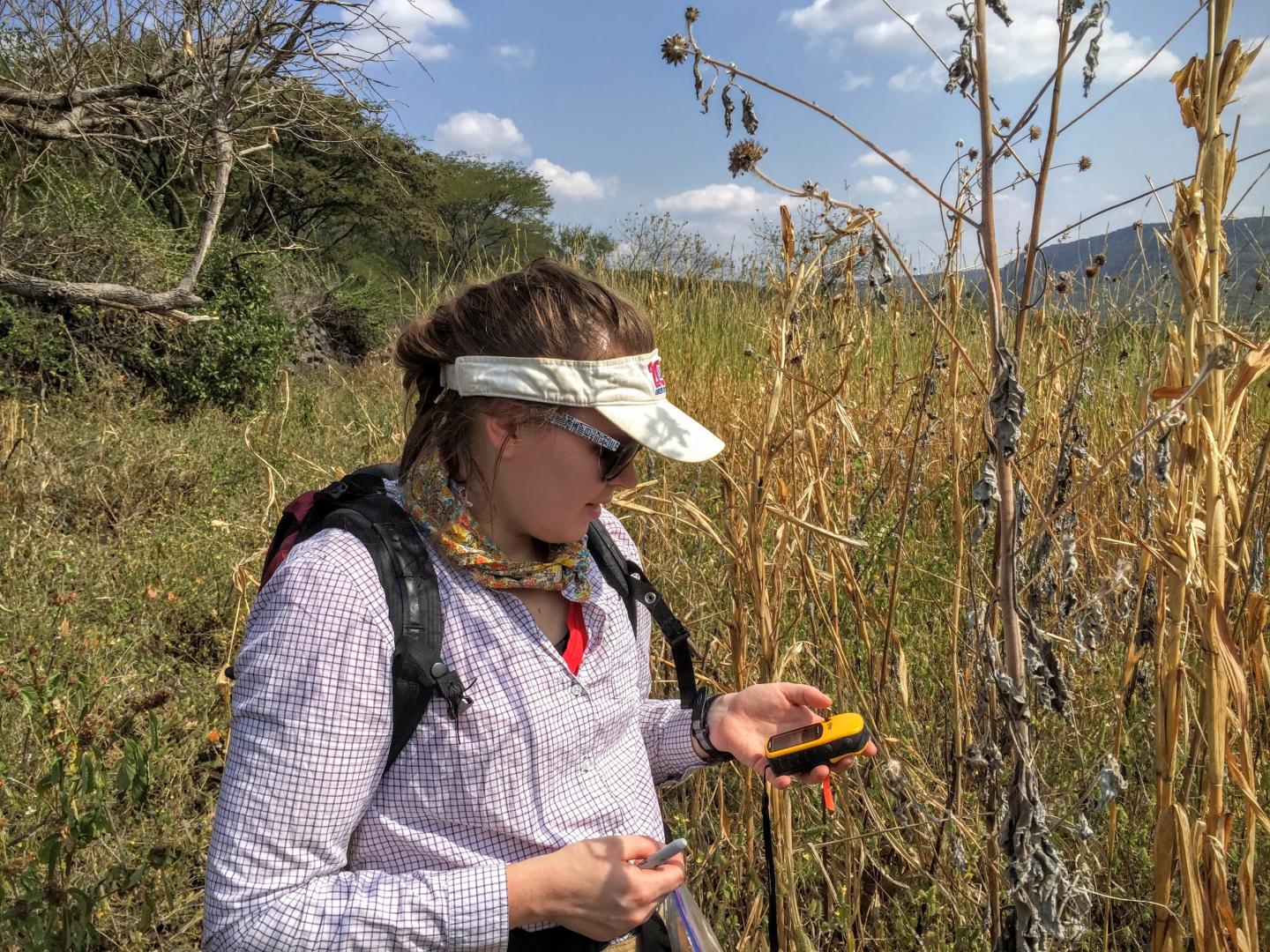
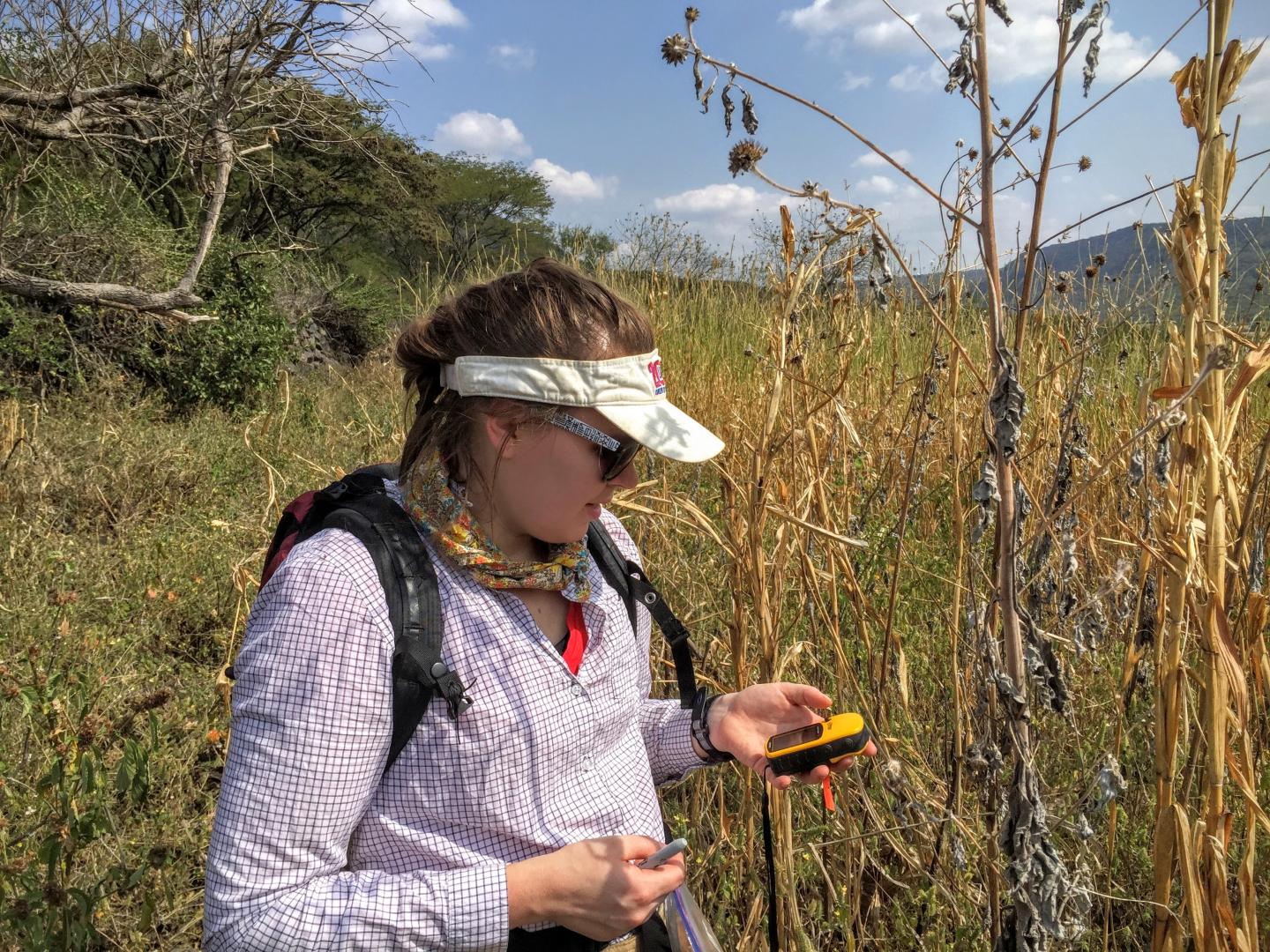
Credit: Jeffrey Ross-Ibarra/UC Davis
The "jumping genes" of maize have finally been mapped by an international team led by researchers at the University of California, Davis, and the Cold Spring Harbor Laboratory. The discovery could ultimately benefit the breeding and production of maize, one of the world's most important crops.
Transposable elements, or transposons, are DNA sequences that can move locations within a genome ("jumping genes"). Discovered in corn by Nobel-winning geneticist Barbara McClintock in the 1940s, they were long considered by many scientists to have little role in genetics. Others however, including McClintock, thought that transposons within a genome may have important roles in cells, including regulating gene expression. We know now that transposable elements are found in most organisms, making up more than 80 percent of the maize genome and nearly 50 percent of the human genome.
Until now, the exact locations of transposons have been elusive, primarily because they have been so difficult to sequence and assemble. Michelle Stitzer, a graduate student in population biology at UC Davis, and maize geneticist Jeff Ross-Ibarra, a professor of plant sciences, worked with colleagues at Cold Spring Harbor and several universities and genome technology companies to create a new maize reference genome that includes the many complex repeat regions. The new sequencing technology they used is described in a recent Nature publication.
Identifying and classifying transposable elements in maize
"Earlier maize reference genomes did not identify all of the repetitive regions," said Stitzer. "Until now, we knew relative positions of sequence segments, but not all of the messy parts in between. This new technology has allowed us to sequence all of the repetitive regions." Stitzer has developed methods to identify the positions of transposons in maize even when they jump into each other.
"The Nature publication focused on the technology, which gave a valuable, high-quality genome sequence," said Ross-Ibarra, "but Michelle then created computational algorithms to identify individual transposable elements across the whole genome, which had never been done before."
"Her work is revealing an entire ecology of transposons, complete with complex relationships of competition and cooperation. This is enabling us to begin to understand the rich biodiversity of the genome as an ecosystem."
Nathan Springer, a professor at the University of Minnesota and co-author on the Nature paper, noted, "Michelle's new approaches to identifying and classifying the full complement of transposable elements in maize should lead to new fundamental biological discoveries."
New windows in transposon research
Transposons can regulate and change the expression of nearby genes depending on where they land in the genome, Stitzer said. "That's very important to know, but was difficult to identify when we couldn't figure out where they were in the genome sequence."
Transposon insertions, and their impact on gene expression, are known to impact the way in which the maize plant interacts with its environment. For example, different transposon insertions confer drought tolerance, altered flowering time, ability to grow in toxic aluminum-rich soils, and have allowed maize to spread to temperate latitudes by breaking sensitivity to the long days of the tropics. And broadly, transposable element insertions have been shown to alter gene expression in stressful conditions. But these insertions with known functional consequences only represent a handful of the hundreds of thousands of transposable elements in the maize genome.
Damon Lisch, a professor at Purdue University who studies the regulation and evolution of plant transposable elements, said, "We simply cannot understand the complexity of plant genomes unless we can identify transposable elements. Michelle's work provides an invaluable road map that allows us to begin to untangle the diversity of all of the genetic elements that make up the maize genome."
Ross-Ibarra said that now that the maize genome is fully sequenced and transposon locations have been determined, a new realm of research is opening beyond the role of individual genes in maize — determining the role of individual transposons.
###
Media Contact
Andy Fell
[email protected]
@ucdavisnews
http://www.ucdavis.edu
Original Source
https://www.ucdavis.edu/news/tracking-down-jumping-genes-maize http://dx.doi.org/10.1038/nature22971