• HOME
  • NEWS
  • EXPLORE
    • CAREER
      • Companies
      • Jobs
    • EVENTS
    • iGEM
      • News
      • Team
    • PHOTOS
    • VIDEO
    • WIKI
  • BLOG
  • COMMUNITY
    • FACEBOOK
    • INSTAGRAM
    • TWITTER
Wednesday, May 13, 2026
BIOENGINEER.ORG
No Result
View All Result
  • Login
  • HOME
  • NEWS
  • EXPLORE
    • CAREER
      • Companies
      • Jobs
        • Lecturer
        • PhD Studentship
        • Postdoc
        • Research Assistant
    • EVENTS
    • iGEM
      • News
      • Team
    • PHOTOS
    • VIDEO
    • WIKI
  • BLOG
  • COMMUNITY
    • FACEBOOK
    • INSTAGRAM
    • TWITTER
  • HOME
  • NEWS
  • EXPLORE
    • CAREER
      • Companies
      • Jobs
        • Lecturer
        • PhD Studentship
        • Postdoc
        • Research Assistant
    • EVENTS
    • iGEM
      • News
      • Team
    • PHOTOS
    • VIDEO
    • WIKI
  • BLOG
  • COMMUNITY
    • FACEBOOK
    • INSTAGRAM
    • TWITTER
No Result
View All Result
Bioengineer.org
No Result
View All Result
Home NEWS Science News

Towards new lithium-ion batteries that are safer and more efficient

Bioengineer by Bioengineer
December 19, 2019
in Science News
Reading Time: 3 mins read
0
IMAGE
Share on FacebookShare on TwitterShare on LinkedinShare on RedditShare on Telegram

Lithium-ion batteries have revolutionised technology and mobile devices, and their use today is standard in mobile phones and laptop computers
IMAGE

Credit: University of Seville


Researchers from the University of Oxford and the University of Seville have published a study in the review Nature in which they define new strategies for the manufacturing of a generation of safer and more efficient lithium-ion batteries. In this way, they intend to overcome some of the limitations that these devices currently have. Their storage capacity and the pollution caused by some of the materials used to make them.

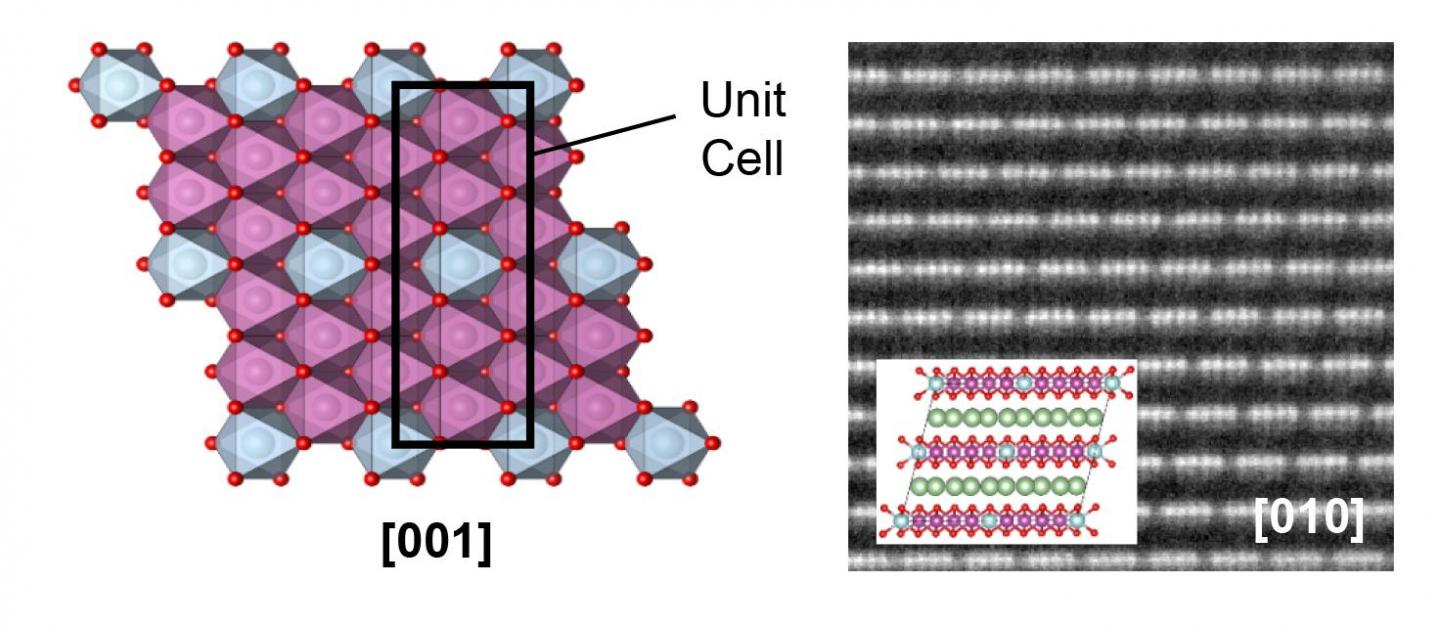
To that end, they have studied two types of cathodes that are very similar in their composition, but which show completely different behaviour: one of them suffers from the known loss of energy density in the first charge cycle, while the other does not. “This different in behaviour is owed to the formation in one type of a new superstructure, that is to say, to a very particular ordering of the metal atoms”, explains Juan Gabriel Lozano, researcher from the Higher Technical School of Engineering at the University of Seville. It has been shown that this characteristic prevents restructuring during the first charge cycle. “This result will allow us to overcome one of the principle bottlenecks that has, until now, been met in the development of this type of technology”, the researcher explains.

Lithium-ion batteries have revolutionised portable technology, and their use today is standard in mobile phones, laptop computers, etc. In recognition of that fact, the creators of this type of battery have this year received the Nobel Prize for Chemistry. However, there are still specific problems that have to be resolved. Firstly, “conventional Li-ion batteries are not capable of storing sufficient energy for their use to extend to grater uses such as in electric cars. In addition, in their cathodes, the majority use metals that are toxic, polluting and have associated safety problems. For all those reasons, there is a growing interest in the scientific community in developing new materials that solve these problems”, explains the University of Seville researcher.

Among the strongest candidates for replacing part of the current technology, are so-called lithium transition metal oxides. These cathodes are capable of storing a greater energy density than conventional ones, and are safer, cheaper and less harmful to the environment. However, they have a fundamental problem, and that is that a good part of the energy density is lost in the first charge cycle. This problem, connected to the atomic restructuring of the cathodes during the extraction and insertion of lithium, has meant that their implementation has still not been possible. However, the finding discussed in this article will allow this difficulty to be overcome.

###

Caption: Images from a high-resolution scanning electron microscope, and atomic models in which can be observed the atomic structure of the cathodes that suffer energy-density loss in the first charge cycle (left) and the new superstructure that prevents this loss (right).

Media Contact
Juan Gabriel Lozano Suarez
[email protected]

Original Source

https://www.nature.com/articles/s41586-019-1854-3

Related Journal Article

http://dx.doi.org/10.1038/s41586-019-1854-3

Tags: Electrical Engineering/ElectronicsHardwareResearch/DevelopmentTechnology/Engineering/Computer Science
Share12Tweet8Share2ShareShareShare2

Related Posts

Simon Fraser University and InBC Partner to Launch $20M Fund for Spin-Off Venture Investments — Technology and Engineering

Simon Fraser University and InBC Partner to Launch $20M Fund for Spin-Off Venture Investments

May 13, 2026

New Study Confirms Reliability of Depression Screening in Chronic Pain Patients

May 13, 2026

Particulate Matter at Low Air Concentrations Linked to Increased Kidney Disease Hospitalizations

May 13, 2026

UMass Chan Scientists Pioneer Gene Editing Technology That Rewrites Entire Genome Chapters

May 13, 2026
Please login to join discussion

POPULAR NEWS

  • Research Indicates Potential Connection Between Prenatal Medication Exposure and Elevated Autism Risk

    842 shares
    Share 337 Tweet 211
  • New Study Reveals Plants Can Detect the Sound of Rain

    729 shares
    Share 291 Tweet 182
  • Salmonella Haem Blocks Macrophages, Boosts Infection

    62 shares
    Share 25 Tweet 16
  • Breastmilk Balances E. coli and Beneficial Bacteria in Infant Gut Microbiomes

    57 shares
    Share 23 Tweet 14

About

We bring you the latest biotechnology news from best research centers and universities around the world. Check our website.

Follow us

Recent News

Simon Fraser University and InBC Partner to Launch $20M Fund for Spin-Off Venture Investments

New Study Confirms Reliability of Depression Screening in Chronic Pain Patients

Particulate Matter at Low Air Concentrations Linked to Increased Kidney Disease Hospitalizations

Subscribe to Blog via Email

Enter your email address to subscribe to this blog and receive notifications of new posts by email.

Join 82 other subscribers
  • Contact Us

Bioengineer.org © Copyright 2023 All Rights Reserved.

Welcome Back!

Login to your account below

Forgotten Password?

Retrieve your password

Please enter your username or email address to reset your password.

Log In
No Result
View All Result
  • Homepages
    • Home Page 1
    • Home Page 2
  • News
  • National
  • Business
  • Health
  • Lifestyle
  • Science

Bioengineer.org © Copyright 2023 All Rights Reserved.