Study first to show how effects of foraging gene are beneficial early in life but costly later in life
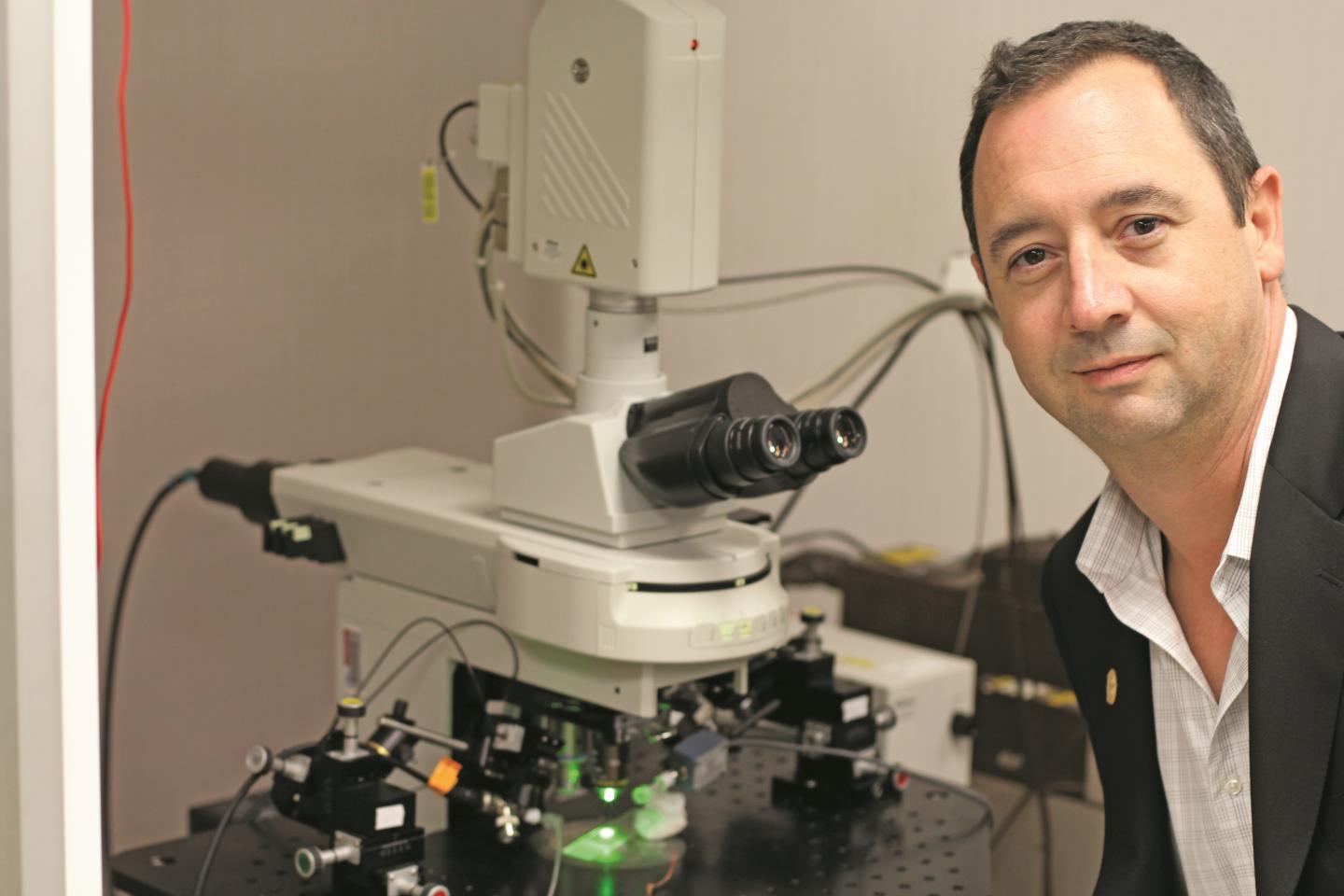
Credit: Florida Atlantic University
The consequences of aging are damage and degeneration of cells, which leads to loss of function, vulnerability to disease, and eventually, death. A hallmark of the aging process is the progressive decline of the nervous system, including both motor and cognitive functions. To complicate matters, natural variation in aging populations makes it difficult to study the factors that contribute to behavioral decline. Because the human aging process is typically slow, elucidating aging biomarkers and predicting individual differences has proven to be very challenging.
With the help of the common fruit fly (D. melanogaster), which ages quickly because it only lives about 60 days, neuroscientists from Florida Atlantic University’s Charles E. Schmidt College of Science provide insights into healthy aging by investigating the effects of a foraging gene on age and stress tolerance.
When most organisms are deprived of oxygen, their brain cells lose homeostasis and are subjected to oxidative stress, or too many free radicals that cause cell damage or death. When fruit flies are deprived of oxygen, however, they slow down their metabolism and enter into a reversible coma, which enable them to survive harsh environmental conditions. Protein kinase G, or PKG, is an enzyme that regulates several biological processes such as muscular contraction and the dilation of blood vessels. This enzyme also regulates synaptic transmission and neuronal function.
It is known that the differences in the foraging (for) gene, which encodes for PKG, is responsible for differences in neuroprotection during severe oxidative stress. The for gene or one of its similar gene sequences is conserved across many species and has been implicated in several behavioral physical traits including feeding, sleep, learning and memory, and environmental stress tolerance. What is not known is how age affects behavior and stress tolerance.
In a study published in the Journal of Experimental Biology, FAU researchers are the first to report that PKG levels in fruit flies affect deterioration due to aging with a robust behavioral component. They have discovered that the for gene confers protection during low oxygen stress at the expense of longevity and a decline in locomotor activity with age in fruit flies. It’s a trade-off – higher tolerance to low-oxygen stress increases fitness early in life, but comes at a cost to lifespan and locomotor activity later in life. These findings suggest a novel role for the PKG pathway in healthy aging and senescence.
Results of the study reveal that under severe anoxic stress (1 percent oxygen), flies expressing high levels of PKG drop into the coma faster, and this holds true in both young and old flies. The researchers also show that PKG influences stress tolerance in old flies under hypoxic conditions (3 percent oxygen) with flies expressing low levels of PKG, significantly increasing their activity during the stress.
Interestingly, the researchers found the same effect with age in normoxic (21 percent oxygen) conditions, indicating that age itself is a stress. The researchers also found that low PKG flies live longer.
“By understanding functional decline, we will be able to find biomarkers of aging and identify therapeutic interventions to counteract the deleterious effects of aging,” said Ken Dawson-Scully, Ph.D., associate professor of biological sciences in FAU’s Charles E. Schmidt College of Science and a member of the FAU Brain Institute (I-BRAIN). “With increasing human lifespan comes a need to understand how we also can age well.”
Functional senescence, defined in this study as inherent age-related decline in physiological and behavioral function, may be affected by pleiotropic genes, which control more than one trait. Antagonistic pleiotropy occurs when one trait is beneficial to an organism’s fitness and the other is detrimental. Because genetic conflicts may arise from a number of physiological, developmental or behavioral sources, pleiotropy is more commonly referred to as “trade-offs” between early- and late-life performance in animal models of aging such as worms, fruit flies and mice.
“Regardless of whether this study is indicative of behavior and fitness consequences in nature, our results make the fruit fly a clear choice for investigating potential diseases involving energy dysfunction,” said Stephanie P. Kelly, Ph.D., co-author and a scholar of the FAU Brain Institute and a graduate student in integrative biology in FAU’s Charles E. Schmidt College of Science.
###
About Florida Atlantic University:
Florida Atlantic University, established in 1961, officially opened its doors in 1964 as the fifth public university in Florida. Today, the University, with an annual economic impact of $6.3 billion, serves more than 30,000 undergraduate and graduate students at sites throughout its six-county service region in southeast Florida. FAU’s world-class teaching and research faculty serves students through 10 colleges: the Dorothy F. Schmidt College of Arts and Letters, the College of Business, the College for Design and Social Inquiry, the College of Education, the College of Engineering and Computer Science, the Graduate College, the Harriet L. Wilkes Honors College, the Charles E. Schmidt College of Medicine, the Christine E. Lynn College of Nursing and the Charles E. Schmidt College of Science. FAU is ranked as a High Research Activity institution by the Carnegie Foundation for the Advancement of Teaching. The University is placing special focus on the rapid development of critical areas that form the basis of its strategic plan: Healthy aging, biotech, coastal and marine issues, neuroscience, regenerative medicine, informatics, lifespan and the environment. These areas provide opportunities for faculty and students to build upon FAU’s existing strengths in research and scholarship. For more information, visit fau.edu.
Media Contact
Gisele Galoustian
[email protected]
Related Journal Article
http://dx.