

• HOME
  • NEWS
  • EXPLORE
    • CAREER
      • Companies
      • Jobs
    • EVENTS
    • iGEM
      • News
      • Team
    • PHOTOS
    • VIDEO
    • WIKI
  • BLOG
  • COMMUNITY
    • FACEBOOK
    • INSTAGRAM
    • TWITTER
Tuesday, July 7, 2026
BIOENGINEER.ORG
No Result
View All Result
  • Login
  • HOME
  • NEWS
  • EXPLORE
    • CAREER
      • Companies
      • Jobs
        • Lecturer
        • PhD Studentship
        • Postdoc
        • Research Assistant
    • EVENTS
    • iGEM
      • News
      • Team
    • PHOTOS
    • VIDEO
    • WIKI
  • BLOG
  • COMMUNITY
    • FACEBOOK
    • INSTAGRAM
    • TWITTER
  • HOME
  • NEWS
  • EXPLORE
    • CAREER
      • Companies
      • Jobs
        • Lecturer
        • PhD Studentship
        • Postdoc
        • Research Assistant
    • EVENTS
    • iGEM
      • News
      • Team
    • PHOTOS
    • VIDEO
    • WIKI
  • BLOG
  • COMMUNITY
    • FACEBOOK
    • INSTAGRAM
    • TWITTER
No Result
View All Result
Bioengineer.org
No Result
View All Result
Home NEWS Science News Biology

Titanium dioxide nanoparticles can exacerbate colitis

Bioengineer by Bioengineer
July 19, 2017
in Biology
Reading Time: 2 mins read
0
Share on FacebookShare on TwitterShare on LinkedinShare on RedditShare on Telegram

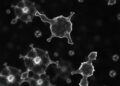
Credit: UZH

Titanium dioxide, one of the most-produced nanoparticles worldwide, is being used increasingly in foodstuffs. When intestinal cells absorb titanium dioxide particles, this leads to increased inflammation and damage to the intestinal mucosa in mice with colitis. Researchers at the University of Zurich recommend that patients with colitis should avoid food containing titanium dioxide particles.

The frequency of inflammatory bowel disease like Crohn's disease and ulcerative colitis has been on the rise in many Western countries for decades. The illnesses are caused by an excessive autoimmune reaction against the intestinal flora. In addition to genetic factors, environmental factors like the Western lifestyle, especially nutrition, play an essential role in the development of these chronic intestinal diseases.

Use of titanium dioxide nanoparticles in food is increasing

The research of Gerhard Rogler, professor of gastroenterology and hepatology at the University of Zurich, now shows that titanium dioxide nanoparticles can intensify the inflammatory reaction in the bodies of patients with inflammatory intestinal diseases. Titanium dioxide is a white pigment used in medicines, cosmetics and toothpaste and increasingly as food additive E171, for example, in icing, chewing gum or marshmallows. Until now, there have been no restrictions on its use in the food industry.

The scientists led by Gerhard Rogler concentrated their research on a protein complex inside cells: the NLRP3 inflammasome. This protein complex is part of the non-specific immune system, which detects danger signals and then triggers inflammation. If the inflammasome is activated by bacterial components, for example, and the inflammatory reaction plays a vital role in the defense against infective agents. In the same way, NLRP3 can be activated by small inorganic particles – sometimes with negative consequences: If uric acid crystals form in the cells, for example the inflammation leads to gout.

Titanium dioxide can be absorbed from food in case of intestinal disease

The research team first studied the effect of inorganic titanium dioxide particles in cell cultures. They were able to show that titanium dioxide can penetrate human intestinal epithelial cells and macrophages and accumulate there. The nanoparticles were detected as danger signals by inflammasomes, which triggered the production of inflammatory messengers. In addition, patients with ulcerative colitis, whose intestinal barrier is disrupted, have an increased concentration of titanium dioxide in their blood. "This shows that these particles can be absorbed from food under certain disease conditions," Rogler says.

In a further step, the scientists orally administered titanium dioxide nanoparticles to mice, which serve as a disease model for inflammatory bowel disease. Here, as well, the particles activated the NLRP3 complex, which led to strong intestinal inflammation and greater damage to the intestinal mucosa in the mice. In addition, titanium dioxide crystals accumulated in the animals' spleens.

Researchers recommend abstinence from foods containing E171 in case of colitis

Whether these findings will be confirmed in humans must now be determined in further studies. "Based on our results," Rogler concludes, "patients with an intestinal barrier dysfunction as found in colitis should abstain from foods containing titanium dioxide."

###

Media Contact

Gerhard Rogler
[email protected]
41-442-559-477
@uzh_news

http://www.uzh.ch

Original Source

http://www.media.uzh.ch/en/Press-Releases/2017/titanium-dioxide-nanoparticles-colitis.html http://dx.doi.org/10.1136/gutjnl-2015-310297

Share12Tweet8Share2ShareShareShare2

Related Posts

Here are a few rewritten headlines for a science magazine post, each with a slightly different tone: Intriguing & poetic: How do organs sculpt themselves? Sea stars hold the secret Direct & research-focused: Sea stars reveal the hidden rules of organ formation Metaphorical & inviting: Tiny architects beneath the waves: What sea stars teach us about building organs Short & punchy: Star-shaped clues to how our organs take shape Question-led: Could a sea star show us how organs form? Elegant & feature-style: The body’s blueprint, glimpsed in a sea star’s arm

July 6, 2026
Bacteria evolve faster with unconventional gene copies — Biology

Bacteria evolve faster with unconventional gene copies

July 6, 2026

Neighbours rewire soil feedback via root microbiome shifts

July 6, 2026

Evolution-Inspired Biosensors Revolutionize Lipid Tracking in Real Time

July 2, 2026
Please login to join discussion

POPULAR NEWS

  • Detection of EDCs in Breast Milk and Infant Urine Up to Six Months Highlights Early Exposure Risks

    77 shares
    Share 31 Tweet 19
  • New Drug Candidate Developed at McMaster Shows Potential for Treating Brain Cancer

    58 shares
    Share 23 Tweet 15
  • Saying Goodbye to PGY-6: Pediatric Fellowship Realities

    103 shares
    Share 41 Tweet 26
  • KTU Researchers Explore Ultrasound’s Role in Enhancing Blood Flow Beyond Diagnostics

    53 shares
    Share 21 Tweet 13

About

We bring you the latest biotechnology news from best research centers and universities around the world. Check our website.

Follow us

Recent News

Flame retardant BDE-209 targets molecularly linked to ulcerative colitis

Ultra-high frequency particle impacts mimic rockbursts to shatter hard rock

Kidney transplant outcomes in older adults studied by German researchers

Subscribe to Blog via Email

Enter your email address to subscribe to this blog and receive notifications of new posts by email.

Join 83 other subscribers
  • Contact Us

Bioengineer.org © Copyright 2023 All Rights Reserved.

Welcome Back!

Login to your account below

Forgotten Password?

Retrieve your password

Please enter your username or email address to reset your password.

Log In
No Result
View All Result
  • Homepages
    • Home Page 1
    • Home Page 2
  • News
  • National
  • Business
  • Health
  • Lifestyle
  • Science

Bioengineer.org © Copyright 2023 All Rights Reserved.