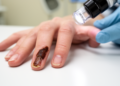
Oral squamous cell carcinoma remains one of the most lethal and disfiguring cancers worldwide, and clinicians have long complained that the tools available to detect and monitor it lag far behind those available for other malignancies. A new pilot study from a research team in India, published in Molecular Biology Reports, adds a small but intriguing piece to the molecular puzzle of this disease. The researchers examined two microRNAs, hsa-miR-21-5p and hsa-miR-26a-5p, in tumour tissue from patients with oral squamous cell carcinoma and compared the results with histologically normal oral tissue. Their findings, drawn from a modest cohort of sixteen tumour samples and sixteen controls, suggest that one of these tiny regulatory RNAs may behave in a remarkably consistent way in advanced disease, while the other, long a favourite of oral cancer researchers, showed a far weaker and less reliable signal.
MicroRNAs are short, non-coding RNA molecules, typically twenty to twenty-four nucleotides in length, that do not encode proteins. Instead, they act as fine-tuners of gene expression, binding to complementary sequences in messenger RNAs and either promoting their degradation or blocking their translation into protein. A single microRNA can regulate dozens or even hundreds of target genes, which places these molecules at critical junctions in cellular control networks governing proliferation, apoptosis, differentiation, and the epithelial-mesenchymal transition that allows cancer cells to invade and spread. Because microRNAs are stable, easily measurable, and often released into circulating body fluids, they have attracted intense interest as candidate biomarkers for cancer detection, prognosis, and treatment monitoring. In oral cancer specifically, dozens of studies have catalogued dysregulated microRNAs, yet no microRNA-based test has entered routine clinical practice, a gap the authors of the new study explicitly set out to help close.
The study was designed as a single-centre case-control pilot investigation. The team collected sixteen tissue samples confirmed by histopathology as oral squamous cell carcinoma, along with sixteen histologically normal oral tissue controls. From each sample they extracted total RNA, reverse-transcribed it into complementary DNA, and quantified the two microRNAs of interest using quantitative real-time polymerase chain reaction. U6 small nuclear RNA served as the reference gene, and relative expression was calculated with the widely used 2^-ΔΔCt method. Rather than relying on a single statistical test, the researchers employed a robust analytical framework: group differences were assessed with the Mann-Whitney U test, effect sizes were reported as Hodges-Lehmann median differences with 95 percent confidence intervals, and diagnostic performance was explored through receiver operating characteristic analysis with bootstrap resampling and leave-one-out internal validation.
The headline result concerns hsa-miR-26a-5p. This microRNA was consistently upregulated in the tumour samples, with a Hodges-Lehmann ΔCt difference of 3.59 and a 95 percent confidence interval running from 3.02 to 4.19, a difference that was highly statistically significant at p less than 0.001. In practical terms, the expression values of hsa-miR-26a-5p completely separated the tumour samples from the normal controls in this dataset, yielding an area under the receiver operating characteristic curve of 1.000. In biomarker research, a perfect separation in any single dataset is a striking finding, but it is also one that experienced researchers treat with caution. Small cohorts, homogeneous sampling, and the particular composition of a study population can all produce apparently flawless discrimination that fails to replicate in larger and more diverse groups.
The authors themselves are careful on this point, and their restraint is one of the more notable features of the paper. The cohort consisted exclusively of advanced-stage disease, with all tumours classified as Stage III or Stage IV. Because no early-stage tumours were included, the perfect separation observed cannot be interpreted as validated diagnostic accuracy for detecting oral cancer in general, let alone for catching the disease at a curable early stage. The team therefore reports the separation descriptively, framing the result as a hypothesis-generating observation that warrants confirmation in larger, independent, and stage-diverse cohorts before any diagnostic application is considered. This kind of explicit boundary-setting is increasingly expected in biomarker pilot studies, where overstatement of preliminary findings has historically fuelled cycles of enthusiasm and disappointment.
The second microRNA examined, hsa-miR-21-5p, tells a more complicated story. This molecule is arguably the most intensively studied microRNA in oral oncology, with a substantial literature linking its overexpression to tumour progression, treatment resistance, and poor survival. In the present dataset, however, its behaviour was far less convincing. The Hodges-Lehmann difference was 1.21, with a 95 percent confidence interval of 0.26 to 1.99 and a p value of 0.012, indicating a statistically detectable but modest and inconsistent shift between groups. The area under the curve was 0.758, well short of the separation achieved by hsa-miR-26a-5p. The finding is a useful reminder that biomarker performance is context-dependent: a molecule that performs strongly in meta-analyses of circulating samples or in large multi-centre tissue panels may behave differently in a small, locally recruited cohort processed with a specific reference gene and analytical pipeline.
Equally informative is what the study did not find. Neither hsa-miR-26a-5p nor hsa-miR-21-5p showed any association with tumour stage, histological grade, patient age, or sex within this cohort. For a biomarker candidate, the absence of correlation with clinical parameters cuts both ways. On one hand, it suggests the microRNA signal may reflect tumour presence rather than tumour burden, which would be desirable for a detection marker. On the other hand, with only advanced-stage tumours represented, the analysis had little stage variation to work with, so the null result on stage association is more a limitation of the design than a substantive biological conclusion.
The biological literature offers plausible reasons why hsa-miR-26a-5p might matter in oral carcinogenesis. Prior work has implicated the miR-26 family in modulating cancer-related pathways in oral squamous cell carcinoma, including studies showing that miR-26a and miR-26b can restrain tumour progression by targeting signalling molecules such as PAK1 in tongue squamous cell carcinoma. Other research has reported that hsa-miR-26a-5p can influence the sensitivity of oral cancer cells to ferroptosis, an iron-dependent form of regulated cell death, by acting on the cystine transporter SLC7A11. The molecule has also been connected to epithelial-mesenchymal transition programs in head and neck cancer stem cells through its regulation of long non-coding RNA networks. The present study does not test these mechanisms directly, but its expression data are consistent with the idea that hsa-miR-26a-5p occupies a meaningful position in the molecular circuitry of the disease.
The practical significance of the work lies partly in its setting. The authors emphasize that reliable molecular markers are especially needed in resource-limited settings, where access to advanced imaging and specialist pathology is constrained and where oral cancer, driven largely by tobacco, areca nut, and alcohol use, imposes a heavy burden. Quantitative PCR assays for microRNAs are relatively inexpensive and technically accessible, which makes a tissue-based or eventually saliva-based microRNA test an attractive proposition for screening and triage in high-burden regions. The study was conducted at a single institution in southern India with institutional ethics approval and informed consent from all participants, and it was supported by seed money from the Vinayaka Mission’s Research Foundation, illustrating how modestly funded local research can still contribute meaningful data to a global biomarker effort.
For now, the appropriate conclusion is the one the authors themselves draw. hsa-miR-26a-5p emerges from this pilot as a robustly overexpressed molecule in advanced oral squamous cell carcinoma, deserving of serious follow-up, while hsa-miR-21-5p, in this particular dataset, did not live up to its reputation. The path forward is clearly laid out: larger, independent, multi-centre cohorts spanning early and late disease stages, ideally paired with matched normal tissue and, eventually, minimally invasive sample types such as saliva or blood. Only then will the perfect separation seen in these sixteen tumour samples be revealed as either a genuine biological signature or an artefact of a small and homogeneous study. Either outcome would be valuable, and this careful, statistically disciplined pilot provides exactly the kind of honest starting point that the long search for an oral cancer biomarker needs.
Subject of Research: Differential expression of the microRNAs hsa-miR-21-5p and hsa-miR-26a-5p in oral squamous cell carcinoma
Article Title: Differential expression of hsa-miR-21-5p and hsa-miR-26a-5p in oral squamous cell carcinoma: A Single Centre pilot study
Article References: Kaliamoorthy, S., Vinitha, G., Manickam, K., Kandasamy, V., Vedeswari, P. C., & Archana, S. P. (2026). Differential expression of hsa-miR-21-5p and hsa-miR-26a-5p in oral squamous cell carcinoma: A Single Centre pilot study. Molecular Biology Reports, 53(1), Article 1527. https://doi.org/10.1007/s11033-026-12712-y
Image Credits: AI Generated
DOI: 10.1007/s11033-026-12712-y
Keywords: oral squamous cell carcinoma, microRNA, hsa-miR-26a-5p, hsa-miR-21-5p, biomarker, qRT-PCR, ROC analysis, cancer diagnosis, non-coding RNA, pilot study, head and neck cancer, molecular biology
News Source: Nathaniel Bowman. (October 19, 2026). Tiny RNA Molecule Shows Striking Signal in Advanced Oral Cancer Pilot Study. Scienmag.