• HOME
  • NEWS
  • EXPLORE
    • CAREER
      • Companies
      • Jobs
    • EVENTS
    • iGEM
      • News
      • Team
    • PHOTOS
    • VIDEO
    • WIKI
  • BLOG
  • COMMUNITY
    • FACEBOOK
    • INSTAGRAM
    • TWITTER
Wednesday, May 20, 2026
BIOENGINEER.ORG
No Result
View All Result
  • Login
  • HOME
  • NEWS
  • EXPLORE
    • CAREER
      • Companies
      • Jobs
        • Lecturer
        • PhD Studentship
        • Postdoc
        • Research Assistant
    • EVENTS
    • iGEM
      • News
      • Team
    • PHOTOS
    • VIDEO
    • WIKI
  • BLOG
  • COMMUNITY
    • FACEBOOK
    • INSTAGRAM
    • TWITTER
  • HOME
  • NEWS
  • EXPLORE
    • CAREER
      • Companies
      • Jobs
        • Lecturer
        • PhD Studentship
        • Postdoc
        • Research Assistant
    • EVENTS
    • iGEM
      • News
      • Team
    • PHOTOS
    • VIDEO
    • WIKI
  • BLOG
  • COMMUNITY
    • FACEBOOK
    • INSTAGRAM
    • TWITTER
No Result
View All Result
Bioengineer.org
No Result
View All Result
Home NEWS Science News Chemistry

Tiny amino acid differences can lead to dramatically different enzymes

Bioengineer by Bioengineer
May 11, 2021
in Chemistry
Reading Time: 2 mins read
0
IMAGE
Share on FacebookShare on TwitterShare on LinkedinShare on RedditShare on Telegram

IMAGE

Credit: Dr Ulrike Kappler

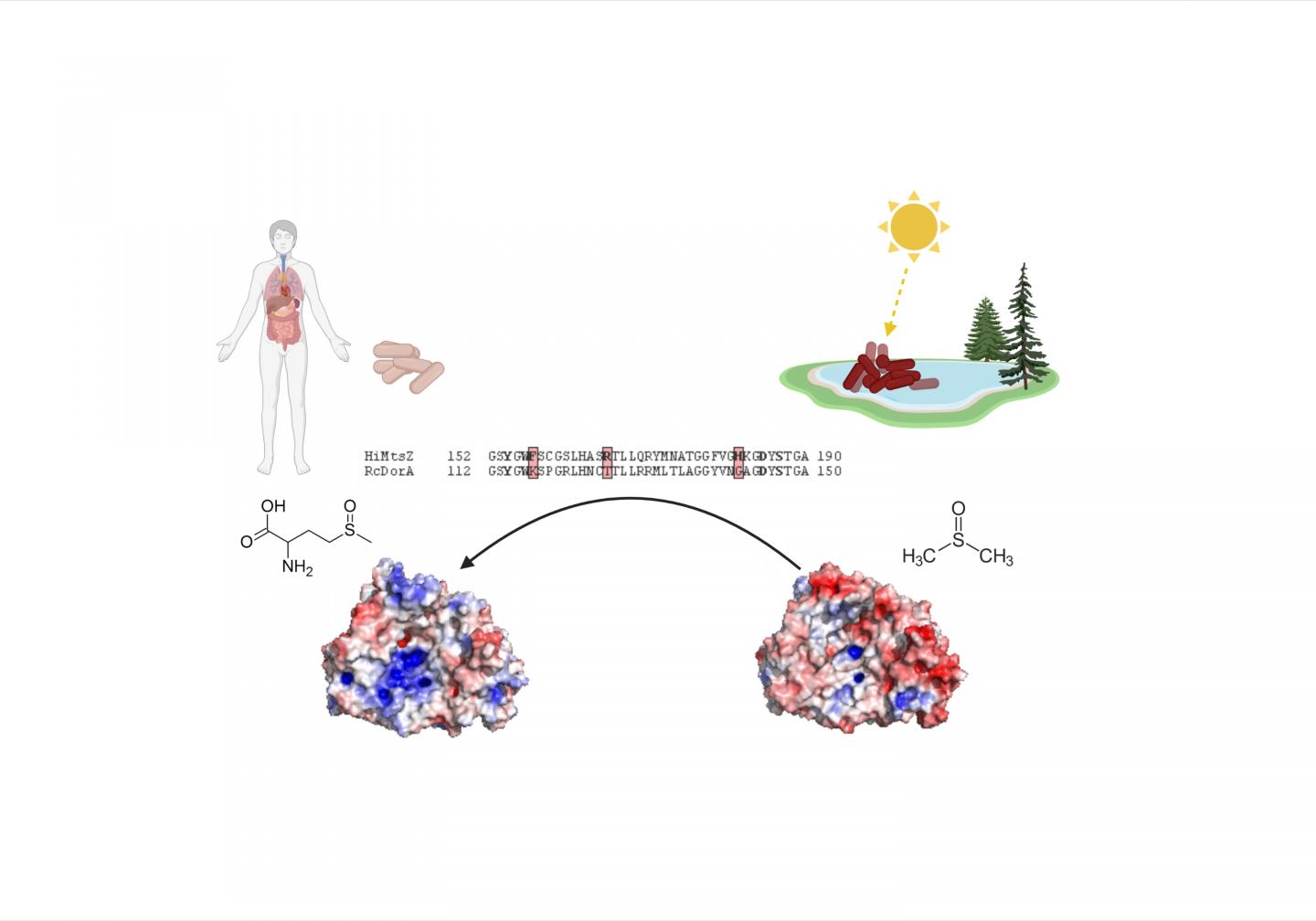
Just a few changes to an enzyme’s amino acids can be enough to dramatically change its function, enabling microbes to inhabit wildly different environments.

University of Queensland microbiologist Associate Professor Ulrike Kappler, led by an international team of researchers, made this discovery when investigating how Haemophilus influenzae bacteria colonise the human respiratory system.

“This disease-causing bacterium is supremely adapted to living in humans, so much so that they cannot survive anywhere else,” Dr Kappler said.

“It turns out that one enzyme, MtsZ, is the key player in this adaptation.

“But, surprisingly, close relatives of this protein, which promotes Haemophilus survival exclusively inside humans, help other species of bacteria to survive exclusively in lakes.

“How could closely related enzymes help one bacterial species live exclusively in humans and another to live only in lakes?

“The answer is a matter of minute amino acid changes.”

The research shows that a sequence difference of just three amino acids, a difference of less than 0.25 per cent of the MtsZ enzyme sequence, changes the functionality of the enzyme between bacteria living in lakes compared with those living in humans.

“It the natural world, tiny differences can lead to enormous functional changes – for example, humans and chimpanzees aren’t exactly the same despite being 99 percent genetically similar,” Dr Kappler said.

“We’re just now realising that this can be the case for enzymes as well.

“The slight changes in this enzyme enable the lake-dwelling bacteria to live on decaying algae and generate energy.

“Contrast this with Haemophilus, which uses MtsZ to scavenge amino acids from the human body and use them for bacterial growth and replication.

“Now that we understand the unique structure of this enzyme in Haemophilus, we hope to develop ways to inhibit its specific function and remedy chronic respiratory conditions associated with this bacterium.”

###

The paper is published in Journal of Biological Chemistry (DOI: 10.1016/j.jbc.2021.100672) and includes collaborating researchers from the USA, Germany and Australia.

Media Contact
A/Prof Ulrike Kappler
[email protected]

Original Source

https://scmb.uq.edu.au/article/2021/05/tiny-amino-acid-differences-can-lead-dramatically-different-enzymes

Related Journal Article

http://dx.doi.org/10.1016/j.jbc.2021.100672

Tags: BiochemistryBiologyCell BiologyChemistry/Physics/Materials SciencesMedicine/HealthMicrobiologyMolecular Biology
Share12Tweet8Share2ShareShareShare2

Related Posts

Scientists Observe Massive Light-Conversion Effect in Chiral Carbon Nanotubes — Chemistry

Scientists Observe Massive Light-Conversion Effect in Chiral Carbon Nanotubes

May 19, 2026
TransEuroOGS Project to Connect Optical Ground Stations Across Europe — Chemistry

TransEuroOGS Project to Connect Optical Ground Stations Across Europe

May 19, 2026

Decarbonizing the Grid: The Essential First Step to Capturing Carbon from the Environment

May 19, 2026

Overcoming Mid-Infrared Interconnection Challenges: Durable Bonding Technique for High-Power Optics Using Liquid-Like Chalcogenide Glass

May 19, 2026
Please login to join discussion

POPULAR NEWS

  • blank

    New Study Reveals Plants Can Detect the Sound of Rain

    732 shares
    Share 292 Tweet 183
  • Research Indicates Potential Connection Between Prenatal Medication Exposure and Elevated Autism Risk

    845 shares
    Share 338 Tweet 211
  • Breastmilk Balances E. coli and Beneficial Bacteria in Infant Gut Microbiomes

    58 shares
    Share 23 Tweet 15
  • ESMO 2025: mRNA COVID Vaccines Enhance Efficacy of Cancer Immunotherapy

    244 shares
    Share 98 Tweet 61

About

We bring you the latest biotechnology news from best research centers and universities around the world. Check our website.

Follow us

Recent News

Thioredoxin Reductase 3 Fuels EGFR Inhibitor Resistance

Targeted Therapy Advances in H3K27-Altered Glioma

Persistent High Rates of Violence Against Women, Especially Among Marginalized Groups

Subscribe to Blog via Email

Enter your email address to subscribe to this blog and receive notifications of new posts by email.

Join 82 other subscribers
  • Contact Us

Bioengineer.org © Copyright 2023 All Rights Reserved.

Welcome Back!

Login to your account below

Forgotten Password?

Retrieve your password

Please enter your username or email address to reset your password.

Log In
No Result
View All Result
  • Homepages
    • Home Page 1
    • Home Page 2
  • News
  • National
  • Business
  • Health
  • Lifestyle
  • Science

Bioengineer.org © Copyright 2023 All Rights Reserved.