Women who spend a lot of time on TikTok — especially those seeing a lot of pro-anorexia content — feel worse about their appearance, a new study shows. The results suggest that high TikTok exposure could harm mental health, reducing body image satisfaction and increasing the risk for disordered eating behavior. Madison Blackburn and Rachel Hogg from Charles Sturt University in Australia present these findings in the open-access journal PLOS ONE on August 7, 2024.
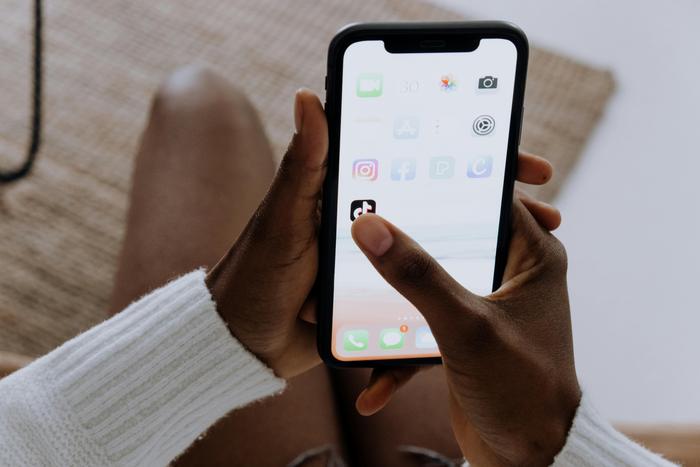
Credit: cottonbro studio, Pexels, CC0 (https://creativecommons.org/publicdomain/zero/1.0/)
Women who spend a lot of time on TikTok — especially those seeing a lot of pro-anorexia content — feel worse about their appearance, a new study shows. The results suggest that high TikTok exposure could harm mental health, reducing body image satisfaction and increasing the risk for disordered eating behavior. Madison Blackburn and Rachel Hogg from Charles Sturt University in Australia present these findings in the open-access journal PLOS ONE on August 7, 2024.
Since its launch, the short-form video app TikTok has had more than 2 billion downloads. The app’s algorithm curates content on a “For You” page based on a user’s interactions with previous videos, and content which glamorizes disordered eating behavior and extremely thin body image ideals can therefore quickly fill a users’ feed. To understand how TikTok content might affect women’s body image, Blackburn and Hogg surveyed 273 women between 18-28. They asked how much they used TikTok, and screened them for symptoms of disordered eating, body image, their attitudes toward beauty standards, and risk for orthorexia—a set of restricted diet and eating patterns focused on ridding oneself of “impure” or “unhealthy” foods or behaviors. The scientists then had half the participants watch a 7-8 minute compilation of disordered eating content from TikTok—including young women starving themselves or providing weight loss tips alongside juice cleanse and workout videos—while the other half of participants viewed neutral content with nature, cooking and animal themes.
Both groups reported a decrease in body image satisfaction after watching the videos, but those exposed to pro-anorexia content had the biggest decrease, and showed an increase in internalization of beauty standards. Women who used TikTok more than 2 hours per day reported more disordered eating behaviors, but the findings were not significant. While the study did not address how exposure to pro-anorexia content might affect people over time, the results suggest that weight-loss focused TikTok content might negatively affect viewers’ body image and beauty standards. The researchers recommend that there be better control over pro-anorexia content on TikTok.
The authors add: “Our study showed that less than 10 minutes of exposure to implicit and explicit pro-anorexia TikTok content had immediate negative consequences for body image states and internalization of appearance ideals, suggesting psychological harm can occur for young female TikTok users even when explicit pro-anorexia content is not sought out and when TikTok use is of a short duration.”
#####
In your coverage please use this URL to provide access to the freely available article in PLOS ONE: https://journals.plos.org/plosone/article?id=10.1371/journal.pone.0307597
Citation: Blackburn MR, Hogg RC (2024) #ForYou? the impact of pro-ana TikTok content on body image dissatisfaction and internalisation of societal beauty standards. PLoS ONE 19(8): e0307597. https://doi.org/10.1371/journal.pone.0307597
Author Countries: Australia
Funding: We acknowledge the financial support provided by Charles Sturt University.
Journal
PLoS ONE
DOI
10.1371/journal.pone.0307597
Method of Research
Survey
Subject of Research
Not applicable
Article Title
#ForYou? the impact of pro-ana TikTok content on body image dissatisfaction and internalisation of societal beauty standards
Article Publication Date
7-Aug-2024
COI Statement
The authors have declared that no competing interests exist.