• HOME
  • NEWS
  • EXPLORE
    • CAREER
      • Companies
      • Jobs
    • EVENTS
    • iGEM
      • News
      • Team
    • PHOTOS
    • VIDEO
    • WIKI
  • BLOG
  • COMMUNITY
    • FACEBOOK
    • INSTAGRAM
    • TWITTER
Sunday, May 17, 2026
BIOENGINEER.ORG
No Result
View All Result
  • Login
  • HOME
  • NEWS
  • EXPLORE
    • CAREER
      • Companies
      • Jobs
        • Lecturer
        • PhD Studentship
        • Postdoc
        • Research Assistant
    • EVENTS
    • iGEM
      • News
      • Team
    • PHOTOS
    • VIDEO
    • WIKI
  • BLOG
  • COMMUNITY
    • FACEBOOK
    • INSTAGRAM
    • TWITTER
  • HOME
  • NEWS
  • EXPLORE
    • CAREER
      • Companies
      • Jobs
        • Lecturer
        • PhD Studentship
        • Postdoc
        • Research Assistant
    • EVENTS
    • iGEM
      • News
      • Team
    • PHOTOS
    • VIDEO
    • WIKI
  • BLOG
  • COMMUNITY
    • FACEBOOK
    • INSTAGRAM
    • TWITTER
No Result
View All Result
Bioengineer.org
No Result
View All Result
Home NEWS Science News Biology

Tiger moths use signals to warn bats: Toxic not tasty

Bioengineer by Bioengineer
February 12, 2018
in Biology
Reading Time: 2 mins read
0
Share on FacebookShare on TwitterShare on LinkedinShare on RedditShare on Telegram
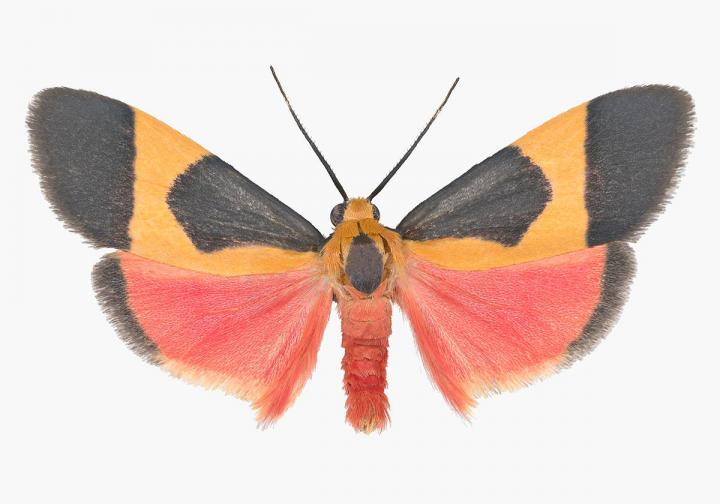
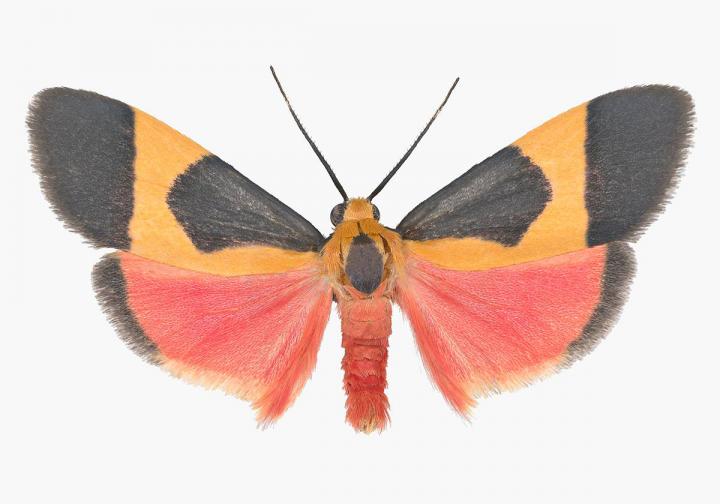
IMAGE

Credit: Joseph Scheer

Acoustic warning signals emitted by tiger moths to deter bats – a behavior previously proven only in the laboratory – actually occur in nature and are used as a defense mechanism, according to new research from Wake Forest University.

Field research of free-flying bats conducted in their natural habitats by biology graduate student Nick Dowdy and colleagues shows that tiger moths produce ultrasonic signals to warn bats they don't taste good. This behavior – called acoustic aposematism – was previously proven in the laboratory by biology professor Bill Conner and Jesse Barber, who earned his doctorate at Wake Forest in 2007.

Birds and other mammals use visual aposematic signals like bright or highly contrasting patterns to advertise their toxicity. But, bats – the main predators for moths – don't rely on vision at night; they rely on sound. So, the moths developed an acoustic signal to deter the bats.

"The signals are, in essence, a warning to the bats that the moth is unpalatable and potentially harmful if ingested by the bats," Dowdy said.

The research, published in PLOS ONE, furthers the understanding of the evolution of animal behavior in the bat vs. moth arms race. Dowdy, who works in Conner's lab, said this is the first time the researchers have been able to show that this phenomenon, acoustic aposematism, actually occurs in nature. Dowdy specifically studied two types of tiger moths, the Pygarctia roseicapitis and the Cisthene martini.

Dowdy said he was also able to show evidence for what he calls a "nonchalance continuum" seen in multiple species. This means they don't always dive out of the way when bats approach. He said most moths enact evasive dives and spiraling flight when a bat is about to capture them, "presumably at a cost to the moth as it can be energetically costly to do these maneuvers. "We've found that this is only sometimes true in tiger moths and different species appear to use these behaviors at different rates."

The implication is that certain species may have evolved to rely on their warning sounds instead of the evasive maneuvers common to most eared moths. Dowdy said the results suggest that acoustic aposematism is likely to be the ancestral function of sound production in tiger moths.

"This means that in evolutionary history these moths first evolved these sounds for use in warning bats of their toxicity and then sometime later, these sounds grew in complexity in certain species to perform a sonar jamming function," he said.

###

Media Contact

Bonnie Davis
[email protected]
336-493-6184
@WakeForest

Home

Share12Tweet8Share2ShareShareShare2

Related Posts

Uncovering C. elegans Immunity via Genetic Screens — Biology

Uncovering C. elegans Immunity via Genetic Screens

May 16, 2026
Single mother must adapt swiftly — the survival of her colony depends on it — Biology

Single mother must adapt swiftly — the survival of her colony depends on it

May 15, 2026

Why Are Nearly Everyone Right-Handed? It Might Be Linked to How We Learned to Walk

May 15, 2026

Excessive Neuronal Activity Initiates Severe Autoimmune Brain Disorder

May 15, 2026
Please login to join discussion

POPULAR NEWS

  • Research Indicates Potential Connection Between Prenatal Medication Exposure and Elevated Autism Risk

    844 shares
    Share 338 Tweet 211
  • New Study Reveals Plants Can Detect the Sound of Rain

    730 shares
    Share 291 Tweet 182
  • Salmonella Haem Blocks Macrophages, Boosts Infection

    62 shares
    Share 25 Tweet 16
  • Breastmilk Balances E. coli and Beneficial Bacteria in Infant Gut Microbiomes

    58 shares
    Share 23 Tweet 15

About

We bring you the latest biotechnology news from best research centers and universities around the world. Check our website.

Follow us

Recent News

Noncanonical Sulfur Metabolism, Immunity Altered in Down Syndrome

Physical Resilience Linked to Aging Views in Chinese Elders

Tau T205 Phosphorylation Controls Memory and Engrams

Subscribe to Blog via Email

Enter your email address to subscribe to this blog and receive notifications of new posts by email.

Join 82 other subscribers
  • Contact Us

Bioengineer.org © Copyright 2023 All Rights Reserved.

Welcome Back!

Login to your account below

Forgotten Password?

Retrieve your password

Please enter your username or email address to reset your password.

Log In
No Result
View All Result
  • Homepages
    • Home Page 1
    • Home Page 2
  • News
  • National
  • Business
  • Health
  • Lifestyle
  • Science

Bioengineer.org © Copyright 2023 All Rights Reserved.