A Tiny Parasite Census Reveals a Hidden World on Mexico’s Greater Grisons
A small, elusive carnivore in Mexico has yielded a surprisingly large biological discovery: 68 adult ticks were recovered from just two greater grisons examined in northern Veracruz. The finding offers one of the clearest glimpses yet into the ectoparasites associated with Galictis vittata, a mustelid whose tick relationships remain poorly documented across much of its range. The grison, sometimes called the greater grison, is a long-bodied relative of weasels and otters that inhabits tropical and subtropical regions of the Americas. Although it is distributed from Central America into South America and occurs in parts of Mexico, scientists still know remarkably little about the organisms that live on its skin. The new study, published in Acta Parasitologica, combines traditional microscopy with DNA sequencing and bacterial screening to identify the ticks and investigate whether they carried selected microorganisms. Its results expose both the value and the hazards of relying on appearance alone: ticks initially classified as one species by morphology were genetically placed in another, while two specimens carried Francisella-like endosymbionts—bacteria associated with ticks but distinct from the dangerous pathogen Francisella tularensis. The study does not show that the grisons or their ticks are transmitting disease, but it establishes an important baseline for understanding wildlife health in Mexico’s Neotropical ecosystems.
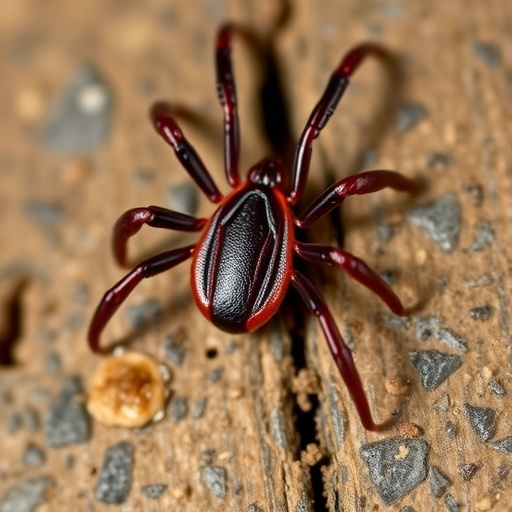
The research began with an opportunistic examination of two G. vittata individuals from northern Veracruz. Opportunistic sampling is common in wildlife parasitology because researchers rarely have the opportunity to capture or inspect elusive carnivores under controlled conditions. Rather than representing a planned survey of an entire population, the work uses animals that became available for examination, making the results valuable as an initial record but unsuitable for estimating how common tick infestations are among greater grisons generally. The researchers carefully searched the animals for ectoparasites and recovered 68 adult ticks. Their distribution was strikingly uneven. The collection included four male and six female Amblyomma ovale, one male Amblyomma mixtum, and 15 male and 42 female ticks that were initially identified morphologically as Amblyomma auricularium. Adult ticks are the life stage most readily identified using external features such as the shape and ornamentation of the body, the arrangement of mouthparts, and structures on the dorsal surface. Yet closely related Amblyomma species can resemble one another, especially when specimens are damaged, engorged, or display overlapping traits. This makes independent molecular confirmation particularly important when mapping host associations and geographic distributions.
To test the morphological identifications, the team amplified and sequenced a fragment of mitochondrial 16S ribosomal DNA. Mitochondrial markers are useful in arthropod systematics because mitochondria occur in many copies per cell, making their DNA comparatively accessible even from small or preserved specimens. The 16S rDNA region evolves quickly enough to distinguish many closely related tick lineages while retaining conserved sections that can be targeted with polymerase chain reaction, or PCR. In this method, short DNA primers bind to selected regions of the mitochondrial genome, and repeated cycles of copying generate millions of target fragments. Sequencing those fragments allows researchers to compare the specimens with reference sequences and assess their placement in a genetic cluster. The molecular results supported the identification of A. mixtum and A. ovale. But the specimens labelled A. auricularium by morphology grouped instead with Amblyomma parvum. That mismatch is more than a taxonomic footnote. Misidentifying a tick can distort records of where a species lives, which hosts it uses, and which microorganisms it may carry. The finding also highlights how genetic tools can reveal hidden diversity or correct assumptions based solely on visual characters.
The taxonomic surprise is especially relevant because host records are central to understanding tick ecology. Hard ticks in the family Ixodidae feed on blood, and many species use different hosts at different stages of their life cycle. Larvae and nymphs may feed on small mammals, birds, or reptiles, while adults often seek larger animals. A record from a greater grison can therefore help clarify whether a tick is using the carnivore as a routine host, an occasional host, or simply an opportunistic source of blood during a particular stage. The 68 ticks were all adults in this collection, but the study cannot determine how long they had been attached or whether the grisons were important for maintaining local tick populations. Nor can it establish whether the ticks originated in the animals’ usual habitat or were acquired after movement through altered landscapes. Still, the species identified are ecologically informative. A. ovale, A. mixtum, and A. parvum are Neotropical hard ticks with broad or complex host relationships, and their presence on the same carnivore species suggests that greater grisons may participate in a wider network linking forest wildlife, domestic animals, and other vertebrates. Such networks are increasingly important as habitat fragmentation brings wildlife, livestock, and people into closer contact.
The researchers also screened the ticks for bacterial DNA from seven groups: Anaplasma, Bartonella, Borrelia, Coxiella, Ehrlichia, Francisella, and Rickettsia. These genera include bacteria associated with diseases in animals and humans, as well as organisms that live harmlessly or beneficially within arthropods. PCR testing searches for genetic signatures rather than directly measuring whether a bacterium is alive, abundant, or capable of causing illness. In the Veracruz specimens, no DNA from Anaplasma, Bartonella, Borrelia, Coxiella burnetii, Ehrlichia, or Rickettsia was detected. That negative result is reassuring but narrowly defined. It applies to the tested specimens, the sampled animals, the target genetic regions, and the sensitivity of the assays used. It does not prove that these bacteria are absent from the region or from greater grisons elsewhere. Tick-borne microorganisms can be patchily distributed, and infection prevalence may vary with season, host age, geography, and tick life stage. A single infected tick can also be missed if its bacterial concentration is below the assay’s detection threshold. The results therefore provide a snapshot, not a clean bill of health for the entire ecosystem.
The positive result involved two A. ovale specimens that carried Francisella-like endosymbionts. Their sequences showed 99 percent identity with sequences previously reported from South America. Endosymbionts are microorganisms that live inside or alongside their arthropod hosts, often in long-term associations. In ticks, some endosymbiotic bacteria may contribute to nutrition by supplying molecules that are scarce in blood meals, while others may influence reproduction, development, immunity, or competition with pathogens. These relationships can be intimate: bacterial cells may occupy specialized tissues or be passed from female ticks to their offspring through eggs. A Francisella-like endosymbiont is not automatically equivalent to F. tularensis, the species that causes tularemia. Genetic similarity at a targeted fragment can indicate relatedness without demonstrating the presence of virulence genes or the ability to infect mammals. The study’s result should therefore not be interpreted as evidence that the greater grisons were exposed to tularemia. Instead, it adds to a growing body of research showing that ticks harbor diverse bacterial communities, many of which remain poorly characterized. The close sequence match to South American records also raises questions about how these symbionts move across landscapes and whether they are stable components of A. ovale populations.
The absence of detectable Rickettsia is notable because A. ovale from Veracruz has previously been associated with Rickettsia parkeri, a species linked to a spotted-fever illness in humans. The current study did not detect Rickettsia DNA in the examined ticks, but that finding does not contradict earlier work. Microbial carriage can differ dramatically among individual ticks, locations, and collection dates, even within the same species. A tick population may contain infected and uninfected individuals, and the bacteria may fluctuate as ticks move between hosts or progress through their life cycle. The researchers’ use of multiple PCR assays gives the survey greater breadth than a test aimed at a single pathogen, but molecular surveillance remains dependent on sampling design and assay performance. These limitations are especially important when the host sample consists of only two animals. The study was not designed to estimate infection rates, assess transmission to people, or determine whether any microorganism affected the grisons’ health. No such clinical conclusions can be drawn from the tick results alone. What the research does demonstrate is the importance of examining wildlife parasites as part of a One Health framework, in which animal health, environmental change, and potential human exposure are considered together without assuming that every detected microbe represents an immediate threat.
For the greater grison itself, the discovery is a reminder that even well-known species can remain ecological blank spots. Reports of tick parasitism in G. vittata have been scarce and concentrated in isolated records from Central and South America, while information from Mexico has been particularly limited. The new Veracruz observations expand the documented picture of the species’ associations with ectoparasites and provide reference material for future surveys. They also expose the danger of treating wildlife records as isolated curiosities. A carnivore that carries several tick species may connect habitats and hosts that researchers rarely study together, potentially transporting ticks across forest edges, agricultural zones, and suburban environments. At the same time, the study’s opportunistic nature means that much remains unknown: whether males and females are infested at different rates, whether juveniles carry different tick species, how infestation changes seasonally, and whether local land-use changes alter the microbial communities within the ticks. Answering those questions will require larger, systematic sampling and repeated molecular surveillance. For now, the 68 ticks recovered from two secretive mammals have transformed a chance examination into a window on hidden biodiversity—and shown that in the tropical wildlife of Veracruz, some of the most revealing stories may be unfolding at millimetre scale.
Subject of Research: Tick species, bacterial endosymbionts, and ectoparasite associations of greater grisons (Galictis vittata) in Veracruz, Mexico
Subject of Research: Biology
Article Title: Ticks Recovered from Opportunistically Examined Greater Grisons (Galictis vittata) in Veracruz, Mexico
Article References: Escorcia-Quintana, M. G., Pérez-Brígido, C. D., Zazueta-Islas, H. M., Caro-Macin, A., Solís-Cortés, M., Grostieta, E., Miranda-Caballero, C. I., Pech-Canché, J. M., Sánchez-Cordero, V., Rodríguez-Moreno, Á., Serrano-Solis, A., Naval-Ávila, C., Salceda-Sánchez, B., Rodríguez-Vivas, R. I., Bravo-Ramos, J. L., & Sánchez-Montes, S. (2026). Ticks Recovered from Opportunistically Examined Greater Grisons (Galictis vittata) in Veracruz, Mexico. Acta Parasitologica, 71(5), Article 196. https://doi.org/10.1007/s11686-026-01385-z
Image Credits: AI Generated
DOI: 10.1007/s11686-026-01385-z
Keywords: greater grison, Galictis vittata, Amblyomma ticks, ectoparasites, Veracruz, Mexico, mitochondrial 16S rDNA, Francisella-like endosymbiont, wildlife disease surveillance
Cite this news
APA
MLA
Chicago
SCIENMAG. (August 27, 2026). Ticks Found on Greater Grisons in Veracruz, Mexico. https://scienmag.com/ticks-found-on-greater-grisons-in-veracruz-mexico/
SCIENMAG. “Ticks Found on Greater Grisons in Veracruz, Mexico.” Scienmag, 27 August 2026, https://scienmag.com/ticks-found-on-greater-grisons-in-veracruz-mexico/. Accessed 27 August 2026.
SCIENMAG. “Ticks Found on Greater Grisons in Veracruz, Mexico.” Scienmag. August 27, 2026. https://scienmag.com/ticks-found-on-greater-grisons-in-veracruz-mexico/
Copy citation
Download RIS
Tags: bacterial screening of ticksbiodiversity of parasites in VeracruzDNA sequencing in parasitologyectoparasite biodiversityFrancisella-like endosymbiontsimplications for zoonotic disease transmissionMexicomicroscopy and genetic analysis in parasite studiesmolecular identification of ticksmolecular taxonomy of ticksmustelid parasite relationshipsparasitological research methodstick identification challengestick species diversity in Central Americatick-borne bacteria in wildlifeTicks on Greater Grisonstropical and subtropical carnivore hoststropical and subtropical mammal parasitesVeracruz Mexicowildlife parasite discovery in Mexicowildlife parasite ecology