• HOME
  • NEWS
  • EXPLORE
    • CAREER
      • Companies
      • Jobs
    • EVENTS
    • iGEM
      • News
      • Team
    • PHOTOS
    • VIDEO
    • WIKI
  • BLOG
  • COMMUNITY
    • FACEBOOK
    • INSTAGRAM
    • TWITTER
Sunday, May 17, 2026
BIOENGINEER.ORG
No Result
View All Result
  • Login
  • HOME
  • NEWS
  • EXPLORE
    • CAREER
      • Companies
      • Jobs
        • Lecturer
        • PhD Studentship
        • Postdoc
        • Research Assistant
    • EVENTS
    • iGEM
      • News
      • Team
    • PHOTOS
    • VIDEO
    • WIKI
  • BLOG
  • COMMUNITY
    • FACEBOOK
    • INSTAGRAM
    • TWITTER
  • HOME
  • NEWS
  • EXPLORE
    • CAREER
      • Companies
      • Jobs
        • Lecturer
        • PhD Studentship
        • Postdoc
        • Research Assistant
    • EVENTS
    • iGEM
      • News
      • Team
    • PHOTOS
    • VIDEO
    • WIKI
  • BLOG
  • COMMUNITY
    • FACEBOOK
    • INSTAGRAM
    • TWITTER
No Result
View All Result
Bioengineer.org
No Result
View All Result
Home NEWS Science News Biology

Three new species of zoantharians described from coral reefs across the Indo-Pacific

Bioengineer by Bioengineer
February 9, 2018
in Biology
Reading Time: 2 mins read
0
Share on FacebookShare on TwitterShare on LinkedinShare on RedditShare on Telegram
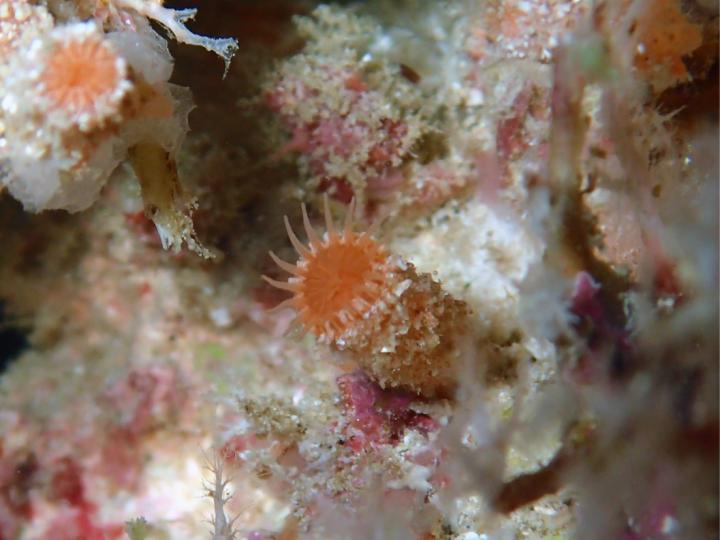
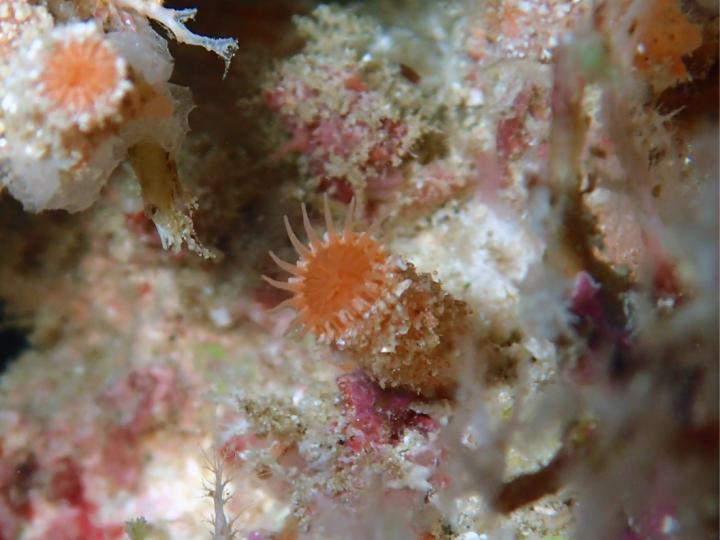
IMAGE

Credit: Hiroki Kise

Three new species of zoantharians were discovered by researchers from the University of the Ryukyus and Kagoshima University, Japan, and the Palau International Coral Reef Center. Despite not being previously known, all three species were found widely across the Indo-Pacific, with at least two species found in the Red Sea, the Maldives, Palau, and southern Japan.

Zoantharians, or colonial anemones, include species popular in the pet trade such as Zoanthus or Palythoa, but the new species are all much more cryptic, living in marine caves, cracks, or at depths below most recreational SCUBA diving (>20 m). The research was published December 29, 2017, in the open-access journal ZooKeys.

The three new species belong to the genus Antipathozoanthus, which contains species that only live on top of black coral colonies. However, surprisingly, one of the new species does not live on black corals, but instead in narrow cracks in coral reefs.

"We think that the new species, Antipathozoanthus obscurus, has evolved away from needing to be on top of black corals to take advantage of the available space in coral reef cracks", said lead researcher Hiroki Kise. "This is yet another example of how much diversity is right underneath our noses, but we still know nothing about it."

Coral reefs, which are widely threatened by rising temperatures from global warming, are generally believed to harbour very high numbers of species, including yet many undescribed or unknown species.

Amongst the other two new species is Antipathozoanthus remengesaui, named after the current president of Palau, Tommy Remengesau.

"Much of our work was based in Palau", said senior author Dr. James Reimer, "and we wished to acknowledge the fantastic support we have received from the nation. Palau is considered at the forefront of marine conservation, and much of this is thanks to President Remengesau's vision."

While the new discoveries shed more light on our understanding of coral reef biodiversity, this work is far from done. In fact, the researchers themselves estimate they still have up to ten more zoantharian species to describe from the waters of Palau and Okinawa.

"Marine diversity of coral reefs is amazing, with new surprises all the time", said Kise, "and biodiversity scientists still have a lot more work to do."

###

Original source:

Kise H, Fujii T, Masucci GD, Biondi P, Reimer JD (2017) Three new species and the molecular phylogeny of Antipathozoanthus from the Indo-Pacific Ocean (Anthozoa, Hexacorallia, Zoantharia). ZooKeys 725: 97-122. https://doi.org/10.3897/zookeys.725.21006

Contacts:

Hiroki Kise
[email protected]

James Davis Reimer
[email protected]

Media Contact

Hiroki Kise
[email protected]
@Pensoft

http://www.pensoft.net

Related Journal Article

http://dx.doi.org/10.3897/zookeys.725.21006

Share12Tweet8Share2ShareShareShare2

Related Posts

Uncovering C. elegans Immunity via Genetic Screens — Biology

Uncovering C. elegans Immunity via Genetic Screens

May 16, 2026
Single mother must adapt swiftly — the survival of her colony depends on it — Biology

Single mother must adapt swiftly — the survival of her colony depends on it

May 15, 2026

Why Are Nearly Everyone Right-Handed? It Might Be Linked to How We Learned to Walk

May 15, 2026

Excessive Neuronal Activity Initiates Severe Autoimmune Brain Disorder

May 15, 2026
Please login to join discussion

POPULAR NEWS

  • Research Indicates Potential Connection Between Prenatal Medication Exposure and Elevated Autism Risk

    844 shares
    Share 338 Tweet 211
  • New Study Reveals Plants Can Detect the Sound of Rain

    730 shares
    Share 291 Tweet 182
  • Salmonella Haem Blocks Macrophages, Boosts Infection

    62 shares
    Share 25 Tweet 16
  • Breastmilk Balances E. coli and Beneficial Bacteria in Infant Gut Microbiomes

    58 shares
    Share 23 Tweet 15

About

We bring you the latest biotechnology news from best research centers and universities around the world. Check our website.

Follow us

Recent News

Boosting Aging Positivity and Activity in Older Couples

Explainable Multi-Agent Learning Disrupts Terrorist Networks

Evaluating Corporate Transitions with Asset-Based Planning

Subscribe to Blog via Email

Enter your email address to subscribe to this blog and receive notifications of new posts by email.

Join 82 other subscribers
  • Contact Us

Bioengineer.org © Copyright 2023 All Rights Reserved.

Welcome Back!

Login to your account below

Forgotten Password?

Retrieve your password

Please enter your username or email address to reset your password.

Log In
No Result
View All Result
  • Homepages
    • Home Page 1
    • Home Page 2
  • News
  • National
  • Business
  • Health
  • Lifestyle
  • Science

Bioengineer.org © Copyright 2023 All Rights Reserved.