Infection from the globally prevalent parasite Toxoplasma gondii may increase a person's likelihood of pursuing entrepreneurial and business-related activities, new University of Colorado Boulder research finds.
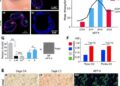
In a study of 1,495 undergraduate students, CU Boulder researchers found that T. gondii-positive individuals were 1.4 times more likely to major in business and 1.7 times more likely to pursue a pursue a management and entrepreneurship emphasis. In an additional survey of 197 adult professionals attending entrepreneurship events, infected individuals were 1.8 times more likely to have started their own business compared with other attendees.
The researchers also compiled national statistics from 42 countries over the past 25 years and found that T. gondii infection prevalences (ranging from 9 percent in Norway to 60 percent in Brazil) proved to be a consistent, positive predictor of entrepreneurial activity, even when controlling for relative national wealth and opportunity factors.
T. gondii, which reproduces in wild and domestic cats, infects an estimated 2 billion people worldwide. While human infections often lack acute symptoms, T. gondii has been correlated with impulsive behaviors and health outcomes such as increased risk of car accidents, road rage, mental illness, neuroticism, drug abuse and suicide.
The explanation behind these altered behaviors is as disturbing as it is fascinating: Because the parasite needs a cat to reproduce, any changes in host behavior that make them more likely to get eaten by a feline are hypothesized to benefit the parasite.
The new study, which was published today in the journal Proceedings of the Royal Society B, highlights the hidden, underexplored role that transmissible microbes could play in affecting human decision-making and cultural behaviors on large scales.
"As humans, we like to think that we are in control of our actions," said Pieter Johnson, the co-lead author of the study and a professor in CU Boulder's Department of Ecology and Evolutionary Biology (EBIO). "But emerging research shows that the microorganisms we encounter in our daily lives have the potential to influence their hosts in significant ways."
Other examples of such parasite-host interactions abound in nature, including the infamous Ophiocordyceps unilateralis fungus that hijacks carpenter ants' brains and compels self-destructive behavior. More benignly, the human gut microbiome contains bacteria that have been linked to mood, diet and immune system functions.
Economics research has historically emphasized the importance of rationality in explaining human decisions, with individuals considering benefits and risks before acting in their self-interest. T. gondii exposure, however, might nudge individuals toward higher risk, higher reward activities and deviating from economic theory.
The study found that nations with a higher infection prevalence saw a lower fraction of respondents cite a "fear of failure" as a deterrent to a new business venture. But that's not to say that all of those businesses will work out or that T. gondii necessarily deserves credit or blame for any individual outcome, the researchers said.
"We can see the association in terms of the number of businesses and the intent of participants, but we don't know if the businesses started by T.gondii-positive individuals are more likely to succeed or fail in the long run," said Stefanie K. Johnson, lead author of the study and an associate professor in CU Boulder's Leeds School of Business. "New ventures have high failure rates, so a fear of failure is quite rational. T.gondii might just reduce that rational fear."
The researchers emphasized that the study is correlational, rather than causal, in nature and that individuals pre-disposed to high-risk behavior could be more likely to be both entrepreneurial in their attitudes and exposed to T. gondii through animal contact.
"Infectious diseases have strongly shaped human history and culture over millions of years," said Pieter Johnson. "Today, we like to believe our decisions and destiny are ours alone, but the contributing roles of our microscopic companions are increasingly apparent."
###
The David and Lucile Packard Foundation, Colorado State University's One Health Program, and CU Boulder's Deming Center for Entrepreneurship provided funding for the study. Co-authors include Marissa Beldon of Leeds; Dana Calhoun of EBIO; Markus Fitza of the Frankfurt School of Finance and Management in Frankfurt, Germany; Daniel A. Lerner of the University of Deusto in Bilbao, Spain; and Elsa Chan of City University of Hong Kong in China.
Media Contact
Trent Knoss
[email protected]
303-735-0528
@cubouldernews
http://www.colorado.edu/news
https://www.colorado.edu/today/node/29482
Related Journal Article
http://dx.doi.org/10.1098/rspb.2018.0822