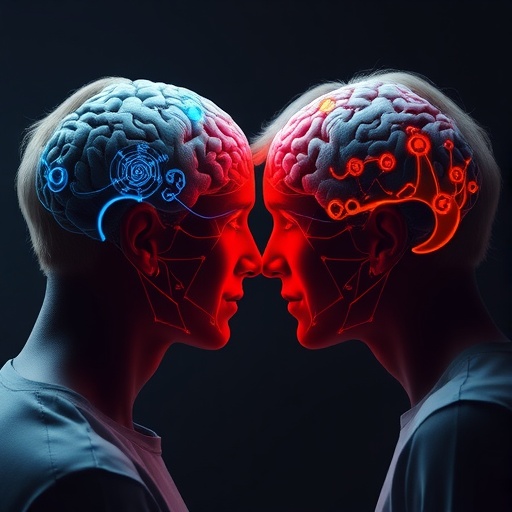
In the relentless quest to unravel the complexities of Parkinson’s disease—a neurodegenerative disorder characterized by motor and cognitive impairments—cutting-edge research has spotlighted a novel neuromodulation strategy that promises to redefine therapeutic paradigms. A team of neuroscientists, led by Xie, Bai, and Zhuang, has unveiled groundbreaking evidence demonstrating that theta-frequency deep brain stimulation (DBS) targeting the subthalamic nucleus significantly enhances conflict resolution capabilities in patients grappling with Parkinson’s disease compounded by freezing of gait (FOG). Their findings, recently published in npj Parkinson’s Disease, elucidate a mechanistic bridge between subcortical stimulation and executive function improvements mediated through frontal cortex modulation, heralding transformative implications for clinical interventions.
Delving into the electrophysiological underpinnings, the researchers implemented theta-frequency DBS in a cohort of Parkinson’s patients exhibiting pronounced FOG. Utilizing advanced neuroimaging and connectivity mapping techniques, they meticulously charted how this patterned stimulation resonated within the frontal cortex—a brain region integral to executive function and conflict monitoring. The subtleties of frontal-subthalamic interplay revealed in this exploration underscore a delicate neural choreography, where theta oscillations act as a temporal scaffold synchronizing cortical and subcortical circuits essential for seamless motor planning.
.adsslot_MIB7fglAme{width:728px !important;height:90px !important;}
@media(max-width:1199px){ .adsslot_MIB7fglAme{width:468px !important;height:60px !important;}
}
@media(max-width:767px){ .adsslot_MIB7fglAme{width:320px !important;height:50px !important;}
}
ADVERTISEMENT
Importantly, the investigators employed rigorous behavioral paradigms designed to isolate conflict resolution capabilities. Patients engaged in tasks demanding rapid decision-making when faced with competing response options, mimicking real-world scenarios triggering FOG episodes. Under theta-frequency DBS, participants demonstrated substantially improved performance: reaction times shortened, accuracy increased, and, crucially, episodes of freezing diminished in frequency and severity. This empirical evidence cements the hypothesis that modulating neural rhythms at theta frequencies can recalibrate disrupted motor-cognitive integration pathways.
The significance of these findings transcends symptomatic relief. They offer compelling support for a conceptual framework positioning Parkinson’s not merely as a basal ganglia disorder but as a network-level dysfunction affecting cortical-subcortical loops. By harnessing the power of frequency-specific neuromodulation, this approach transcends the traditional binary of motor versus cognitive symptoms, addressing the nuanced interplay that shapes complex behaviors like gait initiation amidst competing demands.
To achieve these insights, the research team combined state-of-the-art neurophysiological recording with computational modeling to quantify how theta-frequency stimulation modified network connectivity patterns. Notably, coherence analyses revealed heightened synchrony between the subthalamic nucleus and dorsolateral prefrontal cortex, regions implicated in cognitive control and conflict processing. Such enhanced functional coupling suggests that theta DBS does not only suppress pathological activity but actively fosters neural communication critical for adaptive behavior.
Beyond clinical applications, the study sheds light on fundamental neuroscience questions about oscillatory dynamics and their role in goal-directed behavior. Theta rhythms have long been associated with hippocampal memory encoding, but their involvement in frontal-subthalamic circuits underscores a versatile and distributed function in orchestrating complex cognitive-motor tasks. This paradigm shift encourages revisiting canonical models of Parkinson’s pathology with an emphasis on rhythmic coordination rather than isolated anatomical lesions.
While promising, the authors acknowledge that these findings necessitate replication in larger, more diverse cohorts alongside longitudinal studies examining sustained efficacy and potential neuroplastic changes induced by chronic theta-frequency DBS. Moreover, exploring combinatorial effects with pharmacological agents targeting dopaminergic signaling could elucidate synergistic mechanisms, thereby enhancing patient outcomes through multimodal therapies.
The neuroscientific community has hailed this work as a breakthrough not solely for its innovative methodology but for its translational relevance in addressing one of Parkinson’s most refractory symptoms. By illuminating the intricate ballet of electrical rhythms that govern motor control and cognitive resolution, this research paves the way toward a future where debilitating freezing episodes could be quelled, restoring mobility and autonomy to millions worldwide.
The interface of advanced neurotechnologies, computational neuroscience, and clinical neurology exemplified in this study embodies the evolving landscape of precision medicine. The nuanced understanding of frequency-tuned brain stimulation underscores a paradigm where interventions are not just reactive but predictive, dynamically attuned to the brain’s oscillatory signatures and individual patient profiles.
Subject of Research: Parkinson’s disease, freezing of gait, deep brain stimulation, theta-frequency neuromodulation, conflict resolution, frontal cortex modulation
Article Title: Theta-frequency subthalamic stimulation enhances conflict resolution in Parkinson’s disease patients with freezing of gait through frontal cortex modulation
Article References:
Xie, H., Bai, Y., Zhuang, Y. et al. Theta-frequency subthalamic stimulation enhances conflict resolution in Parkinson’s disease patients with freezing of gait through frontal cortex modulation. npj Parkinsons Dis. 11, 206 (2025). https://doi.org/10.1038/s41531-025-01067-z
Image Credits: AI Generated
Tags: cognitive control in neurodegenerationcutting-edge research in neuromodulationelectrophysiological mechanisms in Parkinson’sexecutive function improvement in Parkinson’sfreezing of gait treatmentimplications of theta stimulation in neuroscienceinnovative therapeutic strategies for Parkinson’smotor symptoms and cognitive impairmentsParkinson’s disease conflict resolutionsubthalamic nucleus neuromodulationtheta-frequency deep brain stimulationtransformative clinical interventions for FOG