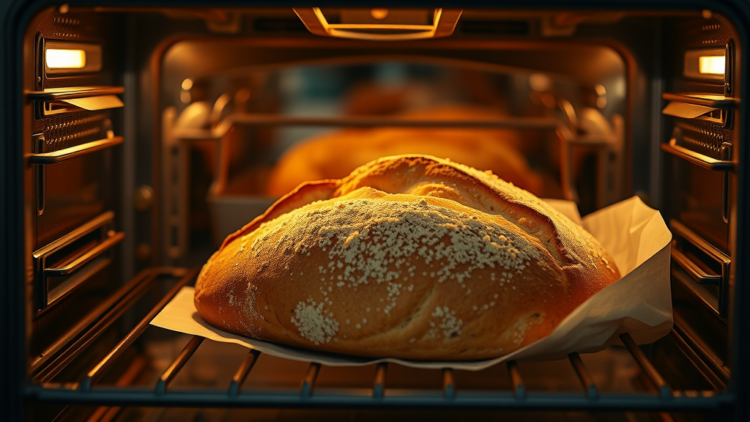
Bread lovers may soon owe their loftier loaves to an unlikely hero: a dairy-derived yeast better known for fermenting yoghurt and cheese than for raising dough. New research from KU Leuven, published in Current Research in Food Science, shows that certain strains of Kluyveromyces marxianus, a thermotolerant yeast species holding both EU Qualified Presumption of Safety and US GRAS status, can outperform industrial baker’s yeast Saccharomyces cerevisiae in one of the most demanding moments of breadmaking: the oven rise, the rapid volume expansion that occurs during the first minutes of baking.
The study, led by Sara Vandenbosch and Christophe Courtin, set out to test whether earlier findings in baker’s yeast would hold across genus boundaries. Previous work had revealed that the choice of S. cerevisiae strain strongly influences oven rise, and that strains which survive longer in the heating dough produce better-risen loaves. Because K. marxianus is inherently thermotolerant, with documented ethanol production above 40 degrees Celsius and growth up to 52 degrees Celsius, the team reasoned that bioprospecting within this species might uncover strains with superior baking performance.
The researchers selected eight genetically diverse K. marxianus strains from a collection of 178, drawing on isolates from sources as varied as Bantu beer, South African and Japanese soil, Italian natural rennet, and spoilt curd from Russia. Strains were pre-screened for thermotolerance at 42 degrees Celsius and for adequate glycerol production, and their carbon dioxide fermentation capacity in dough was standardised so that every dough entered the baking phase having produced exactly 400 millilitres of CO2. Two strains that needed more than 200 minutes to reach this benchmark were excluded as industrially irrelevant.
Baking trials were conducted in an electrical resistance oven, a device in which dough is heated between two metal plates carrying an electric current rather than by convection. A proportional-integral-derivative controller, guided by a thermocouple at the dough core, reproduced the exact time-temperature profile of conventional baking at 215 degrees Celsius, climbing from 30 to 100 degrees Celsius over 24 minutes. The transparent holding trays allowed researchers to track dough height every minute, while the absence of crust formation and the easy access for sampling made the system ideal for mechanistic study.
The results revealed striking strain-to-strain variability. Oven rise among the K. marxianus strains ranged from just 13.3 percent for strain Km5 to 41.5 percent for strain Km8, a broader spread than seen among 14 industrial S. cerevisiae strains tested under identical conditions in earlier work. Remarkably, Km8 significantly outperformed both the industrial baker’s yeast benchmark, which achieved 23.0 percent, and the best-performing S. cerevisiae strain, which reached 31.5 percent. Collapse after the peak was smallest for strain Km7, at only 2.0 percent.
Viability measurements during baking helped explain these differences. All strains survived the first six minutes of baking, when the dough core reached 42 degrees Celsius, but at nine minutes, at 59 degrees Celsius, some strains began to falter. By twelve minutes, at 77 degrees Celsius, viability ranged from 37.1 percent for Km8 down to 7.1 percent for Km1. Crucially, oven rise correlated positively with viability at the twelve-minute mark, with an R-squared of 0.77, mirroring the strong correlation previously reported for S. cerevisiae strains. When data from both species were combined, the correlation persisted, though an ANCOVA revealed a significant genus-by-viability interaction, with a steeper slope for K. marxianus, suggesting that viability contributes even more strongly to oven rise in this species.
The team also tracked carbon dioxide escaping from the dough into the oven headspace using a near-infrared sensor. Gas release follows two phases: a slow, gradual loss as surface CO2 evaporates and overextended gluten strands rupture, followed by a sharp surge when starch gelatinisation and gluten polymerisation rigidify the structure, converting the foam-like dough into a sponge-like bread. The timing of this structural setting did not differ between strains, nor from that observed with S. cerevisiae, but the rate of gas release did. The poorest performer, Km5, released CO2 significantly faster and reached higher final headspace concentrations than the best performers, Km7 and Km8, which retained gas more effectively during the critical structure-setting phase.
Intriguingly, viability alone could not fully explain the results. Km7 released CO2 more slowly than any other strain and maintained relatively high viability, yet did not achieve the highest oven rise. The authors propose that strain-dependent cell death may release intracellular compounds such as glutathione, a reducing agent known to weaken gluten networks, potentially destabilising the dough matrix. They also note that K. marxianus strains required longer fermentation times, between 110 and 150 minutes, to reach the standardised CO2 level, which may have amplified strain-specific differences in metabolite concentrations affecting gluten stability.
K. marxianus brings additional advantages beyond oven rise. Although it cannot ferment maltose, the most abundant sugar in dough, added amyloglucosidases and alpha-glucosidases in flour improvers convert dextrins and maltose into glucose, sidestepping this limitation. More notably, the species hydrolyses up to 90 percent of fructan, a FODMAP carbohydrate that triggers intestinal discomfort in people with irritable bowel syndrome, potentially opening bread back up to sensitive consumers. Previous studies have found little to no difference in bread aroma or flavour when using K. marxianus, and the yeast grows rapidly on inexpensive substrates, including hemicellulose waste streams, making industrial production efficient.
The findings carry real industrial weight. Superior K. marxianus strains could improve loaf volume while reducing reliance on chemical bread improvers, supporting clean-label production at a time when consumers increasingly distrust E-numbers. The researchers caution, however, that the electrical resistance oven prevents crust formation and differs from commercial baking, so validation under conventional industrial conditions remains necessary. Earlier work suggests strain rankings are consistent across both methods, offering cautious optimism. If confirmed, the dairy yeast long overshadowed by its baker’s cousin may earn a permanent place beside the flour, delivering taller, airier loaves naturally.
Subject of Research: Strain-dependent oven rise performance and viability of the thermotolerant yeast Kluyveromyces marxianus compared with Saccharomyces cerevisiae in bread baking
Article Title: Kluyveromyces marxianus : a promising alternative to baker’s yeast Saccharomyces cerevisiae for enhanced oven rise performance during bread baking
Article References: Vandenbosch, S., De Bondt, Y., Simmonds, S. J., Steensels, J., Verstrepen, K. J., & Courtin, C. M. (2026). Kluyveromyces marxianus: a promising alternative to baker’s yeast Saccharomyces cerevisiae for enhanced oven rise performance during bread baking. Current Research in Food Science, 13, Article 101573. https://doi.org/10.1016/j.crfs.2026.101573
Image Credits: AI Generated
DOI: 10.1016/j.crfs.2026.101573
Keywords: Kluyveromyces marxianus, Saccharomyces cerevisiae, baker’s yeast, oven rise, bread baking, thermotolerance, electrical resistance oven, yeast viability, carbon dioxide release, gluten network, low-FODMAP bread, clean-label baking
Cite Scienmag News
APA
MLA
Chicago
Alan Morgan. (September 22, 2026). Thermotolerant yeast outperforms baker’s yeast in oven rise during bread baking. Scienmag. https://scienmag.com/thermotolerant-yeast-outperforms-bakers-yeast-in-oven-rise-during-bread-baking/
Alan Morgan. “Thermotolerant yeast outperforms baker’s yeast in oven rise during bread baking.” Scienmag, 22 September 2026, https://scienmag.com/thermotolerant-yeast-outperforms-bakers-yeast-in-oven-rise-during-bread-baking/. Accessed 22 September 2026.
Alan Morgan. “Thermotolerant yeast outperforms baker’s yeast in oven rise during bread baking.” Scienmag. September 22, 2026. https://scienmag.com/thermotolerant-yeast-outperforms-bakers-yeast-in-oven-rise-during-bread-baking/
Copy citation
Download RIS
Tags: baker’s yeastbioprospecting thermotolerant yeastsbread bakingcarbon dioxide releaseclean-label bakingcomparison of K. marxianus and Saccharomyces cerevisiaedairy-derived yeast for bakingelectrical resistance ovenEU and US safety status of baker’s yeastgluten networkimpact of yeast choice on breadinnovative yeast strains for bakery industryKluyveromyces marxianusKluyveromyces marxianus fermentationlow-FODMAP breadoven riseSaccharomyces cerevisiaesuperior bread leavening agentsthermotoleranceThermotolerant yeast in bread bakingyeast heat tolerance in breadmakingyeast performance during bakingyeast strains for oven riseyeast viability