• HOME
  • NEWS
  • EXPLORE
    • CAREER
      • Companies
      • Jobs
    • EVENTS
    • iGEM
      • News
      • Team
    • PHOTOS
    • VIDEO
    • WIKI
  • BLOG
  • COMMUNITY
    • FACEBOOK
    • INSTAGRAM
    • TWITTER
Monday, June 29, 2026
BIOENGINEER.ORG
No Result
View All Result
  • Login
  • HOME
  • NEWS
  • EXPLORE
    • CAREER
      • Companies
      • Jobs
        • Lecturer
        • PhD Studentship
        • Postdoc
        • Research Assistant
    • EVENTS
    • iGEM
      • News
      • Team
    • PHOTOS
    • VIDEO
    • WIKI
  • BLOG
  • COMMUNITY
    • FACEBOOK
    • INSTAGRAM
    • TWITTER
  • HOME
  • NEWS
  • EXPLORE
    • CAREER
      • Companies
      • Jobs
        • Lecturer
        • PhD Studentship
        • Postdoc
        • Research Assistant
    • EVENTS
    • iGEM
      • News
      • Team
    • PHOTOS
    • VIDEO
    • WIKI
  • BLOG
  • COMMUNITY
    • FACEBOOK
    • INSTAGRAM
    • TWITTER
No Result
View All Result
Bioengineer.org
No Result
View All Result
Home NEWS Science News Biology

Thermal vision shows endangered numbats feel the heat of warming climate

Bioengineer by Bioengineer
January 11, 2024
in Biology
Reading Time: 2 mins read
0
baby numbat
Share on FacebookShare on TwitterShare on LinkedinShare on RedditShare on Telegram

Curtin University research using thermal imaging of numbats in Western Australia has found that during hot weather the endangered animals are limited to as little as ten minutes of activity in the sun before they overheat to a body temperature of greater than 40°C.
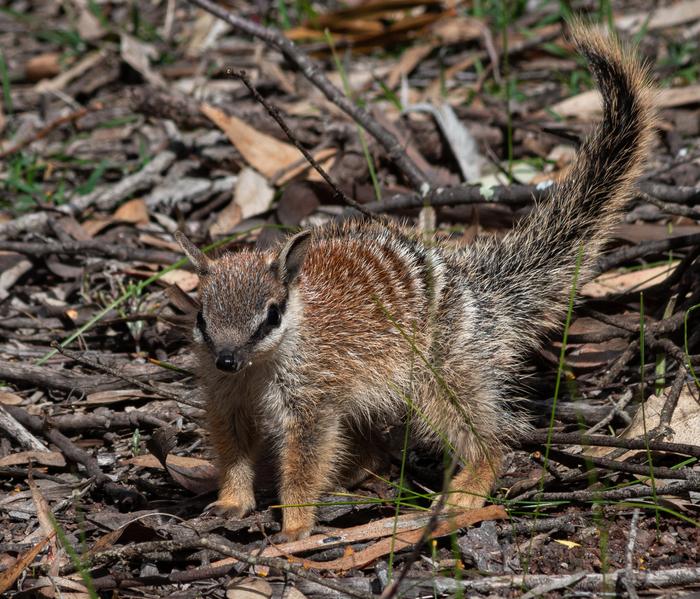
baby numbat

Credit: Curtin University

Curtin University research using thermal imaging of numbats in Western Australia has found that during hot weather the endangered animals are limited to as little as ten minutes of activity in the sun before they overheat to a body temperature of greater than 40°C.

Lead author Dr Christine Cooper, from Curtin’s School of Molecular and Life Sciences, said despite using techniques such as raising or flattening their fur to regulate body temperature, numbats were prone to overheating, which was an important consideration for future conservation efforts, particularly given our warming climate.

“Active only during the day and with an exclusive diet of termites, numbats are often exposed to high temperatures and gain heat from direct sunlight. Even when in the shade they gain heat from radiation from the ground, rocks and trees,” Dr Cooper said.

“We found when it is cold, numbats keep warm by raising their fur to provide better insulation and to allow more radiation to penetrate. When it is hot, they depress their fur to facilitate heat loss and shield the skin from solar radiation. In this way their body functions as a thermal window that allows heat exchange.

“The numbats’ distinctive stripes do not have a role in heat balance, rather their most likely function is for camouflage.”

Dr Cooper said numbats used to be found across southern Australia but were now restricted to two remaining natural populations at Dryandra Woodland, near Narrogin, where the study was done, and Perup Nature Reserve, near Manjimup, with some additional re-introduced populations.

“With an estimated population of only about 2000, numbats are under threat from habitat loss and introduced predators like foxes and feral cats,” Dr Cooper said.

“In terms of habitat requirements, our findings show the importance of considering temperature and shade availability when planning translocations for the conservation of this endangered species, particularly given our warming climate.

“Even with shade available, higher temperatures will reduce how long numbats can forage during the day, and because they have limited capacity to become more nocturnal, heat may become problematic for numbats.

“Understanding how the numbat responds to and manages heat is essential to understanding its ecology and has particular relevance for the future conservation and management of the species in the face of global warming.”

Published in Journal of Experimental Biology, the research is titled ‘Implications of heat exchange for a free-living endangered marsupial determined by non-invasive thermal imaging’.


Journal

Journal of Experimental Biology

Method of Research

Observational study

Subject of Research

Animals

Article Title

Implications of heat exchange for a free-living endangered marsupial determined by non-invasive thermal imaging’

Article Publication Date

11-Jan-2024

Share12Tweet8Share2ShareShareShare2

Related Posts

Natural Hallucinogens: Evolution’s Ecological Tools, Not Mere Chemical Byproducts

June 25, 2026

This Famous Butterfly Revealed: Three Distinct Species Hidden in One

June 25, 2026

Scientists Attack Soybean Cyst Nematode by Starving Its Food Source

June 25, 2026

Decoding the Secret Code of a Crucial Immune Sensor

June 24, 2026

POPULAR NEWS

  • Saying Goodbye to PGY-6: Pediatric Fellowship Realities

    103 shares
    Share 41 Tweet 26
  • Multi-Hospital Study Reveals Long Covid Burden Is Twice as High as Current Estimates

    92 shares
    Share 36 Tweet 23
  • Detection of EDCs in Breast Milk and Infant Urine Up to Six Months Highlights Early Exposure Risks

    77 shares
    Share 31 Tweet 19
  • New Drug Candidate Developed at McMaster Shows Potential for Treating Brain Cancer

    58 shares
    Share 23 Tweet 15

About

We bring you the latest biotechnology news from best research centers and universities around the world. Check our website.

Follow us

Recent News

Tracking Lanthanide-Labeled Microplastics in Plants

POSTECH Researchers Slash Cost of Reconstituted Cell-Free Systems by 95%

AI and Physics Collaborate to Design Advanced Hydrogen Storage Materials

Subscribe to Blog via Email

Success! An email was just sent to confirm your subscription. Please find the email now and click 'Confirm' to start subscribing.

Join 82 other subscribers
  • Contact Us

Bioengineer.org © Copyright 2023 All Rights Reserved.

Welcome Back!

Login to your account below

Forgotten Password?

Retrieve your password

Please enter your username or email address to reset your password.

Log In
No Result
View All Result
  • Homepages
    • Home Page 1
    • Home Page 2
  • News
  • National
  • Business
  • Health
  • Lifestyle
  • Science

Bioengineer.org © Copyright 2023 All Rights Reserved.