Study reveals important insight regarding breeding and distribution practices and management in the turfgrass industry
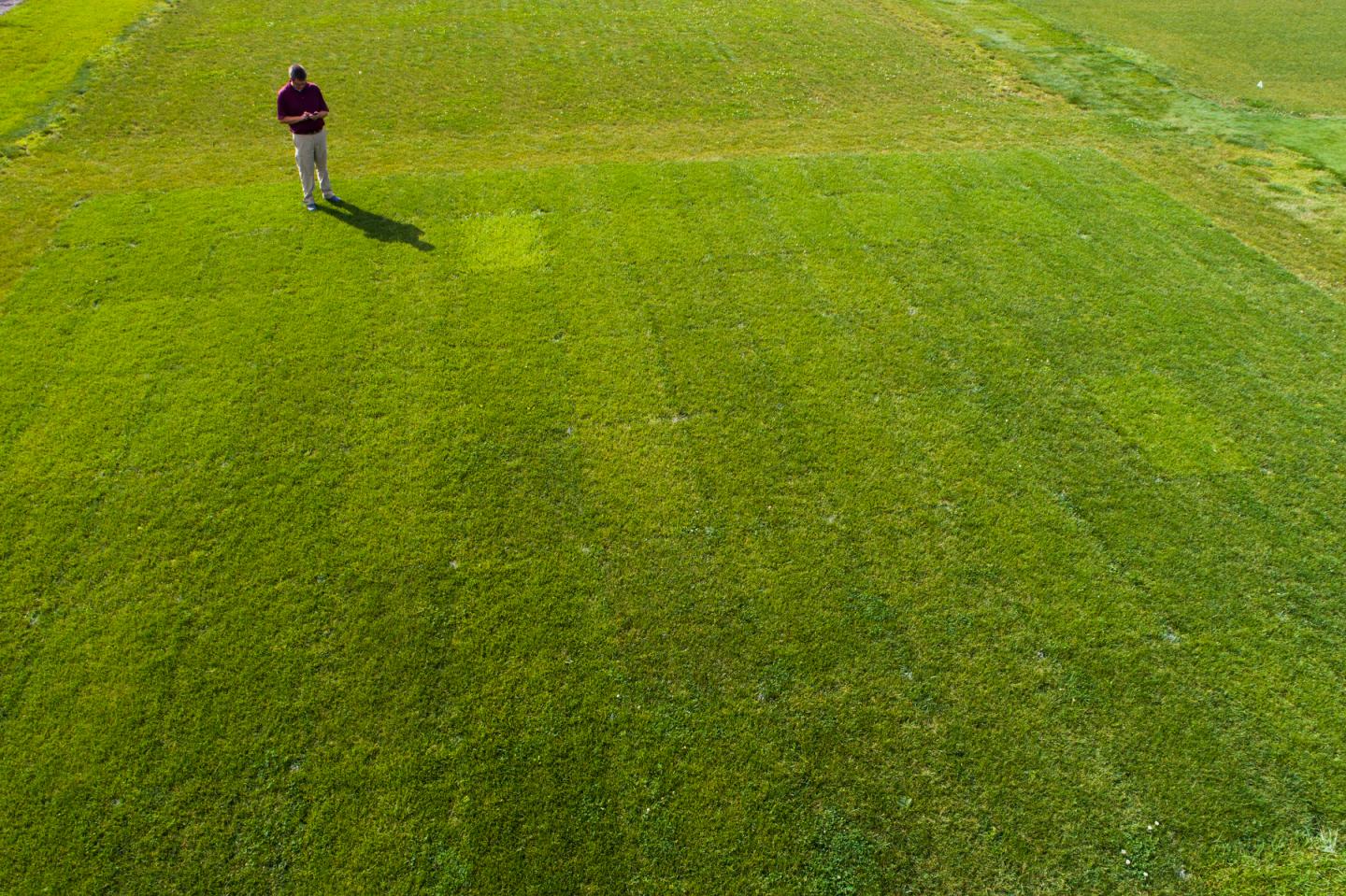
Credit: Chengyan Yue
ST. PAUL, MINNESOTA–The Trials of Turfgrass Breeders
A study out of the University of Minnesota investigated the practices and challenges of turfgrass breeders and distributors. Chengyan Yue led a team of researchers that unveiled important insight regarding breeding and distribution practices and management in the turfgrass industry.
Their discoveries are outlined in the article “Investigating the Practices and Challenges for Turfgrass Breeders and Distributors” published in HortScience.
The researchers held four specific objectives: 1) to identify the primary parties influencing how turfgrass breeders and distributors prioritize turfgrass traits; 2) to evaluate how technical considerations influence how these priorities are set; 3) to identify challenges turfgrass breeders encounter when determining and implementing target traits for breeding; and 4) to investigate differences in the practices and challenges encountered by breeders/distributors when breeding/distributing turfgrasses with different uses and how demographics profiles and program characteristics affect such differences.
Increased urban development and the conjoined increase in turfgrass acreage have resulted in increased research of turfgrass breeding and associated management practices.
In the United States, turfgrasses occupy 1.9% of the continental surface and cover an area three times larger than any irrigated crop. Turfgrasses provide functional benefits such as water quality protection, soil erosion control, and water microclimate moderation.
Residential lawns have become one of the most fundamental landscape components providing recreational and aesthetic benefits for numerous consumers. However, researchers and the public have shown growing concerns about the increasing use of resources such as water, pesticides, and fertilizer for lawn maintenance and the resulting environmental problems such as soil runoff and excess nutrients and pesticides in watersheds.
To fulfill the needs of consumers and to contribute to environmental sustainability, turfgrass breeding programs evaluate, develop, and introduce turfgrasses with superior traits. Various turfgrass species have been assessed for pest and disease resistance, climatic region adaptation, drought tolerance, and reduced nitrogen requirements.
Turfgrass breeding, like other product development activities, determines the inherent physical characteristics of the turfgrass variety and creates value for stakeholders in the supply chain. Because of the substantial evidence suggesting that market-driven businesses are more likely to be economically successful, it is useful to investigate whether turfgrass suppliers adopt a market-driven approach.
To assess the turfgrass industry, the researchers conducted an online survey to investigate the current practices of and challenges encountered by turfgrass breeders and turfgrass seed distributors in the United States. The survey asked questions about species, targeted regions, and major uses of the turfgrasses that are bred/distributed. Says Yue, “Identifying the major technical and societal challenges turfgrass breeders or distributors are facing is the important first step. The next step to is explore effective ways to overcome these challenges to improve the overall success of the turfgrass industry.”
The results presented in the article are useful for turfgrass researchers, breeders, distributors, and policymakers.
###
The complete article is available on the ASHS HortScience journal web site: DOI: https:/
Contact Chengyan Yue of The University of Minnesota at [email protected] or call (612)280-0316.
Founded in 1903, the American Society for Horticultural Science (ASHS) is the largest organization dedicated to advancing all facets of horticulture research, education, and application. More information at ashs.org.
Media Contact
Michael Neff
[email protected]
Related Journal Article
http://dx.