• HOME
  • NEWS
  • EXPLORE
    • CAREER
      • Companies
      • Jobs
    • EVENTS
    • iGEM
      • News
      • Team
    • PHOTOS
    • VIDEO
    • WIKI
  • BLOG
  • COMMUNITY
    • FACEBOOK
    • INSTAGRAM
    • TWITTER
Sunday, August 16, 2026
BIOENGINEER.ORG
No Result
View All Result
  • Login
  • HOME
  • NEWS
  • EXPLORE
    • CAREER
      • Companies
      • Jobs
        • Lecturer
        • PhD Studentship
        • Postdoc
        • Research Assistant
    • EVENTS
    • iGEM
      • News
      • Team
    • PHOTOS
    • VIDEO
    • WIKI
  • BLOG
  • COMMUNITY
    • FACEBOOK
    • INSTAGRAM
    • TWITTER
  • HOME
  • NEWS
  • EXPLORE
    • CAREER
      • Companies
      • Jobs
        • Lecturer
        • PhD Studentship
        • Postdoc
        • Research Assistant
    • EVENTS
    • iGEM
      • News
      • Team
    • PHOTOS
    • VIDEO
    • WIKI
  • BLOG
  • COMMUNITY
    • FACEBOOK
    • INSTAGRAM
    • TWITTER
No Result
View All Result
Bioengineer.org
No Result
View All Result
Home NEWS Science News Biology

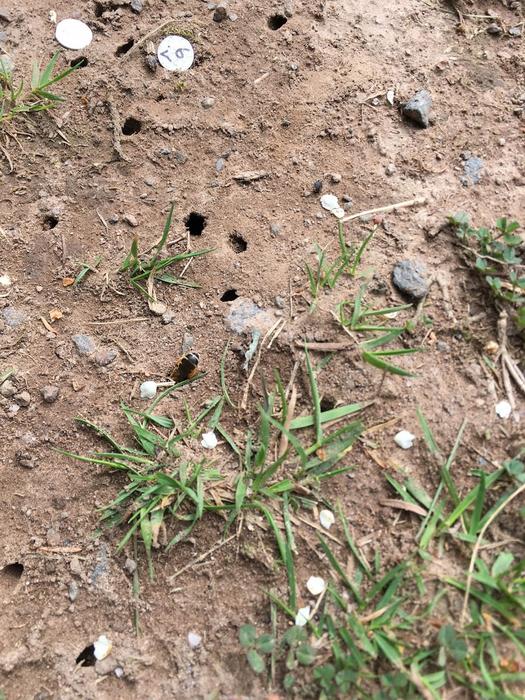
The sweat bee, H. rubicundus, is less sociable in Scotland than in Cornwall, but is genetically differentiated and genetically isolated too
Bioengineer by Bioengineer
May 29, 2024
in Biology
Reading Time: 1 min read
0
Genetic differentiation at extreme latitudes in the socially plastic sweat bee Halictus rubicundus
Share on FacebookShare on TwitterShare on LinkedinShare on RedditShare on Telegram

The sweat bee, H. rubicundus, is less sociable in Scotland than in Cornwall, but is genetically differentiated and genetically isolated too

Genetic differentiation at extreme latitudes in the socially plastic sweat bee Halictus rubicundus

Credit: Rebecca A. Boulton, CC-BY 4.0 (https://creativecommons.org/licenses/by/4.0/)

The sweat bee, H. rubicundus, is less sociable in Scotland than in Cornwall, but is genetically differentiated and genetically isolated too

###

Article URL:  https://journals.plos.org/plosone/article?id=10.1371/journal.pone.0302688

Article Title: Genetic differentiation at extreme latitudes in the socially plastic sweat bee Halictus rubicundus

Author Countries: Netherlands, UK

Funding: This work is part of a project that received funding from the European Research Council (ERC) under the European Horizon’s 202 research and innovation programme (grantagreement no. 695744). RAB was funded by a Wageningen Graduate School Postdoctoral Talent fellowship and a BBSRC discovery fellowship.


Journal

PLoS ONE

DOI

10.1371/journal.pone.0302688

Article Title

Genetic differentiation at extreme latitudes in the socially plastic sweat bee Halictus rubicundus

Article Publication Date

29-May-2024

COI Statement

The authors have declared that no competing interests exist.
Share12Tweet8Share2ShareShareShare2

Related Posts

Strubbelig–NHL3 Receptor Complex Helps Arabidopsis Respond to Cellulose Deficiency

Strubbelig–NHL3 Receptor Complex Helps Arabidopsis Respond to Cellulose Deficiency

August 15, 2026
Bombyx mori Satellitome Analysis Reveals Evolutionary Stability, Dispersed Chromosomal Organization, Transposon Origins

Bombyx mori Satellitome Analysis Reveals Evolutionary Stability, Dispersed Chromosomal Organization, Transposon Origins

August 15, 2026

Synthetic pyrenoid reconstruction reveals EPYC1-driven carbon concentration mechanisms and evolution

August 15, 2026

Endophytic Flavobacterium boosts root hairs and drought tolerance through ERF–CEP5 signaling

August 15, 2026

POPULAR NEWS

  • KAIST develops semiconductor neuron that harnesses noise to selectively process signals

    29 shares
    Share 12 Tweet 7
  • Imagining natural and extra robotic thumbs together strengthens kinesthetic sensorimotor networks

    29 shares
    Share 12 Tweet 7
  • PARP1 Drives Neuropathic Pain Through GPX4-Dependent Ferroptosis in Injured Mice’s Sensory Neurons

    29 shares
    Share 12 Tweet 7
  • Strubbelig–NHL3 Receptor Complex Helps Arabidopsis Respond to Cellulose Deficiency

    29 shares
    Share 12 Tweet 7

About

We bring you the latest biotechnology news from best research centers and universities around the world. Check our website.

Follow us

Recent News

KAIST develops semiconductor neuron that harnesses noise to selectively process signals

Imagining natural and extra robotic thumbs together strengthens kinesthetic sensorimotor networks

PARP1 Drives Neuropathic Pain Through GPX4-Dependent Ferroptosis in Injured Mice’s Sensory Neurons

Subscribe to Blog via Email

Success! An email was just sent to confirm your subscription. Please find the email now and click 'Confirm' to start subscribing.

Join 85 other subscribers
  • Contact Us

Bioengineer.org © Copyright 2023 All Rights Reserved.

Welcome Back!

Login to your account below

Forgotten Password?

Retrieve your password

Please enter your username or email address to reset your password.

Log In
No Result
View All Result
  • Homepages
    • Home Page 1
    • Home Page 2
  • News
  • National
  • Business
  • Health
  • Lifestyle
  • Science

Bioengineer.org © Copyright 2023 All Rights Reserved.