• HOME
  • NEWS
  • EXPLORE
    • CAREER
      • Companies
      • Jobs
    • EVENTS
    • iGEM
      • News
      • Team
    • PHOTOS
    • VIDEO
    • WIKI
  • BLOG
  • COMMUNITY
    • FACEBOOK
    • INSTAGRAM
    • TWITTER
Monday, May 11, 2026
BIOENGINEER.ORG
No Result
View All Result
  • Login
  • HOME
  • NEWS
  • EXPLORE
    • CAREER
      • Companies
      • Jobs
        • Lecturer
        • PhD Studentship
        • Postdoc
        • Research Assistant
    • EVENTS
    • iGEM
      • News
      • Team
    • PHOTOS
    • VIDEO
    • WIKI
  • BLOG
  • COMMUNITY
    • FACEBOOK
    • INSTAGRAM
    • TWITTER
  • HOME
  • NEWS
  • EXPLORE
    • CAREER
      • Companies
      • Jobs
        • Lecturer
        • PhD Studentship
        • Postdoc
        • Research Assistant
    • EVENTS
    • iGEM
      • News
      • Team
    • PHOTOS
    • VIDEO
    • WIKI
  • BLOG
  • COMMUNITY
    • FACEBOOK
    • INSTAGRAM
    • TWITTER
No Result
View All Result
Bioengineer.org
No Result
View All Result
Home NEWS Science News Chemistry

The smell of old books could help preserve them

Bioengineer by Bioengineer
November 13, 2019
in Chemistry
Reading Time: 2 mins read
0
IMAGE
Share on FacebookShare on TwitterShare on LinkedinShare on RedditShare on Telegram

IMAGE

Credit: Adapted from ACS Sensors 2019, DOI: 10.1021/acssensors.9b01279


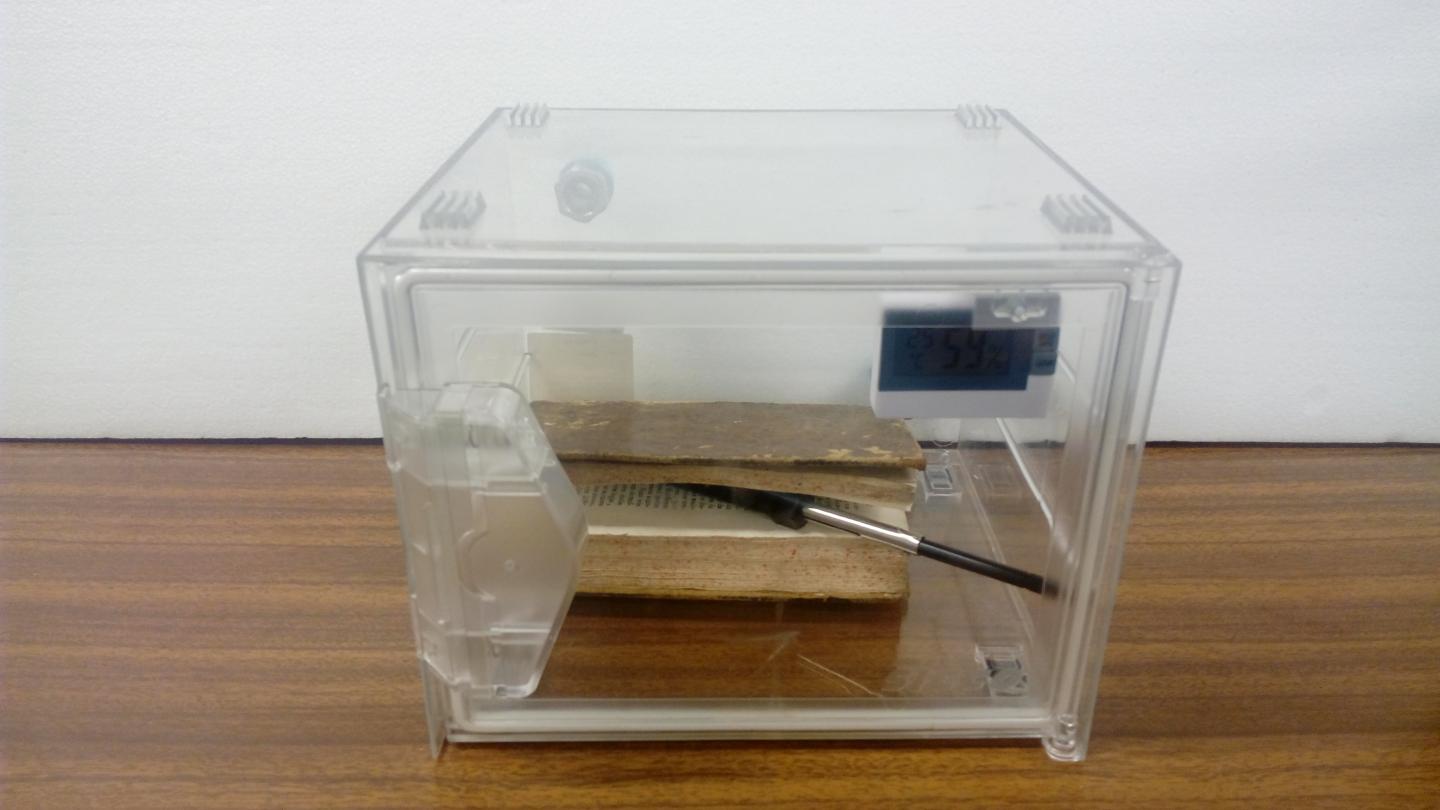
Old books give off a complex mélange of odors, ranging from pleasant (almonds, caramel and chocolate) to nasty (formaldehyde, old clothes and trash). Detecting early signs of paper degradation could help guide preservation efforts, but most techniques destroy the very paper historians want to save. Now, researchers reporting in ACS Sensors have developed an electronic nose that can non-destructively sniff out odors emitted by books of different paper compositions, conditions and ages.

Paper is made primarily of cellulose, along with other plant components, and additives that improve the paper’s properties. Cellulose is resistant to ageing, but the other paper components are much more vulnerable to degradation by heat, humidity and UV light. Before 1845, paper was made mainly from cotton and linen rags, which were relatively pure forms of cellulose and therefore quite stable. Then, in 1845, inventors developed a process to make paper from wood-pulp fibers. This paper is less durable than that made from cotton, but wood is cheaper and more readily available. In 1980, the advent of acid-free paper was a boon to preservationists because it degrades much more slowly than acidic wood-pulp paper. Marta Veríssimo, M. Teresa Gomes and colleagues wanted to develop an electronic nose that could non-destructively detect early signs of paper degradation from the volatile organic compounds (VOCs) books emit.

The researchers collected 19 books published from 1567 to 2016. They classified the books by time period, paper composition, color and visible state. Then, the researchers collected VOCs released from the books and detected the gases with an electronic nose containing six sensors that selectively bound different VOCs. The electronic nose clearly distinguished between paper from cotton or linen rags and paper from wood, as well as among books from three different time periods. Unexpectedly, some books published after 1990 still contained acidic paper, which the sensor discriminated from books with acid-free paper. And finally, the device sniffed out yellowing books, and new and used books from the same time period. The sensitive new method could help identify books in need of preservation, as well as help protect books from VOCs emitted by their neighbors on a shelf.

###

The authors acknowledge funding from the Portuguese Foundation for Science and Technology.

The abstract that accompanies this study is available here.

The American Chemical Society, the world’s largest scientific society, is a nonprofit organization chartered by the U.S. Congress. ACS is a global leader in providing access to chemistry-related information and research through its multiple databases, peer-reviewed journals and scientific conferences. ACS does not conduct research, but publishes and publicizes peer-reviewed scientific studies. Its main offices are in Washington, D.C., and Columbus, Ohio.

To automatically receive news releases from the American Chemical Society, contact [email protected].

Follow us on Twitter | Facebook

Media Contact
Katie Cottingham
[email protected]
301-775-8455

Tags: AnthropologyArts/CultureChemistry/Physics/Materials SciencesHistoryInformation Management/Tracking SystemsLearning/Literacy/ReadingMass MediaPrinted Media
Share12Tweet8Share2ShareShareShare2

Related Posts

Miniature Sensor Uses Light to Detect Touch — Chemistry

Miniature Sensor Uses Light to Detect Touch

May 8, 2026
Iron Minerals Determine Whether Dissolved Organic Matter Fuels Microbes or Becomes Long-Term Carbon Storage — Chemistry

Iron Minerals Determine Whether Dissolved Organic Matter Fuels Microbes or Becomes Long-Term Carbon Storage

May 8, 2026

Kate Evans Appointed Associate Lab Director for Biological and Environmental Systems Science at ORNL

May 8, 2026

Advancing Multiscale Modeling and Overcoming Operational Challenges in Autothermal CO₂-to-Methanol Reactors

May 8, 2026
Please login to join discussion

POPULAR NEWS

  • Research Indicates Potential Connection Between Prenatal Medication Exposure and Elevated Autism Risk

    841 shares
    Share 336 Tweet 210
  • New Study Reveals Plants Can Detect the Sound of Rain

    728 shares
    Share 290 Tweet 182
  • Salmonella Haem Blocks Macrophages, Boosts Infection

    62 shares
    Share 25 Tweet 16
  • Breastmilk Balances E. coli and Beneficial Bacteria in Infant Gut Microbiomes

    57 shares
    Share 23 Tweet 14

About

We bring you the latest biotechnology news from best research centers and universities around the world. Check our website.

Follow us

Recent News

HIV-1 Strains Reveal Varied Paths to Antibody Escape

Rapid Nanopore Genomics Tracks Malaria Across Africa

Global City Growth Decouples from Fossil Fuels

Subscribe to Blog via Email

Enter your email address to subscribe to this blog and receive notifications of new posts by email.

Join 82 other subscribers
  • Contact Us

Bioengineer.org © Copyright 2023 All Rights Reserved.

Welcome Back!

Login to your account below

Forgotten Password?

Retrieve your password

Please enter your username or email address to reset your password.

Log In
No Result
View All Result
  • Homepages
    • Home Page 1
    • Home Page 2
  • News
  • National
  • Business
  • Health
  • Lifestyle
  • Science

Bioengineer.org © Copyright 2023 All Rights Reserved.