• HOME
  • NEWS
  • EXPLORE
    • CAREER
      • Companies
      • Jobs
    • EVENTS
    • iGEM
      • News
      • Team
    • PHOTOS
    • VIDEO
    • WIKI
  • BLOG
  • COMMUNITY
    • FACEBOOK
    • INSTAGRAM
    • TWITTER
Monday, October 5, 2026
BIOENGINEER.ORG
No Result
View All Result
  • Login
  • HOME
  • NEWS
  • EXPLORE
    • CAREER
      • Companies
      • Jobs
        • Lecturer
        • PhD Studentship
        • Postdoc
        • Research Assistant
    • EVENTS
    • iGEM
      • News
      • Team
    • PHOTOS
    • VIDEO
    • WIKI
  • BLOG
  • COMMUNITY
    • FACEBOOK
    • INSTAGRAM
    • TWITTER
  • HOME
  • NEWS
  • EXPLORE
    • CAREER
      • Companies
      • Jobs
        • Lecturer
        • PhD Studentship
        • Postdoc
        • Research Assistant
    • EVENTS
    • iGEM
      • News
      • Team
    • PHOTOS
    • VIDEO
    • WIKI
  • BLOG
  • COMMUNITY
    • FACEBOOK
    • INSTAGRAM
    • TWITTER
No Result
View All Result
Bioengineer.org
No Result
View All Result
Home NEWS Science News Chemistry

The secret to sneaky float serves

Bioengineer by Bioengineer
October 10, 2019
in Chemistry
Reading Time: 2 mins read
0
IMAGE
Share on FacebookShare on TwitterShare on LinkedinShare on RedditShare on Telegram

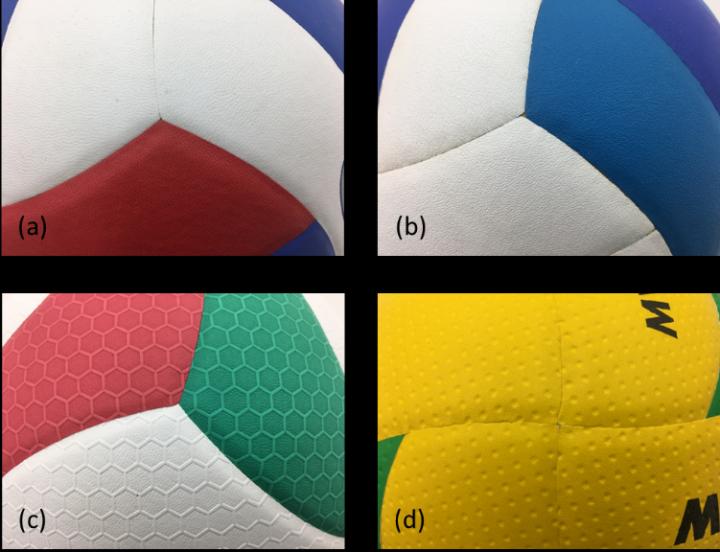
University of Tsukuba researchers use wind-tunnel experiments to study the effect the panels of a volleyball have on its flight, the asymmetric aerodynamics of which may have implications for aviation
IMAGE

Credit: University of Tsukuba


Tsukuba, Japan – A research team led by the University of Tsukuba studied the aerodynamics of a volleyball using a wind tunnel and hitting robot. They found that no matter the orientation of a standard ball, the pattern of panels presents an asymmetric surface to the flow of air, leading to deviations in its flight patterns. This work may help shed light on unsolved questions in the field of fluid dynamics.

Aerodynamics, which is the behavior of air as it flows around objects, plays a huge role in many sports. This includes golf, baseball, tennis, soccer, and of course, volleyball. Soccer players can “bend” kicks into the goal, and baseball pitchers throw knuckleballs that can dance around an opposing player’s bat. In these cases, the aerodynamic properties are used to gain a competitive advantage. Scientists studying these phenomena tend to focus on the boundary layer of air surrounding the ball. For example, dimples on a golf ball can cause it to fly farther on drives. This is because the dimples reduce drag by creating a turbulent boundary layer of air. But these effects strongly depend on the speed the ball is travelling, as well as the surface roughness.

“When a spherical ball moves through the air, a long tangle of turbulent, swirling air trails behind, causing it to slow down,” explains first author Sungchan Hong. “But if the ball is moving fast enough, this wake suddenly shrinks and the drag force plummets in a phenomenon called drag crisis.” If the laminar flow of the boundary layer near the ball begins to become turbulent, experienced players can take advantage of the resulting strange aerodynamic effects to make the ball swerve unexpectedly. In particular, a volleyball player can get some extra velocity on his or her float serves with an understanding of these principles.

In the wind-tunnel experiments, the researchers found that the panels on standard volleyballs led to unpredictable flight patterns. They also found a hexagonal pattern in the ball significantly reduces the threshold required for drag crisis to occur, while the dimpled pattern ball increases it. Therefore, this study suggests that the conditions for drag crisis can be controlled with the surface design of a volleyball.

“The most commonly used volleyballs have six panels, each made with three parallel rectangular strips. This makes the trajectory strongly dependent on the orientation of the ball. Using a hexagonal or dimpled pattern instead could significantly increase the consistency of its flight,” says author Takeshi Asai. “This research may have important implications not only within sports, but also for developing more efficient and stable drones.”

###

Media Contact
Naoko Yamashina
[email protected]
81-298-532-066

Related Journal Article

http://dx.doi.org/10.3390/app9194007

Tags: Biomechanics/BiophysicsChemistry/Physics/Materials SciencesIndustrial Engineering/Chemistry
Share13Tweet8Share2ShareShareShare2

Related Posts

Polymers move from sunscreen helpers to the heart of UV protection

Polymers move from sunscreen helpers to the heart of UV protection

October 5, 2026
Optica Elects Delfyett as 2027 Vice President, Adds Backus and Vanholsbeeck to Board

Optica Elects Delfyett as 2027 Vice President, Adds Backus and Vanholsbeeck to Board

October 5, 2026

New HPLC Method Simultaneously Tracks Three Diabetes Drugs in One Pill

October 5, 2026

Tiny Cellulose Rods Keep Pea Starch Gels Fresh by Locking Up Water

October 5, 2026
Please login to join discussion

POPULAR NEWS

  • Alloys That Shrink Their Own Grains: New PIX Mechanism Refines Metals With Heat Alone

    Alloys That Shrink Their Own Grains: New PIX Mechanism Refines Metals With Heat Alone

    29 shares
    Share 12 Tweet 7
  • Endurance Exercise Reshapes the Liver in Males and Females Through Distinct Molecular Routes

    29 shares
    Share 12 Tweet 7
  • Single Transcription Factor PU.1 Rapidly Converts Fibroblasts into Macrophage-Lineage Cells

    29 shares
    Share 12 Tweet 7
  • New Scale Measures How Ready Nurse Educators Really Are for the AI Era

    29 shares
    Share 12 Tweet 7

About

We bring you the latest biotechnology news from best research centers and universities around the world. Check our website.

Follow us

Recent News

Alloys That Shrink Their Own Grains: New PIX Mechanism Refines Metals With Heat Alone

Endurance Exercise Reshapes the Liver in Males and Females Through Distinct Molecular Routes

Single Transcription Factor PU.1 Rapidly Converts Fibroblasts into Macrophage-Lineage Cells

Subscribe to Blog via Email

Success! An email was just sent to confirm your subscription. Please find the email now and click 'Confirm' to start subscribing.

Join 85 other subscribers
  • Contact Us

Bioengineer.org © Copyright 2023 All Rights Reserved.

Welcome Back!

Login to your account below

Forgotten Password?

Retrieve your password

Please enter your username or email address to reset your password.

Log In
No Result
View All Result
  • Homepages
    • Home Page 1
    • Home Page 2
  • News
  • National
  • Business
  • Health
  • Lifestyle
  • Science

Bioengineer.org © Copyright 2023 All Rights Reserved.