

• HOME
  • NEWS
  • EXPLORE
    • CAREER
      • Companies
      • Jobs
    • EVENTS
    • iGEM
      • News
      • Team
    • PHOTOS
    • VIDEO
    • WIKI
  • BLOG
  • COMMUNITY
    • FACEBOOK
    • INSTAGRAM
    • TWITTER
Tuesday, July 7, 2026
BIOENGINEER.ORG
No Result
View All Result
  • Login
  • HOME
  • NEWS
  • EXPLORE
    • CAREER
      • Companies
      • Jobs
        • Lecturer
        • PhD Studentship
        • Postdoc
        • Research Assistant
    • EVENTS
    • iGEM
      • News
      • Team
    • PHOTOS
    • VIDEO
    • WIKI
  • BLOG
  • COMMUNITY
    • FACEBOOK
    • INSTAGRAM
    • TWITTER
  • HOME
  • NEWS
  • EXPLORE
    • CAREER
      • Companies
      • Jobs
        • Lecturer
        • PhD Studentship
        • Postdoc
        • Research Assistant
    • EVENTS
    • iGEM
      • News
      • Team
    • PHOTOS
    • VIDEO
    • WIKI
  • BLOG
  • COMMUNITY
    • FACEBOOK
    • INSTAGRAM
    • TWITTER
No Result
View All Result
Bioengineer.org
No Result
View All Result
Home NEWS Science News Biology

The rules of attraction: Scientists find elusive molecule that helps sperm find egg

Bioengineer by Bioengineer
August 3, 2018
in Biology
Reading Time: 2 mins read
0
Share on FacebookShare on TwitterShare on LinkedinShare on RedditShare on Telegram
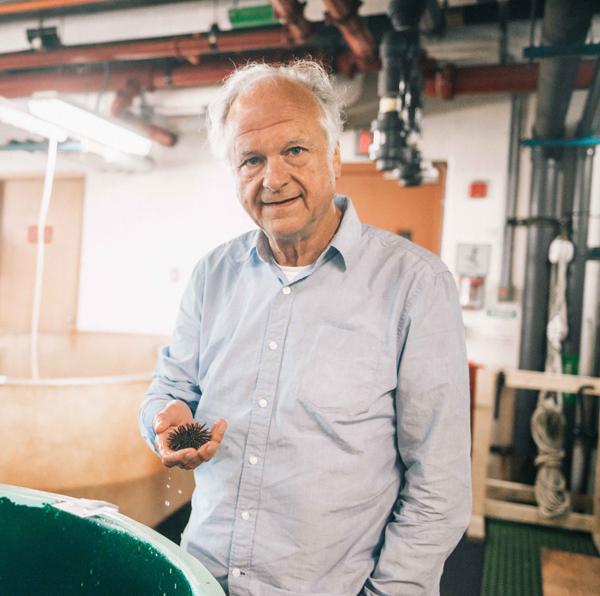
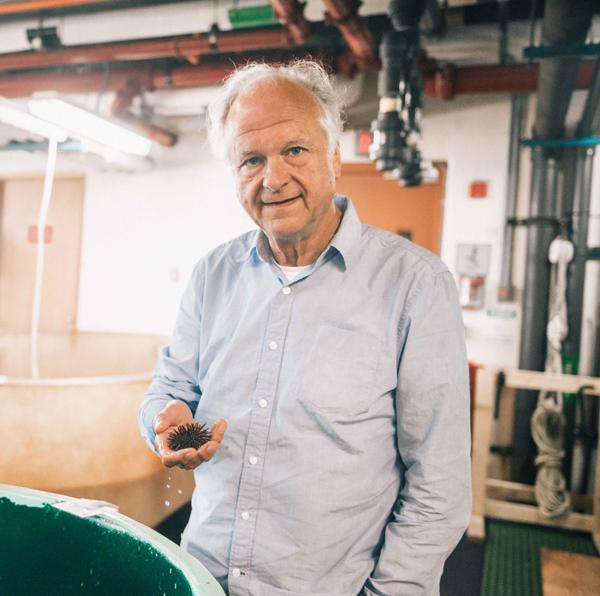
IMAGE

Credit: Megan Costello

WOODS HOLE, Mass. — Scientists affiliated with the Marine Biological Laboratory (MBL) have identified a key molecule driving chemoattraction between sperm and egg cells in marine invertebrates. The study was recently published in Nature Communications.

More than 100 years ago, MBL Director F.R. Lillie of the University of Chicago discovered that eggs from marine invertebrates release a chemical factor that attracts sperm, a process called chemotaxis. Sperm, for their part, swim up a chemical gradient to reach the egg, assisted by a pulsatile rise in calcium ion (Ca2+) concentration in the sperm tail that controls its beating.

In past years, many of the cellular components that translate chemoattractant stimulation into a Ca2+ response have been revealed, but a crucial ingredient has been missing. A prerequisite for Ca2+ ions from the sperm's environment being able to enter the tail is that the sperm cell's pH becomes more alkaline. The molecule that brings about this change in pH has been elusive.

In this new report, U. Benjamin Kaupp, a MBL Whitman Center Scientist from the Center of Advanced European Studies (Caesar) in Bonn, Germany, identifies this molecule. Kaupp spent 18 summers at the MBL conducting research in the footsteps of F.R. Lillie's original quest.

The molecule that Kaupp and colleagues identified allows sodium ions to flow into the sperm cell and, in exchange, transports protons out of the cell. Such so-called sodium/proton exchangers have been known for a long time, but this one is special. It is a chimaera that shares structural features with ion channels, called pacemaker channels, which control our heartbeat and electrical activity in the brain.

This sodium/proton exchange in the sperm cell, like in the pacemaker channels, is activated by a stretch of positively charged amino acids called the voltage sensor. When sperm capture chemoattractant molecules, the voltage becomes more negative, because potassium channels open and potassium ions leave the cell. The voltage-sensor registers this voltage change and the exchanger begins exporting protons from the cell; the cell's interior becomes more alkaline. When this mechanism is disabled, the Ca2+ pulses in the sperm tail are suppressed, and sperm are lost on their voyage to the egg.

###

The lead author on this report is Florian Windler from Kaupp's lab in Bonn. Windler and Reinhard Seifert studied this unique molecule during several research stays in the MBL Whitman Center.

Citation:

Windler, F. et al (2018) The solute carrier SLC9C1 is a Na+/H+-exchanger gated by an S4-type voltage-sensor and cyclic-nucleotide binding. Nature Communications, DOI: 10.1038/s41467-018-05253-xDOI: 10.1038

Media Contact

Diana Kenney
[email protected]
508-289-7139
@mblscience

http://www.mbl.edu

Original Source

http://www.mbl.edu/blog/the-rules-of-attraction-whitman-scientists-find-elusive-molecule-that-helps-sperm-find-egg/ http://dx.doi.org/10.1038/s41467-018-05253-x

Share15Tweet8Share2ShareShareShare2

Related Posts

Here are a few rewritten headlines for a science magazine post, each with a slightly different tone: Intriguing & poetic: How do organs sculpt themselves? Sea stars hold the secret Direct & research-focused: Sea stars reveal the hidden rules of organ formation Metaphorical & inviting: Tiny architects beneath the waves: What sea stars teach us about building organs Short & punchy: Star-shaped clues to how our organs take shape Question-led: Could a sea star show us how organs form? Elegant & feature-style: The body’s blueprint, glimpsed in a sea star’s arm

July 6, 2026
Bacteria evolve faster with unconventional gene copies — Biology

Bacteria evolve faster with unconventional gene copies

July 6, 2026

Neighbours rewire soil feedback via root microbiome shifts

July 6, 2026

Evolution-Inspired Biosensors Revolutionize Lipid Tracking in Real Time

July 2, 2026
Please login to join discussion

POPULAR NEWS

  • Detection of EDCs in Breast Milk and Infant Urine Up to Six Months Highlights Early Exposure Risks

    77 shares
    Share 31 Tweet 19
  • New Drug Candidate Developed at McMaster Shows Potential for Treating Brain Cancer

    58 shares
    Share 23 Tweet 15
  • Saying Goodbye to PGY-6: Pediatric Fellowship Realities

    103 shares
    Share 41 Tweet 26
  • KTU Researchers Explore Ultrasound’s Role in Enhancing Blood Flow Beyond Diagnostics

    53 shares
    Share 21 Tweet 13

About

We bring you the latest biotechnology news from best research centers and universities around the world. Check our website.

Follow us

Recent News

Flame retardant BDE-209 targets molecularly linked to ulcerative colitis

Ultra-high frequency particle impacts mimic rockbursts to shatter hard rock

Kidney transplant outcomes in older adults studied by German researchers

Subscribe to Blog via Email

Enter your email address to subscribe to this blog and receive notifications of new posts by email.

Join 83 other subscribers
  • Contact Us

Bioengineer.org © Copyright 2023 All Rights Reserved.

Welcome Back!

Login to your account below

Forgotten Password?

Retrieve your password

Please enter your username or email address to reset your password.

Log In
No Result
View All Result
  • Homepages
    • Home Page 1
    • Home Page 2
  • News
  • National
  • Business
  • Health
  • Lifestyle
  • Science

Bioengineer.org © Copyright 2023 All Rights Reserved.