• HOME
  • NEWS
  • EXPLORE
    • CAREER
      • Companies
      • Jobs
    • EVENTS
    • iGEM
      • News
      • Team
    • PHOTOS
    • VIDEO
    • WIKI
  • BLOG
  • COMMUNITY
    • FACEBOOK
    • INSTAGRAM
    • TWITTER
Monday, May 11, 2026
BIOENGINEER.ORG
No Result
View All Result
  • Login
  • HOME
  • NEWS
  • EXPLORE
    • CAREER
      • Companies
      • Jobs
        • Lecturer
        • PhD Studentship
        • Postdoc
        • Research Assistant
    • EVENTS
    • iGEM
      • News
      • Team
    • PHOTOS
    • VIDEO
    • WIKI
  • BLOG
  • COMMUNITY
    • FACEBOOK
    • INSTAGRAM
    • TWITTER
  • HOME
  • NEWS
  • EXPLORE
    • CAREER
      • Companies
      • Jobs
        • Lecturer
        • PhD Studentship
        • Postdoc
        • Research Assistant
    • EVENTS
    • iGEM
      • News
      • Team
    • PHOTOS
    • VIDEO
    • WIKI
  • BLOG
  • COMMUNITY
    • FACEBOOK
    • INSTAGRAM
    • TWITTER
No Result
View All Result
Bioengineer.org
No Result
View All Result
Home NEWS Science News

The power of light for internet of underwater things

Bioengineer by Bioengineer
March 19, 2020
in Science News
Reading Time: 3 mins read
0
IMAGE
Share on FacebookShare on TwitterShare on LinkedinShare on RedditShare on Telegram

IMAGE

Credit: © 2020 Filho et al.


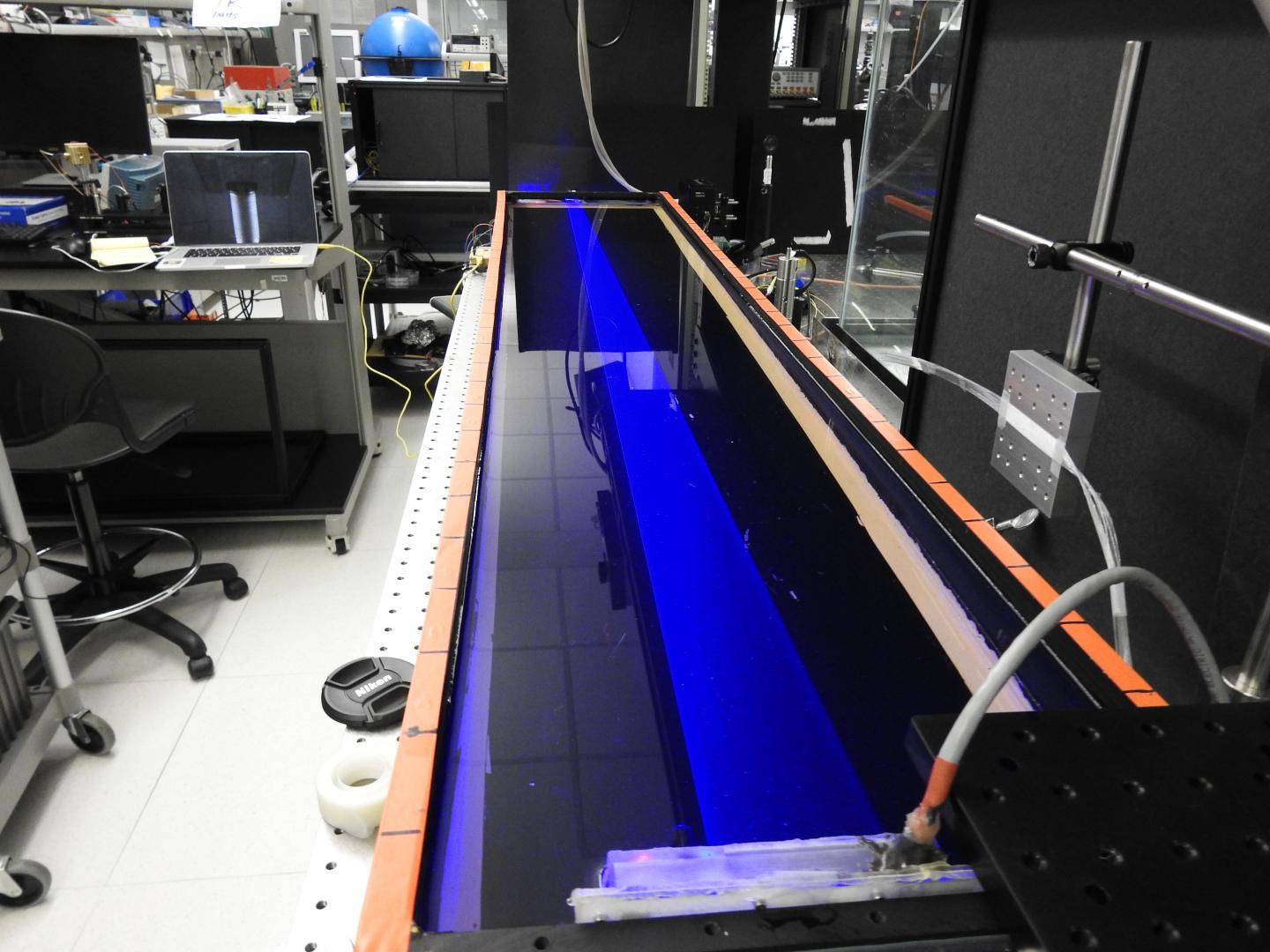
A system that can concurrently transmit light and energy to underwater energy devices is under development at KAUST. Self-powered internet of underwater things (IoUT) that harvest energy and decode information transferred by light beams can enhance sensing and communication in the seas and oceans. KAUST researchers are now solving some of the many challenges to this technology being employed in such harsh and dynamic environments1.

“Underwater acoustic and radio wave communications are already in use, but both have huge drawbacks. Acoustic communication can be used over large distances but lacks stealth (making it detectable by a third party) and can only access a small bandwidth,” explains master’s student Jose Filho. “Furthermore, radio waves lose their energy in seawater, which limits their use in shallow depths. They also require bulky equipment and lots of energy to run,” he explains.

“Underwater optical communication provides an enormous bandwidth and is useful for reliably transmitting information over several meters,” says co-first author Abderrahmen Trichili. “KAUST has conducted some of the first tests of high-bit-rate underwater communication, setting records2 on the distance and capacity of underwater transmission in 2015.”

Led by Khaled Salama, Filho, Trichili and team are investigating the use of simultaneous lightwave information and power transfer (SLIPT) configurations for transmitting energy and data to underwater electronic devices.

“SLIPT can help charge devices in inaccessible locations where continuous powering is costly or not possible,” explains Filho.

In one experiment, the KAUST team was able to charge and transmit instructions across a 1.5-meter-long water tank to a solar panel on a submerged temperature sensor. The sensor recorded temperature data and saved it on a memory card, later transmitting it to a receiver when information in the light beam instructed it to do so.

In another experiment, the battery of a camera submerged at the bottom of a tank supplied with Red Sea water was charged via its solar panel within an hour and a half by a partially submerged, externally powered laser source. The fully charged camera was able to stream one-minute-long videos back to the laser transmitter.

“These demonstrations were the first stand-alone devices to harvest energy, decode information and perform a particular function–in this case temperature sensing and video streaming,” says Salama.

The KAUST team is now working on the deployment of underwater SLIP configurations. They are finding ways to overcome the effects of turbulence on underwater reception and looking into the use of ultraviolet light for transmissions that face underwater obstructions. They are also developing smart underwater optical positioning algorithms that could help locate relay devices set up to extend the communication ranges of IoUT devices.

Their and others’ research in the field could ultimately lead to the deployment of self-powered underwater sensors for tracking climate change effects on coral reefs, detecting seismic activity and monitoring oil pipelines. It could also lead to the development of small autonomous robots for more accurate and extensive underwater search and rescue operations.

###

Media Contact
Carolyn Unck
[email protected]

Original Source

https://discovery.kaust.edu.sa/en/article/952/the-power-of-light-for-internet-of-underwater-things

Related Journal Article

http://dx.doi.org/10.1109/MCOM.001.1900413

Tags: Civil EngineeringElectrical Engineering/ElectronicsInternetResearch/DevelopmentTechnology/Engineering/Computer Science
Share12Tweet8Share2ShareShareShare2

Related Posts

New Post-Hoc Analysis Explores Daily Oral Orforglipron Use in Adults Over 65 with Obesity, Regardless of Diabetes Status

May 11, 2026

Evaluating Digoxin Use in Patients with Symptomatic Rheumatic Heart Disease

May 10, 2026

Evaluating the Effectiveness and Safety of Digitalis Glycosides in Treating Heart Failure

May 10, 2026

Urdu Fall Risk Questionnaire Adapted for Elderly

May 10, 2026
Please login to join discussion

POPULAR NEWS

  • Research Indicates Potential Connection Between Prenatal Medication Exposure and Elevated Autism Risk

    840 shares
    Share 336 Tweet 210
  • New Study Reveals Plants Can Detect the Sound of Rain

    727 shares
    Share 290 Tweet 181
  • Salmonella Haem Blocks Macrophages, Boosts Infection

    61 shares
    Share 24 Tweet 15
  • Breastmilk Balances E. coli and Beneficial Bacteria in Infant Gut Microbiomes

    57 shares
    Share 23 Tweet 14

About

We bring you the latest biotechnology news from best research centers and universities around the world. Check our website.

Follow us

Recent News

New Post-Hoc Analysis Explores Daily Oral Orforglipron Use in Adults Over 65 with Obesity, Regardless of Diabetes Status

Evaluating Digoxin Use in Patients with Symptomatic Rheumatic Heart Disease

Evaluating the Effectiveness and Safety of Digitalis Glycosides in Treating Heart Failure

Subscribe to Blog via Email

Enter your email address to subscribe to this blog and receive notifications of new posts by email.

Join 82 other subscribers
  • Contact Us

Bioengineer.org © Copyright 2023 All Rights Reserved.

Welcome Back!

Login to your account below

Forgotten Password?

Retrieve your password

Please enter your username or email address to reset your password.

Log In
No Result
View All Result
  • Homepages
    • Home Page 1
    • Home Page 2
  • News
  • National
  • Business
  • Health
  • Lifestyle
  • Science

Bioengineer.org © Copyright 2023 All Rights Reserved.