• HOME
  • NEWS
  • EXPLORE
    • CAREER
      • Companies
      • Jobs
    • EVENTS
    • iGEM
      • News
      • Team
    • PHOTOS
    • VIDEO
    • WIKI
  • BLOG
  • COMMUNITY
    • FACEBOOK
    • INSTAGRAM
    • TWITTER
Monday, April 20, 2026
BIOENGINEER.ORG
No Result
View All Result
  • Login
  • HOME
  • NEWS
  • EXPLORE
    • CAREER
      • Companies
      • Jobs
        • Lecturer
        • PhD Studentship
        • Postdoc
        • Research Assistant
    • EVENTS
    • iGEM
      • News
      • Team
    • PHOTOS
    • VIDEO
    • WIKI
  • BLOG
  • COMMUNITY
    • FACEBOOK
    • INSTAGRAM
    • TWITTER
  • HOME
  • NEWS
  • EXPLORE
    • CAREER
      • Companies
      • Jobs
        • Lecturer
        • PhD Studentship
        • Postdoc
        • Research Assistant
    • EVENTS
    • iGEM
      • News
      • Team
    • PHOTOS
    • VIDEO
    • WIKI
  • BLOG
  • COMMUNITY
    • FACEBOOK
    • INSTAGRAM
    • TWITTER
No Result
View All Result
Bioengineer.org
No Result
View All Result
Home NEWS Science News

The key to lowering CO2 emissions is made of metal

Bioengineer by Bioengineer
September 29, 2020
in Science News
Reading Time: 2 mins read
0
IMAGE
Share on FacebookShare on TwitterShare on LinkedinShare on RedditShare on Telegram

Osaka City University discovers metal ions as key component in exploring the use of CO2 as a raw material through artificial photosynthesis.
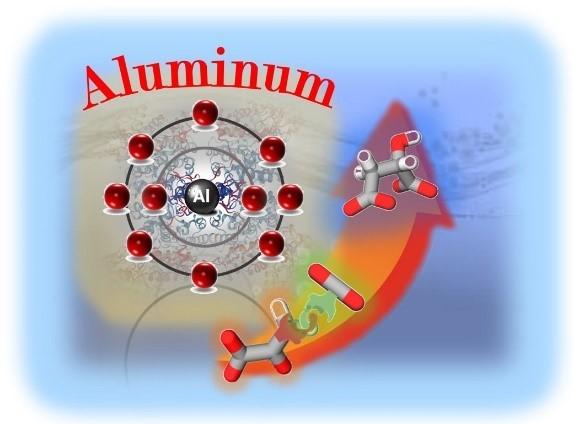
IMAGE

Credit: Yutaka Amao, Osaka City University

Osaka, Japan – Carbon dioxide (CO2) levels are rising and our planet is heating up. What do we do? What if we used this excess CO2 as a raw material to produce things we need – similar to how plants use it to produce oxygen.

This is one thing artificial photosynthesis has set out to do.

Artificial photosynthesis is a chemical process that mimics the natural process of photosynthesis to convert sunlight, water, and carbon dioxide into useful things like carbohydrates and oxygen. The problem is that current technologies can only produce molecules with 1 carbon atom. These molecules are too weak to be used for the production of more complex materials. Standard experimental conditions have not been stable enough to allow for molecules with bonds of more than one carbon atom to form.

New research at Osaka City University has found that simply adding metal ions like aluminum and iron was enough to allow the production of malic acid, which contains 4 carbon atoms. The study appeared recently online in the New Journal of Chemistry published by the Royal Society of Chemistry.

“I was surprised that the solution was found in such a common thing as aluminum ions” said lead author Takeyuki Katagiri.

“Our goal is to create groups of molecules with as many as 100 carbon atoms” added supporting author Yutaka Amao. “Then we can finally explore possibilities of using CO2 as a raw material.”

###

We are Osaka City University – the oldest research university in Osaka. With 9 undergraduate faculties and 11 graduate schools all dedicated to making urban life better, energy cleaner, and people healthier and happier, we have won numerous awards and have produced 2 Nobel laureates. For more information, please visit our website at https://www.osaka-cu.ac.jp/en

Media Contact
James Gracey
[email protected]

Original Source

https://doi.org/10.1039/D0NJ03449E

Related Journal Article

http://dx.doi.org/10.1039/D0NJ03449E

Tags: BiochemistryChemistry/Physics/Materials SciencesEnergy/Fuel (non-petroleum)Industrial Engineering/Chemistry
Share12Tweet8Share2ShareShareShare2

Related Posts

Tech-Driven Follow-Up Care for NICU Graduates

April 20, 2026

JAK1 Inhibitors Fight Colitis via NLRP3 Blockade

April 20, 2026

Heat-Loving Enzyme Revealed: A New Breakthrough to Enhance Plastic Recycling

April 20, 2026

Self-Assembling Luminophores Create Nanotubes Enabling Multidirectional Exciton Transport

April 20, 2026
Please login to join discussion

POPULAR NEWS

  • Scientists Investigate Possible Connection Between COVID-19 and Increased Lung Cancer Risk

    62 shares
    Share 25 Tweet 16
  • NSF funds machine-learning research at UNO and UNL to study energy requirements of walking in older adults

    101 shares
    Share 40 Tweet 25
  • Boosting Breast Cancer Risk Prediction with Genetics

    47 shares
    Share 19 Tweet 12
  • Self-Oscillating Electroactive Nanocomposites Boost Heat Pumps

    42 shares
    Share 17 Tweet 11

About

We bring you the latest biotechnology news from best research centers and universities around the world. Check our website.

Follow us

Recent News

Tech-Driven Follow-Up Care for NICU Graduates

JAK1 Inhibitors Fight Colitis via NLRP3 Blockade

Heat-Loving Enzyme Revealed: A New Breakthrough to Enhance Plastic Recycling

Subscribe to Blog via Email

Enter your email address to subscribe to this blog and receive notifications of new posts by email.

Join 79 other subscribers
  • Contact Us

Bioengineer.org © Copyright 2023 All Rights Reserved.

Welcome Back!

Login to your account below

Forgotten Password?

Retrieve your password

Please enter your username or email address to reset your password.

Log In
No Result
View All Result
  • Homepages
    • Home Page 1
    • Home Page 2
  • News
  • National
  • Business
  • Health
  • Lifestyle
  • Science

Bioengineer.org © Copyright 2023 All Rights Reserved.