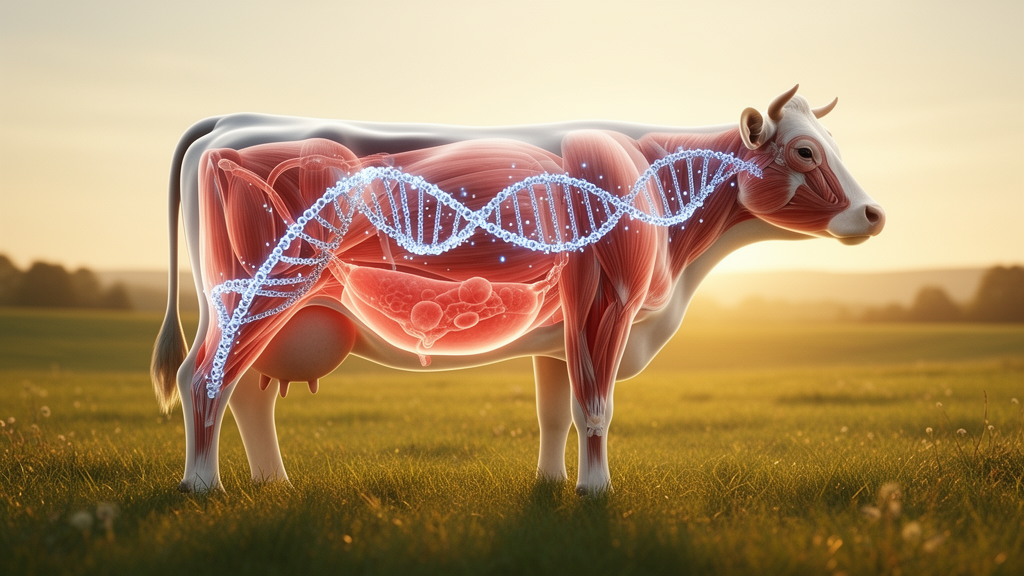
Deep inside the genomes of cattle, sheep, pigs and chickens, a vast population of RNA molecules that never produce a single protein is quietly pulling the levers of growth, fertility, disease resistance and meat quality. These long non-coding RNAs, or lncRNAs, are transcripts longer than 200 nucleotides that arise from the roughly 98 percent of the mammalian genome which does not encode proteins. A comprehensive new review synthesises evidence that they form a critical regulatory layer shaping the very traits that livestock breeders have spent centuries trying to improve. The review argues that lncRNAs represent a largely untapped resource that can be converted from descriptive transcriptomic catalogues into actionable breeding tools through a three-step process: prioritising candidates from genome-wide association studies and transcriptome data, functionally validating their roles using RNA-targeting CRISPR approaches, and incorporating validated lncRNA markers into genomic selection pipelines.
The sheer scale of lncRNA transcription is staggering. Early genome-wide studies revealed that 94 percent of detected transcripts on human chromosomes 21 and 22 originated from regions outside known exons, and subsequent cap analysis of gene expression demonstrated that approximately 63 percent of the mammalian genome is transcribed. Genome-wide association studies have shown that more than 90 percent of trait-associated variants lie within non-coding genomic regions, strongly suggesting that regulatory elements including lncRNAs make substantial contributions to phenotypic variation in livestock. Unlike protein-coding mRNAs, lncRNAs function primarily as regulators of gene expression at three levels: epigenetic, transcriptional and post-transcriptional. They act as molecular switches, scaffolds, decoys and guides, influencing key biological processes from myogenesis to folliculogenesis. Based on their genomic location, most lncRNAs can be characterised as large intergenic non-coding RNAs, natural antisense transcripts, pseudogenes, long intronic lncRNAs and divergent transcripts. The HUGO Gene Nomenclature Committee has categorised lncRNAs into nine subgroups, with the most abundant classes being long intergenic ncRNAs at approximately 40 percent, antisense RNAs at approximately 34 percent and divergent transcripts at approximately 10.6 percent.
LncRNAs exert their regulatory functions through six major modes of action that frequently intersect in a context-dependent manner. As molecular signals, they respond to specific cellular stimuli and recruit chromatin-modifying enzymes to target genes; in livestock, stress-responsive lncRNAs in bovine mammary tissue rapidly recruit histone modifiers during heat stress, modulating milk protein synthesis pathways. As scaffolds, they serve as platforms to bring multiple proteins together; a recent example is lncRNA MEG3, which scaffolds SUZ12 via its intrinsically disordered region to promote liquid-liquid phase separation, ultimately regulating muscle fibre composition and intramuscular fat deposition in cattle and sheep. As decoys, they bind to proteins or other RNAs, preventing them from interacting with their natural targets; in skeletal muscle, certain lncRNAs sequester transcription factors that would otherwise drive premature differentiation, thereby extending the proliferative window of myoblasts and influencing final muscle mass. As guides, they direct transcriptional complexes to specific genomic locations; in reproductive tissues of sheep and goats, guide lncRNAs recruit polycomb complexes to imprinted loci, contributing to the epigenetic control of ovulation rate and litter size. As architects, they help maintain three-dimensional genome organisation by stabilising enhancer-promoter loops, and as competing endogenous RNAs, they sequester microRNAs to prevent them from silencing target mRNAs.
Some of the most compelling evidence for lncRNA control of economically important traits comes from genomic imprinting. A well-characterised example is the ovine DLK1-DIO3 imprinted domain underlying the Callipyge muscle-hypertrophy phenotype: a single cis-acting mutation upregulates the paternally expressed DLK1 and RTL1 transcripts together with the maternally expressed lncRNAs MEG3 and MEG8, producing a polar-overdominant pattern of postnatal muscle hypertrophy. A parallel imprinting-based mechanism operates at the bovine H19/IGF2 locus, where methylation of the H19 differentially methylated region governs the reciprocal, parent-of-origin-specific expression of the H19 lncRNA and the growth-promoting IGF2 gene. This H19/IGF2 imprinting mechanism has been traced back through comparative genomic analysis of marsupial and eutherian lineages, underscoring its fundamental role in mammalian growth regulation. In cattle, Xist expression has been detected during preimplantation embryo development, and its temporal pattern is consistent with a role in the initiation of X chromosome inactivation and dosage compensation. Aberrant DNA methylation at the IGF2R differentially methylated region has also been observed in cloned sheep, highlighting the sensitivity of these epigenetic regulatory regions to developmental manipulation.
Skeletal muscle is one of the most economically important tissues in livestock, directly determining meat yield, carcass composition and product quality. Over the past decade, thousands of lncRNAs have been identified in skeletal muscle across species, and current evidence shows that they regulate muscle development through chromatin remodelling, transcriptional activation, molecular sponging, competitive protein binding, modulation of mRNA translation and control of protein stability. In sheep, RNA sequencing identified 1,566 lncRNAs, with 404 differentially expressed between prenatal and postnatal skeletal muscle, many showing potential cis-regulatory interactions with key myogenic genes such as Mef2 and MyoD. The lncRNA LncMyoD, directly activated by the myogenic factor MyoD, plays a key role in promoting cell-cycle exit and myogenic differentiation. The imprinted lncRNA H19 regulates myoblast differentiation through multiple pathways, including recruitment of PRC2, sponging of let-7 microRNA and modulation of mRNA stability via KSRP. In beef cattle, lncRNAs such as MALAT1 and H19 modulate myoblast apoptosis to prevent excessive cell death during postnatal growth, thereby increasing muscle fibre number and improving meat yield. A novel layer of regulation has recently emerged through liquid-liquid phase separation: the lncRNA MEG3 regulates skeletal muscle mass and metabolic homeostasis by modulating liquid-liquid phase separation of the SUZ12 protein, influencing slow-twitch fibre proportion, mitochondrial function and intramuscular fat accumulation.
Reproductive performance is another domain where lncRNAs are proving decisive. In goats, a recent study identified the novel lncRNA lnc_2217 as an important regulator of zygotic genome activation. Knockdown of lnc_2217 by siRNA microinjection significantly reduced the blastocyst formation rate from approximately 32.5 percent to 13.9 percent, an impairment associated with reduced global de novo RNA synthesis and excessive degradation of maternal mRNAs at the eight-cell stage. Mechanistically, lnc_2217 functions as a competing endogenous RNA that sequesters miR-877-3p and thereby sustains the expression of the m6A reader YTHDF2, contributing to the appropriate clearance of maternal transcripts during the maternal-to-zygotic transition. In sheep, comparative ovarian transcriptomics between high-fecundity Small Tail Han and low-fecundity Ujumqin breeds revealed a comprehensive competing endogenous RNA network. A key validated axis, circRNA803/lncRNA MSTRG.19726-oar-let-7a-CPEB1, was shown to regulate follicular dominance through competitive sponging of oar-let-7a to modulate CPEB1 expression, a critical factor influencing ovulation rate and litter size. In cattle, comparative transcriptomic analysis of immature and sexually mature testes identified numerous differentially expressed lncRNAs associated with testicular development, sexual maturation and spermatogenesis. In chickens, whole-transcriptome sequencing across the hypothalamus-pituitary-ovarian axis identified numerous differentially expressed lncRNAs, microRNAs and mRNAs associated with gonadal differentiation, with key regulatory networks targeting genes such as GATA4, SMAD3 and FOXL2.
Disease resistance is gaining increasing attention as a trait amenable to lncRNA-based improvement. A recent study on Holstein cows with different stages of paratuberculosis, a costly chronic infection also known as Johne’s disease, used integrated RNA sequencing and small RNA sequencing on jejunal tissue. The researchers identified differentially expressed lncRNAs, microRNAs and mRNAs linked to susceptibility or resistance to Mycobacterium avium subspecies paratuberculosis, and constructed a competing endogenous RNA network highlighting six lncRNAs and 48 microRNAs that may regulate important immune genes such as BOLA-DQB and PPARG. These findings offer promising new targets for breeding cattle with improved disease resistance. In chickens, lncRNA research has focused on immune responses to diseases such as Marek’s disease and infectious bronchitis virus, with egg-production-associated lncRNAs frequently acting on hypothalamic-pituitary-gonadal and hypothalamic-pituitary-ovarian axis genes via competing endogenous RNA sponging. Beyond classical disease traits, lncRNAs also participate in lipid metabolism and adipogenesis, with several backfat and intramuscular-fat-associated lncRNAs in pigs functioning as competing endogenous RNAs that sequester adipogenesis-related microRNAs.
A transformative technological development is now opening new avenues for functional interrogation of lncRNAs. RNA-targeting CRISPR-Cas13 systems enable direct perturbation of RNA transcripts without altering the underlying genomic DNA, significantly minimising off-target effects on nearby coding genes. A landmark study employed a transcriptome-scale Cas13 screening approach called CaRPool-seq to probe approximately 6,200 lncRNAs across five human cell lines, identifying lncRNAs essential for cellular fitness with context-specific or broader roles and highlighting their previously underestimated importance in cellular fitness and cancer biology. Although large-scale transcriptome-wide Cas13 screens in livestock species have not yet been reported at the same scale as in human cells, related CRISPR-based approaches are increasingly applied in animal models to interrogate lncRNA functions during development and in agricultural contexts. Adaptation of these RNA-targeting technologies to livestock species is expected to greatly accelerate the discovery and functional validation of lncRNAs that influence economically important traits such as growth, reproduction, disease resistance and meat quality. In parallel, numerous specialised databases now support lncRNA research in livestock, including NONCODE v7.0, which covers cattle, pig, sheep and chicken, and Ensembl Release 116, which provides excellent livestock genome assemblies.
Despite substantial progress, much of lncRNA biology in livestock remains poorly understood. The majority of discovered transcripts still lack experimental functional validation, with most current knowledge based on expression profiling and bioinformatic predictions, leaving clear causal relationships between specific lncRNAs and economically important traits as a major challenge. Many lncRNAs experience minimal evolutionary constraint, resulting in limited sequence conservation across distant species, which means many lncRNAs appear and disappear within specific lineages. The remarkable diversity of lncRNA mechanisms, from chromatin remodelling to liquid-liquid phase separation, makes systematic characterisation particularly demanding. Future progress will depend on integrating multiple layers of biological data, including transcriptomics, epigenomics, chromatin accessibility, proteomics, metabolomics and genome-wide association studies. Artificial intelligence and machine learning are expected to play an increasingly important role by improving predictions of lncRNA structure, function and regulatory potential, helping researchers prioritise the most promising candidates for validation. International collaborative efforts such as the Functional Annotation of Animal Genomes project are expected to significantly improve the limited availability of high-quality genome assemblies and functional annotation tools for many livestock breeds.
The translational roadmap proposed by the review equips animal breeders and geneticists with a structured framework for converting lncRNA discoveries into tangible genetic improvements. The first step involves prioritising candidate lncRNAs from genome-wide association studies and transcriptome data, leveraging the observation that more than 90 percent of trait-associated variants lie within non-coding genomic regions. The second step requires functional validation using CRISPR-Cas13 and related RNA-targeting approaches in livestock primary cells, moving beyond descriptive catalogues to establish causal roles. The third step incorporates validated lncRNA markers into genomic selection pipelines, with the potential to improve breeding value prediction and support more efficient, sustainable livestock breeding strategies. Across livestock species, a consistent pattern emerges: lncRNAs primarily regulate economic traits through three recurring mechanistic themes, namely competing endogenous RNA networks that fine-tune microRNA activity during muscle and follicular development, chromatin remodelling that controls myogenic and adipogenic gene programs, and epigenetic scaffolding that stabilises tissue-specific expression states. Early large-scale efforts reported over 53,000 lncRNA records in pigs, approximately 12,850 in chickens and 22,227 in cattle, establishing foundational resources for understanding gene regulation and trait-associated molecular mechanisms. In horses, large-scale transcriptomic studies have identified more than 20,000 candidate lncRNAs, establishing a foundational resource for equine genomics. These advances open the way for incorporating lncRNA-based information into future genetic improvement programs, although substantial functional validation is still required before the promise of this hidden regulatory layer can be fully realised in meat quality, reproductive efficiency and disease resistance across livestock and poultry.
Subject of Research: Long non-coding RNAs as regulators of economically important traits in livestock and their breeding applications
Article Title: Long Non‐Coding RNAs: Key Regulators of Economic Traits in Livestock From Mechanisms to Breeding Applications
Article References: Khani, K., Harkinezhad, M. T., & Sepehri, R. (2026). Long Non‐Coding RNAs: Key Regulators of Economic Traits in Livestock From Mechanisms to Breeding Applications. Veterinary Medicine and Science, 12(6), Article e71292. https://doi.org/10.1002/vms3.71292
Image Credits: AI Generated
DOI: 10.1002/vms3.71292
Keywords: long non-coding RNAs, lncRNAs, livestock, epigenetics, CRISPR-Cas13, animal breeding, skeletal muscle, reproduction, disease resistance, genomic selection, competing endogenous RNA, genomic imprinting
News Source: Juliet Wilcox. (October 25, 2026). The Hidden RNA Layer That Controls Meat, Milk and Fertility in Livestock. Scienmag.