• HOME
  • NEWS
  • EXPLORE
    • CAREER
      • Companies
      • Jobs
    • EVENTS
    • iGEM
      • News
      • Team
    • PHOTOS
    • VIDEO
    • WIKI
  • BLOG
  • COMMUNITY
    • FACEBOOK
    • INSTAGRAM
    • TWITTER
Saturday, February 7, 2026
BIOENGINEER.ORG
No Result
View All Result
  • Login
  • HOME
  • NEWS
  • EXPLORE
    • CAREER
      • Companies
      • Jobs
        • Lecturer
        • PhD Studentship
        • Postdoc
        • Research Assistant
    • EVENTS
    • iGEM
      • News
      • Team
    • PHOTOS
    • VIDEO
    • WIKI
  • BLOG
  • COMMUNITY
    • FACEBOOK
    • INSTAGRAM
    • TWITTER
  • HOME
  • NEWS
  • EXPLORE
    • CAREER
      • Companies
      • Jobs
        • Lecturer
        • PhD Studentship
        • Postdoc
        • Research Assistant
    • EVENTS
    • iGEM
      • News
      • Team
    • PHOTOS
    • VIDEO
    • WIKI
  • BLOG
  • COMMUNITY
    • FACEBOOK
    • INSTAGRAM
    • TWITTER
No Result
View All Result
Bioengineer.org
No Result
View All Result
Home NEWS Science News Health

The first mouse model of human pancreas cancer subtypes

Bioengineer by Bioengineer
July 23, 2020
in Health
Reading Time: 2 mins read
0
IMAGE
Share on FacebookShare on TwitterShare on LinkedinShare on RedditShare on Telegram

IMAGE

Credit: Miyabayashi/Tuveson lab, CSHL

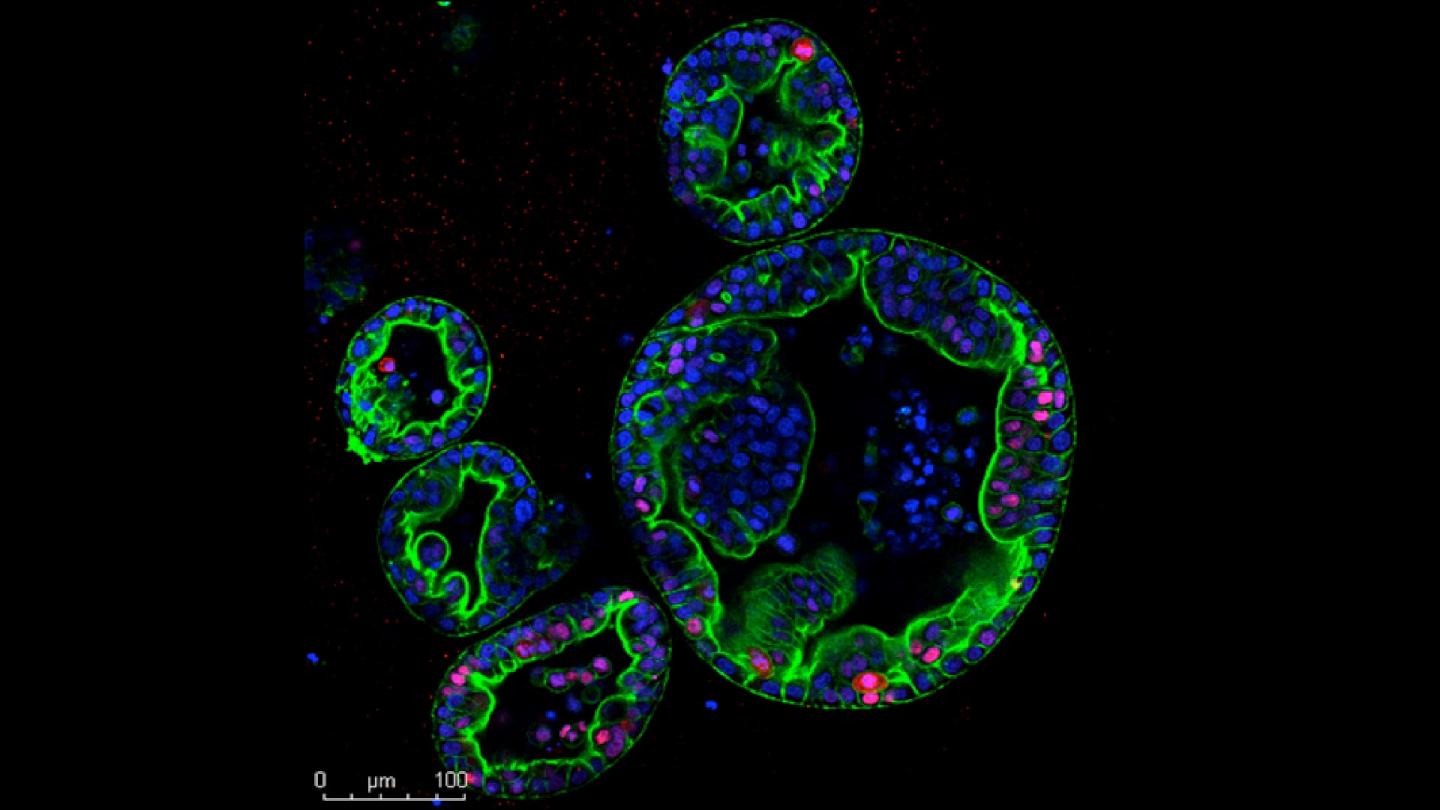
Scientists at Cold Spring Harbor Laboratory (CSHL) have created the first mouse model of pancreatic cancer that recreates two subtypes of the human disease. The model, published July 23, 2020 in Cancer Discovery, will help researchers investigate why some pancreatic cancers are more aggressive than others and what causes them to progress, paving the way to targeted therapies.

Pancreatic ductal adenocarcinoma (PDAC), the most common type of pancreatic cancer, has a grim prognosis. Recently, molecular analyses of patient tumors have identified two subtypes of the disease that behave very differently. The first, known as classical PDAC, is slow to progress and can be responsive to chemotherapy. The second, known as basal PDAC, spreads quickly and usually does not respond to chemotherapy.

CSHL researchers have been studying both subtypes using three-dimensional cultures of human cancer cells called organoids, a system developed in CSHL Cancer Center Director David Tuveson’s lab. But the researchers in this lab, which is dedicated by the Lustgarten Foundation, also want to understand how cancer cells behave inside the pancreas, where surrounding tissues influence a tumor’s growth and progression.

To make such studies possible, postdoctoral researcher Koji Miyabayashi injected patient-derived PDAC organoids into mice, delivering them directly to the pancreatic duct, where this type of tumor originates.

Like patient cancers, the transplanted tumors fell into two distinct subtypes: one remaining inside the pancreatic duct and slow to progress, the other much more invasive and deadly. Molecular analyses revealed that the two groups of tumors shared defining features of classical and basal PDAC.

“We can now study these two subtypes of tumors within the same microenvironment where they develop in patients,” Tuveson says. “This model is now our racehorse in pancreatic cancer research, allowing us to understand what drives these cancers and investigate therapeutic strategies that target each subtype’s particular vulnerabilities.”

Already, the team has discovered that PDAC subtype is not a fixed identity. Some of the classical tumors in the mice progressed, acquiring the invasive nature as well as the molecular features of the basal subtype. The researchers found that activity of the K-Ras gene, a notorious driver of many cancers, was key to determining each tumor’s nature. They also identified 13 other genes whose activity surged as the classical subtype tumors became invasive. Reining in those genes might be a way to keep the more aggressive PDAC subtype in check, they say.

“A patient with classical subtype has a good prognosis. Maybe if we can induce classical subtype from basal subtype, the patient will have a better chance of survival,” Miyabayashi explains.

###

Media Contact
Sara Roncero-Menendez
[email protected]

Related Journal Article

http://dx.doi.org/10.1158/2159-8290.CD-20-0133

Tags: BiologycancerCell BiologyGeneticsMedicine/Health
Share12Tweet8Share2ShareShareShare2

Related Posts

Succinate Receptor 1 Limits Blood Cell Formation, Leukemia

February 7, 2026

Palmitoylation of Tfr1 Drives Platelet Ferroptosis and Exacerbates Liver Damage in Heat Stroke

February 7, 2026

Oxygen-Enhanced Dual-Section Microneedle Patch Improves Drug Delivery and Boosts Photodynamic and Anti-Inflammatory Treatment for Psoriasis

February 7, 2026

Scientists Identify SARS-CoV-2 PLpro and RIPK1 Inhibitors Showing Potent Synergistic Antiviral Effects in Mouse COVID-19 Model

February 7, 2026
Please login to join discussion

POPULAR NEWS

  • Robotic Ureteral Reconstruction: A Novel Approach

    Robotic Ureteral Reconstruction: A Novel Approach

    82 shares
    Share 33 Tweet 21
  • Digital Privacy: Health Data Control in Incarceration

    63 shares
    Share 25 Tweet 16
  • Study Reveals Lipid Accumulation in ME/CFS Cells

    57 shares
    Share 23 Tweet 14
  • Breakthrough in RNA Research Accelerates Medical Innovations Timeline

    53 shares
    Share 21 Tweet 13

About

We bring you the latest biotechnology news from best research centers and universities around the world. Check our website.

Follow us

Recent News

Succinate Receptor 1 Limits Blood Cell Formation, Leukemia

Palmitoylation of Tfr1 Drives Platelet Ferroptosis and Exacerbates Liver Damage in Heat Stroke

Oxygen-Enhanced Dual-Section Microneedle Patch Improves Drug Delivery and Boosts Photodynamic and Anti-Inflammatory Treatment for Psoriasis

Subscribe to Blog via Email

Enter your email address to subscribe to this blog and receive notifications of new posts by email.

Join 73 other subscribers
  • Contact Us

Bioengineer.org © Copyright 2023 All Rights Reserved.

Welcome Back!

Login to your account below

Forgotten Password?

Retrieve your password

Please enter your username or email address to reset your password.

Log In
No Result
View All Result
  • Homepages
    • Home Page 1
    • Home Page 2
  • News
  • National
  • Business
  • Health
  • Lifestyle
  • Science

Bioengineer.org © Copyright 2023 All Rights Reserved.