• HOME
  • NEWS
  • EXPLORE
    • CAREER
      • Companies
      • Jobs
    • EVENTS
    • iGEM
      • News
      • Team
    • PHOTOS
    • VIDEO
    • WIKI
  • BLOG
  • COMMUNITY
    • FACEBOOK
    • INSTAGRAM
    • TWITTER
Friday, June 26, 2026
BIOENGINEER.ORG
No Result
View All Result
  • Login
  • HOME
  • NEWS
  • EXPLORE
    • CAREER
      • Companies
      • Jobs
        • Lecturer
        • PhD Studentship
        • Postdoc
        • Research Assistant
    • EVENTS
    • iGEM
      • News
      • Team
    • PHOTOS
    • VIDEO
    • WIKI
  • BLOG
  • COMMUNITY
    • FACEBOOK
    • INSTAGRAM
    • TWITTER
  • HOME
  • NEWS
  • EXPLORE
    • CAREER
      • Companies
      • Jobs
        • Lecturer
        • PhD Studentship
        • Postdoc
        • Research Assistant
    • EVENTS
    • iGEM
      • News
      • Team
    • PHOTOS
    • VIDEO
    • WIKI
  • BLOG
  • COMMUNITY
    • FACEBOOK
    • INSTAGRAM
    • TWITTER
No Result
View All Result
Bioengineer.org
No Result
View All Result
Home NEWS Science News Health

The case of the poisoned songbirds

Bioengineer by Bioengineer
June 26, 2019
in Health
Reading Time: 2 mins read
0
IMAGE
Share on FacebookShare on TwitterShare on LinkedinShare on RedditShare on Telegram

IMAGE

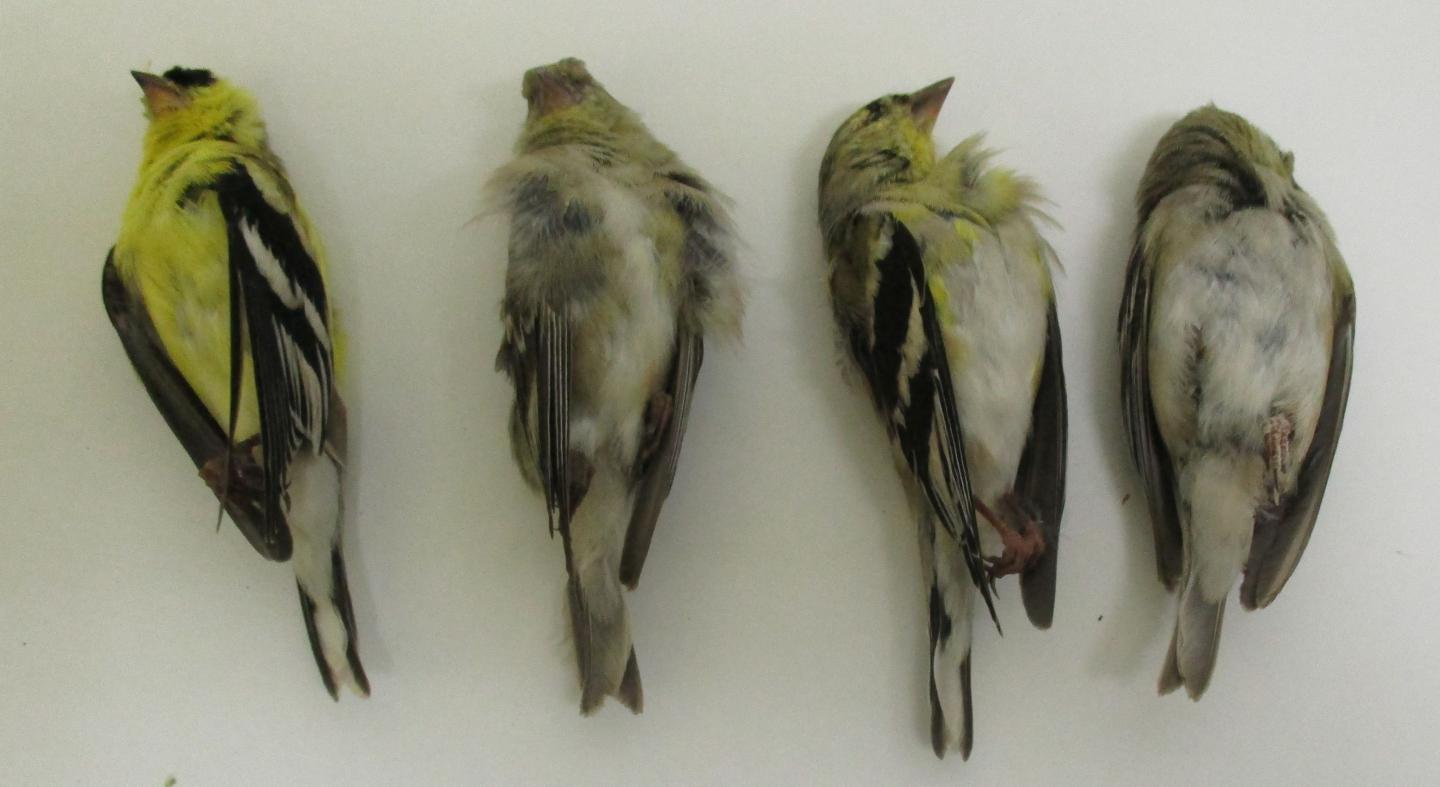
Credit: Photo: Krysta Rogers

Researchers from the California Department of Fish and Wildlife’s Wildlife Investigations Laboratory present their results from a toxicological investigation into a mortality event involving songbirds in a new publication in Environmental Toxicology and Chemistry.

On 17 March 2017, residents in Modesto, California, reported dead birds along the street and in front yards in a section of the town. The day prior to the incident, the city had made a drench application of imidacloprid, a pesticide synthetically derived from nicotine, to the base of trees that lined the street. The pesticide was reportedly mixed and applied according to package directions. Researchers at the Wildlife Investigation Laboratory were notified of the incident and conducted a postmortem investigation on the dead songbirds, which were identified as American goldfinches. The cause of death was determined to be imidacloprid poisoning likely due to the ingestion of fallen elm tree seeds contaminated during the drench application.

Lead author, Krysta Rogers, and her colleagues noted that “The mortality event investigated in the present study highlights a previously unidentified risk of drench application for imidacloprid. The pesticide label states that the product be applied to the base of the tree and directly to the root zone. [However] Seeds, insects, or other invertebrates consumed by birds and other animals may be present within that zone. If these food items were contaminated during the drench application, they would be highly toxic to animals when ingested.”

The authors recommend that “drench applications not occur during seed drop to minimize the risk of exposure to animals that consume fallen seeds and that mitigation measures could be taken to prevent small animals from accessing areas treated with the pesticide, at a minimum” Finally the authors encourage integrated pest management over the prophylactic use of pesticides as the ideal.

###

Media Contact
Jen Lynch
[email protected]

Related Journal Article

http://dx.doi.org/10.1002/etc.4473

Tags: BiodiversityBiologyEcology/EnvironmentFertilizers/Pest ManagementPollution/RemediationToxicologyZoology/Veterinary Science
Share12Tweet8Share2ShareShareShare2

Related Posts

Tracking Lanthanide-Labeled Microplastics in Plants

June 25, 2026

Neural Design Enables Zero-Shot Drug-Binding Proteins

June 25, 2026

Genomic Insights into Human Skin Fungi Diversity

June 25, 2026

Chiral Laser Gyroscopes Surpass Lock-In Limit

June 25, 2026
Please login to join discussion

POPULAR NEWS

  • Saying Goodbye to PGY-6: Pediatric Fellowship Realities

    103 shares
    Share 41 Tweet 26
  • Multi-Hospital Study Reveals Long Covid Burden Is Twice as High as Current Estimates

    92 shares
    Share 36 Tweet 23
  • Detection of EDCs in Breast Milk and Infant Urine Up to Six Months Highlights Early Exposure Risks

    77 shares
    Share 31 Tweet 19
  • New Drug Candidate Developed at McMaster Shows Potential for Treating Brain Cancer

    58 shares
    Share 23 Tweet 15

About

We bring you the latest biotechnology news from best research centers and universities around the world. Check our website.

Follow us

Recent News

Tracking Lanthanide-Labeled Microplastics in Plants

POSTECH Researchers Slash Cost of Reconstituted Cell-Free Systems by 95%

AI and Physics Collaborate to Design Advanced Hydrogen Storage Materials

Subscribe to Blog via Email

Success! An email was just sent to confirm your subscription. Please find the email now and click 'Confirm' to start subscribing.

Join 82 other subscribers
  • Contact Us

Bioengineer.org © Copyright 2023 All Rights Reserved.

Welcome Back!

Login to your account below

Forgotten Password?

Retrieve your password

Please enter your username or email address to reset your password.

Log In
No Result
View All Result
  • Homepages
    • Home Page 1
    • Home Page 2
  • News
  • National
  • Business
  • Health
  • Lifestyle
  • Science

Bioengineer.org © Copyright 2023 All Rights Reserved.