Credit: Rachel Parsons
The oceans are great at absorbing carbon dioxide (CO2) from the air, but when their deep waters are brought to the surface, the oceans themselves can be a source of this prevalent greenhouse gas.
Wind patterns together with the Earth's rotation drive deep ocean water — and the CO2 it sequesters — upward, replacing surface water moving offshore. A process known as upwelling, it occurs on the west coasts of continents. And it's part of a never-ending loop in which CO2 levels in the surface ocean rise and fall in a natural rhythm.
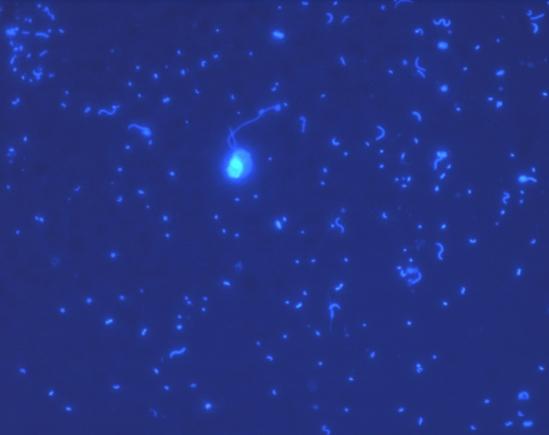
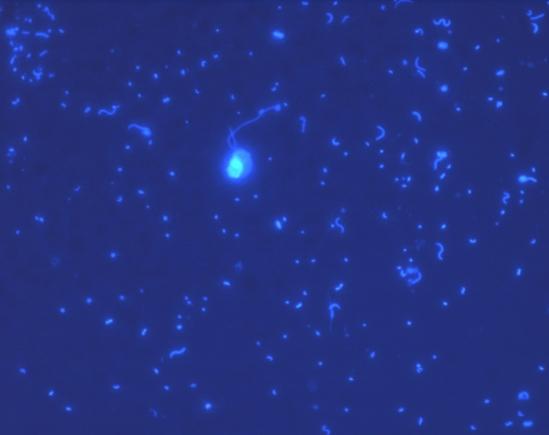
But when CO2 levels rise, ocean pH falls, causing ocean acidification. Seeking to explore how short-term periods of elevated CO2 from upwelling impact the bacteria in the water, UC Santa Barbara researchers found that the additional CO2 — and corresponding drop in pH — increased the respiration of these organisms. This means more resources are recycled rather than retained in the food web. The results appear in the journal PLOS ONE.
"Despite their microscopic size, these bacteria drive the major cycling of carbon in the ocean's surface," said lead author Anna K. James, a graduate student in UCSB's Interdepartmental Graduate Program in Marine Science. "I wanted to see how much dissolved organic carbon the bacteria were eating and what proportion they dedicated to biomass."
In addition to measuring the organisms' biomass, James calculated bacterial respiration. When these microbes respire, the organic carbon they consume is converted back to CO2, which — as a gas — has the potential to go back into the atmosphere or to once again dissolve in the surface ocean.
"The elevated bacterial respiration could limit the oceans' ability to store organic carbon by converting it back to CO2," James explained.
To measure the flow of carbon through bacteria, James conducted remineralization experiments — seawater culture incubations that use filtered surface seawater. She collected natural bacterial communities from the surface ocean, added them to the filtered seawater and measured how much carbon the bacteria consumed. From that, James was able too calculate their biomass, abundance and respiration.
"It important to know what bacterial respiration is because it has a number of implications for the ocean carbon cycle," James said. "The first is the movement of organic carbon from the surface into the deep ocean either via physical mixing or sinking. The other is, if the organic carbon is contained in bacterial biomass, it can be consumed by other organisms that eat bacteria."
The upshot: Factors that affect the recycling rate of microbes alter the fate of organic matter in the ocean's water column. "It is really surprising to realize that tiny bacteria respond to the concentration of CO2 available and in turn influence the amount of carbon the ocean takes up," said co-author Uta Passow, a research oceanographer at UCSB's Marine Science Institute.
"Anna's work demonstrates an unexpected but important finding that shows marine bacteria can directly respond to rapid decreases in ocean pH," said co-author Craig Carlson, a professor in UCSB's Department of Ecology, Evolution and Marine Biology. "By increasing their recycling rate, bacteria convert some of the organic matter back to CO2, which has implications in food web and ocean biogeochemical processes."
###
Media Contact
Julie Cohen
[email protected]
805-893-7220
@ucsantabarbara
http://www.ucsb.edu
############
Story Source: Materials provided by Scienmag